A tired, scorched or badly fitted ironing board cover can undo careful laundry work: seams imprint, delicate fabrics snag, and steam becomes patchy. The right cover gives the iron a smooth, stable surface so cotton shirts, school uniform and synthetics can be pressed with less shine, drag and frustration.
For most UK homes, the best choice is not the thickest or flashiest option. It is the one that fits your board correctly, lets steam pass through cleanly, has enough padding to prevent frame marks, and feels smooth under the iron.
The short version
- Measure the board before buying, including the length, widest point and nose shape.
- Choose a smooth cotton or cotton-rich top layer for everyday garment care.
- Look for firm, even padding rather than a soft, lumpy feel.
- Avoid badly scorched, stained or loose covers if you regularly iron pale shirts.
- Use a pressing cloth as well as a good surface for wool, viscose, pleats and dark synthetics.
Start with fit, not fabric claims
An ironing board cover protects fabrics only if it sits flat. A loose surface creates ridges that can press into shirts, trousers and school uniform. A cover that is too tight may pull away at the nose or corners, exposing the board edge just where sleeves and hems tend to catch.
Measure the board in centimetres from the pointed or rounded nose to the back edge, then measure the widest part across. Do not rely only on “standard size”, because boards vary. If your board has a wide steam-generator rest or an unusual shoulder shape, check the cover’s stated size range carefully.
The fastening matters too. Drawstrings, bungee cords and toggle systems can all work well if they allow the fabric to be pulled evenly underneath. After fitting, run your hand across the board from nose to tail. If you can feel ripples before the iron is switched on, those ripples can transfer to softer garments.
Choose padding that prevents imprints
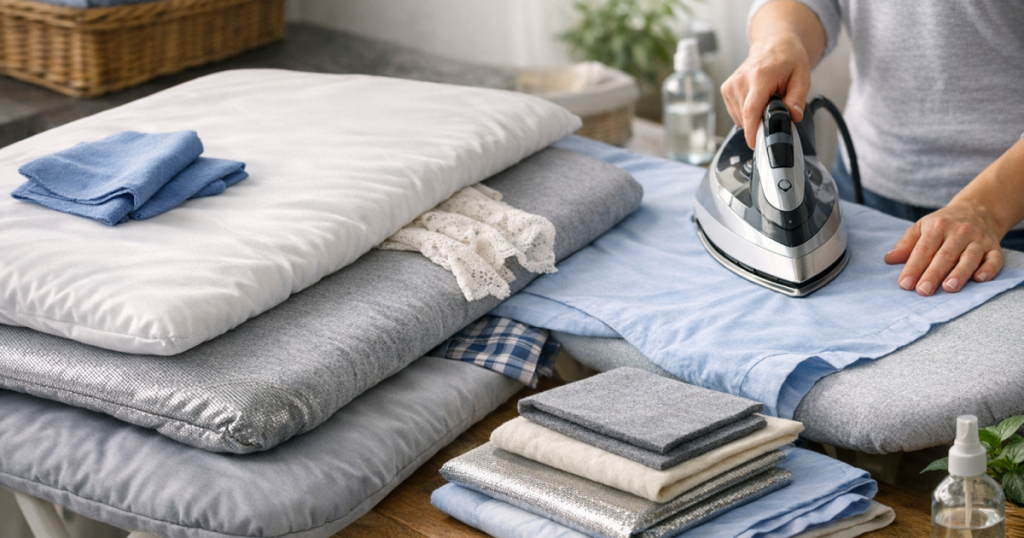
Thin covers are the main cause of mesh marks, frame lines and hard edge impressions. This is especially noticeable on school shirts, lightweight cotton blouses and uniforms that are ironed frequently. The padding should cushion the garment from the metal board beneath without making the surface feel unstable.
A good everyday ironing board cover usually has a firm foam or felt layer, or a layered construction that combines both. Foam can feel springy, while felt often feels denser and more stable. What matters is evenness: no flat patches, no bumps, and no sharp transition where the padding ends near the edges.
If the top fabric still looks clean but the board feels hard underneath, a separate felt underlay can be a useful fix. It should be trimmed or fitted so it does not bunch at the nose. Bunched padding is almost as troublesome as no padding because it can create pressure lines in trousers, sleeves and pillowcases.
Pick a surface that glides without grabbing
The top layer is the part that touches your clothes, so it should feel smooth, tightly woven and colourfast. Cotton and cotton-rich surfaces are popular because they tolerate normal ironing routines and give a predictable glide. Very rough, novelty or heavily textured surfaces are best avoided if you iron fine shirts, viscose, silk blends or lightweight synthetics.
Colour matters more than many people realise. A dark or strongly printed surface is not automatically unsafe, but it should not transfer colour when exposed to heat and moisture. If you iron many white shirts or pale school polos, a plain light-coloured cover makes it easier to spot scorch marks, rust staining or detergent residue before it reaches a garment.
Metallic or heat-reflective finishes can be useful for speed, but they are not always the gentlest choice for every fabric. They can feel hotter and less forgiving on dark synthetics, wool blends and garments prone to shine. If you choose one, use lower heat where the care label requires it and keep a clean pressing cloth nearby.
Match the cover to your iron and steam habits
Steam needs somewhere to go. If moisture is trapped between the garment and the board, you can end up with damp patches, water marks or a surface that feels clammy during a long ironing session. A breathable cover and padding layer help steam pass through rather than pooling under collars and cuffs.
Steam-generator users should pay particular attention to ventilation and drying. These irons produce more steam than many traditional models, so a very dense or poorly vented surface can become wet quickly. After ironing, leave the board open for a short while so the cover can air before folding it away.
The iron’s soleplate also affects how a cover behaves. A smooth soleplate may glide easily over cotton, while a scratched or dirty soleplate can drag and mark the surface. If you are choosing equipment as a set, it is worth understanding how ceramic, stainless steel and non-stick soleplates behave differently before blaming the board cover alone.
Think about the fabrics you iron most
Work shirts and cotton school uniform
For cotton shirts, polos and school uniform, prioritise a firm, flat surface with enough padding to stop seam and frame marks. A stable cover helps you press collars, button bands and cuffs without needing to push down aggressively. Less pressure is kinder to fabric fibres and reduces the chance of shiny wear on frequently ironed areas.
Dark trousers and synthetic blends
Dark polyester, viscose blends and smart work trousers are more likely to show shine. The cover should be smooth, but the bigger protection comes from using the right heat setting and a pressing cloth. Avoid letting a hot iron sit still on one area, even on a premium surface.
Pleats, kilts and structured garments
Pleats need control rather than heavy pressure. A flat, grippy-enough surface helps keep folds aligned while you work, but overly soft padding can make pleats wobble or distort. If school uniform is part of your weekly ironing pile, pair the right cover with careful technique for ironing pleated school skirts without flattening the pleats.
Delicates and heat-sensitive fabrics
For silk, satin, lace trims and delicate synthetics, the board cover is only one layer of protection. Use a clean cotton pressing cloth, iron on the reverse where suitable, and follow the garment care label. A cover with scorch marks, rough patches or melted residue should not be used under delicate pieces.
Useful checks before you buy
- Size range: Check the stated board length and width in centimetres, not just the word “standard”.
- Nose shape: A pointed board and a rounded board may need different cover shapes for a neat fit.
- Fastening: Look for a system that tightens evenly underneath without leaving ridges on top.
- Padding depth: Choose firm cushioning that hides the board mesh but does not feel spongy.
- Top fabric: Prioritise smooth, tightly woven cotton or cotton-rich fabric for everyday garments.
- Steam handling: If you iron in long sessions, choose a breathable construction and air the board after use.
- Care instructions: Check whether the cover can be wiped, removed or washed according to the manufacturer’s guidance.
When branded covers are worth comparing
Brand is less important than fit, but recognised covers can make comparison easier because dimensions, fastening style and compatible board sizes are usually stated clearly. When comparing a Brabantia PerfectFlow Ironing Board Cover with a Vileda Park and Go Ironing Board Cover, check the exact size option, the underside fastening and the care instructions rather than assuming one will suit every board.
If you already own a board from a well-known brand, the matching cover can be convenient, but it still needs to suit the fabrics you iron. A household pressing mostly cotton shirts may want a different surface feel from one dealing with pleated skirts, dark office trousers and delicate blouses.
How to keep the cover fabric-safe
Once fitted, treat the cover as part of your garment care routine rather than a permanent fixture. Lint, starch, detergent residue and scorch marks can all transfer or create drag. Brush or vacuum loose fibres occasionally, and wipe only if the manufacturer says the material allows it.
Replace the cover when padding becomes flat, the top layer feels rough, stains appear in the main ironing area, or the surface no longer tightens properly. If you fold the board away while damp, you can shorten the life of the cover and encourage musty odours. Let it air first, then store it somewhere dry. The same principle applies to clothes after pressing: a fabric-safe wardrobe environment helps freshly ironed garments stay clean, dry and ready to wear.
Common questions
Is a thicker ironing board cover always better?
No. Thick padding can help prevent mesh marks, but it still needs to be firm and even. Very soft padding may make seams and pleats harder to control.
Can a cover stop shine on dark clothes?
It can help by providing a smooth surface, but shine is mainly controlled by heat, pressure and technique. Use a pressing cloth and iron dark garments on the reverse where suitable.
Should I wash a stained cover?
Only wash it if the care instructions allow it. Some covers can shrink, distort or lose their finish if washed incorrectly. If stains are scorched or sticky, replacement is usually safer for pale fabrics.
Why does my board cover feel damp after ironing?
Steam may be collecting in the padding or underside of the board. Use less steam where possible, check that the cover is breathable, and leave the board open to dry before storing it.
Can I use a towel instead of replacing the cover?
A towel can bunch, hold moisture and create texture marks. It is better to use a properly fitted replacement cover or a purpose-made felt underlay beneath a smooth top layer.
Final thoughts
The safest choice is a well-fitted, smooth, evenly padded cover that matches your board and your normal laundry pile. For everyday UK households, that usually means reliable fit, breathable construction and a surface that stays clean under steam. Once the cover starts to flatten, stain or ripple, replacing it is a simple way to protect shirts, uniforms and delicate fabrics from avoidable ironing damage.