Drying clothes inside is sometimes unavoidable in UK homes, especially through wet spells, flat living and winter laundry backlogs. Good indoor laundry ventilation stops moisture hanging in the air, helps fabrics dry more evenly and reduces the musty smell that can cling to towels, uniforms and cotton basics.
The aim is not to make the room cold; it is to move damp air out and bring drier air in. With the right setup, you can dry laundry indoors without turning one room into a condensation trap.
At a glance
- Open a window slightly and create cross-flow where possible, rather than sealing the room shut.
- Keep clothes spaced apart so air can pass between layers, sleeves and hems.
- Use a dehumidifier or extractor fan when outdoor air is very damp or the room has poor natural airflow.
- Dry laundry in one controlled area, not spread across every radiator and doorway.
- Check windows, walls and fabric smell as early warning signs that moisture is building up.
Why wet laundry needs fresh air
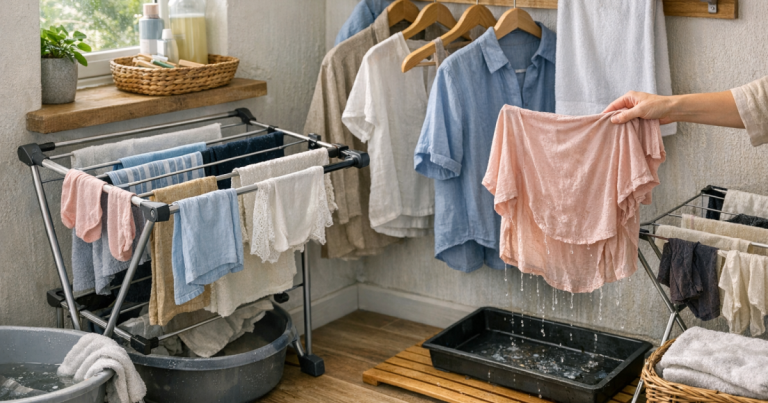
A full wash load can release a surprising amount of moisture as it dries. If that water vapour stays in the room, it settles on colder surfaces such as windows, exterior walls and corners behind furniture. That is why a room can feel humid even when the clothes still feel damp.
Fabrics also suffer when moisture lingers. Cotton can smell stale, synthetics can hold odour, wool can become misshapen if left heavy for too long, and school uniforms can dry with creases set into the cloth. A ventilated drying routine protects the room and the garment at the same time.
The best method depends on the weather, the room, and the fabric. A sunny breezy afternoon may only need a cracked window and well-spaced airer. A cold, still evening in a small flat may need mechanical help from an extractor fan or dehumidifier.
Step 1: Choose the least damp room you can
Start by picking a room that already has some airflow. A spare bedroom with a window, a utility area with an extractor, or a bathroom with a good fan is usually better than a closed living room full of soft furnishings.
Avoid drying large loads in rooms that already show signs of damp, such as black spotting around window sealant, peeling paint, a persistent earthy smell, or wet patches on exterior walls. Adding more moisture will make the problem worse and can leave clothes smelling musty even after washing.
Keep laundry away from wardrobes, packed shelves and curtains where air movement is poor. For broader storage protection after clothes are fully dry, see our guide to creating a fabric-safe wardrobe environment.
Step 2: Set up the airer for airflow, not maximum capacity
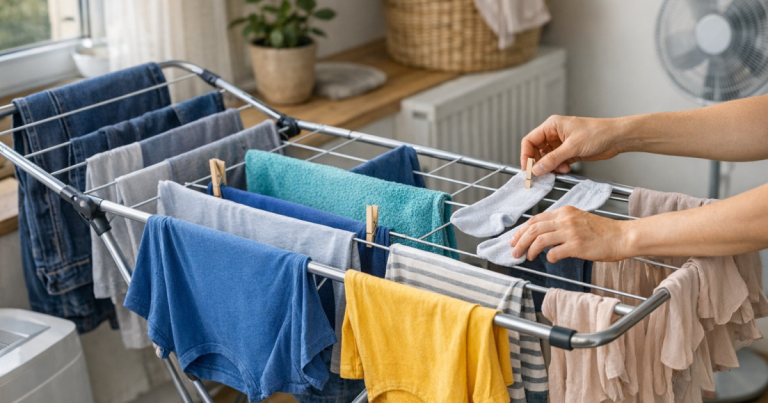
An overloaded airer dries slowly because garments block one another. It is better to dry one well-spaced load than two cramped loads that stay damp all evening.
- Hang heavier items on the outer rails where air reaches them first.
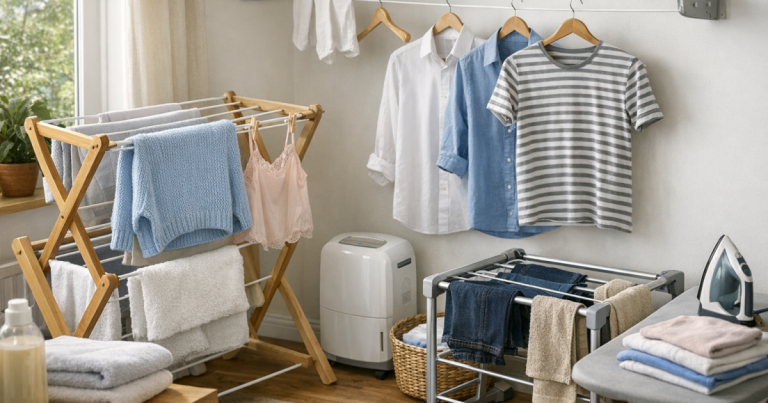
- Put T-shirts, shirts and lighter items on hangers if you have space, leaving gaps between them.
- Open waistbands, cuffs and pockets so trapped moisture can escape.
- Turn thick items once during drying, especially jeans, hoodies and towels.
- Do not drape wet laundry directly over radiators, as this can raise room humidity sharply and dry garments unevenly.
If you need a uniform or work shirt quickly, prioritise that garment rather than crowding the whole load around it. Shirts dry faster when hung from the shoulders with buttons open and sleeves free, not folded over the middle of an airer.
Step 3: Use windows properly
Opening a window wide for hours is not always realistic, particularly in cold weather. Instead, use short, controlled ventilation. Open the window slightly while the load is at its wettest, then increase airflow for 10 to 15 minutes once or twice during drying.
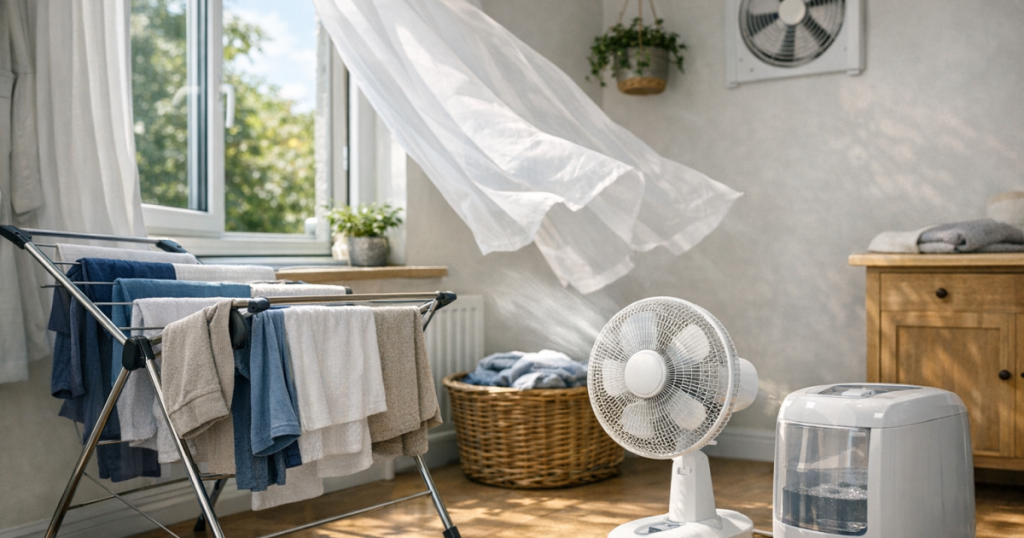
Cross-ventilation is more effective than a single open window. If the layout allows, open a second window or internal door on the opposite side of the home for a short burst. The goal is to let damp air leave the room rather than simply cooling the same humid air.
On very wet or foggy days, outdoor air may already be moisture-heavy. You can still ventilate briefly, but a dehumidifier may do more useful work than leaving windows open for long periods. Watch the glass: if condensation increases quickly, the room needs a different balance of heat, airflow and moisture removal.
Step 4: Use extraction where it already exists
Bathrooms and kitchens often have extractor fans, which can help remove moisture when used sensibly. If you dry laundry in a bathroom, run the extractor while clothes are actively drying and keep the door slightly ajar if that improves replacement airflow. An extractor cannot remove much moisture if no fresh air can enter.
Do not dry clothes in a kitchen while cooking without extra ventilation. Steam from pans, boiling kettles and washing-up adds more moisture to the air, and food odours can settle into damp fabric. If the kitchen is your only option, air the room after cooking first, then dry laundry away from cooking smells.
Step 5: Add warmth carefully
Warm air holds more moisture, so gentle heat can help fabric release water. However, heat without ventilation just moves moisture from the clothes into the room. If you warm the room, pair it with a window gap, extractor fan or dehumidifier.
A steady room temperature is usually better for garments than blasting heat at them. Direct heat can stiffen cotton, distort some knits and leave certain synthetic fibres with stubborn creases. Delicates, woollens and embellished garments should be dried flat or shaped according to the care label, not rushed beside a heater.
For school clothing emergencies, it helps to combine airflow, garment spacing and fabric-safe heat. Our separate advice on how to dry school uniforms overnight without shrinking covers that routine in more detail.
Step 6: Know when a dehumidifier helps
A dehumidifier is useful when a room has limited window access, poor winter airflow, or regular condensation after laundry days. It pulls moisture from the air, which helps clothes continue drying when natural ventilation is weak.
Position it in the same room as the airer, with space around the vents and the door mostly closed unless the manufacturer’s instructions say otherwise. Keep garments spaced so the machine is drying the air, not trying to pull moisture from a dense wall of fabric.
Empty the water tank promptly and clean filters as instructed. A neglected dehumidifier will not work efficiently, and stale collected water is not something you want near clean washing. If the room still smells damp after several drying cycles, check for building-related moisture rather than assuming laundry is the only cause.
Fabric-aware drying examples
Towels and bedding
These release a lot of moisture and can make a small room clammy. Spin them well in the washing machine, shake them out, then give them the widest spacing on the airer. If possible, dry towels separately from lighter clothing so they do not slow the whole load.
Uniforms, shirts and everyday cotton
Hang shirts and polo tops from the shoulders, smooth seams by hand and leave sleeves loose. This improves airflow and reduces ironing time later. Do not sandwich damp cotton layers together, as collars and underarms are often the last areas to dry.
Waterproofs and technical fabrics
Waterproof jackets need more care than ordinary cotton laundry. Avoid placing them on radiators or in harsh direct heat, as finishes and seam areas can be affected. If you are cleaning outerwear before drying, follow the care label and read our guide to washing waterproof jackets without ruining the finish.
Wool, knitwear and delicate items
Dry these flat where the care label allows, reshaping them gently while damp. Ventilation still matters, but the priority is shape retention. Do not hang heavy wet knitwear from narrow rails, as the weight can stretch shoulders and hems.
Warning signs your room needs better ventilation
Indoor laundry ventilation is working when clothes dry in a reasonable time, the room does not smell stale, and windows are not wet for hours afterwards. If any of the signs below appear regularly, adjust the setup before it becomes a bigger damp problem.
- Water running down windows or pooling on sills after each load.
- Clothes smell musty even when washed correctly.
- Outer walls feel cold and damp to the touch.
- Black spots appear around window frames, corners or behind furniture.
- Large items take more than a day to dry in normal household conditions.
One occasional slow-drying day is not a disaster. A repeated pattern means the drying area needs less crowding, more air exchange, better moisture extraction or a smaller load size.
A simple indoor drying routine
- Run the highest spin speed that is safe for the fabric care label.
- Shake garments out before hanging so folds do not trap water.
- Place the airer near airflow, not pressed against a cold wall.
- Open a window slightly or run extraction during the wettest stage.
- Turn heavy garments part-way through drying.
- Remove dry items promptly so damp pieces get more space.
- Air the room briefly once the load is dry.
This routine is especially useful in flats, terraced homes and rooms with limited outdoor drying options. It keeps the process controlled rather than letting moisture drift through the whole home.
Common questions
Should I keep the door open or closed when drying clothes inside?
Keep it slightly open if you are relying on natural airflow through the home. Keep it mostly closed if you are using a dehumidifier in one room, unless the appliance instructions say otherwise.
Is it better to open windows or use a dehumidifier?
Use windows when outdoor air is reasonably dry and there is a breeze. Use a dehumidifier when the weather is cold, wet, still, or the room has poor ventilation.
Can drying laundry indoors cause mould?
It can contribute to mould if moisture is trapped repeatedly. Good spacing, short ventilation bursts, extraction and prompt removal of dry items greatly reduce the risk.
How close should the airer be to a window?
Close enough to benefit from airflow, but not pressed against cold glass or damp walls. Leave space around the airer so air can move on all sides.
Why do clothes smell damp even after they dry?
They may have dried too slowly, been crowded together, or sat in humid air for too long. Rewash persistent musty items and improve airflow next time.
Main lessons
Ventilating a room for indoor drying is about balance: enough warmth to help water leave the fabric, enough airflow to remove damp air, and enough spacing so garments dry evenly. The most fabric-safe setup is usually a well-spun load, a loosely filled airer, controlled window or fan use, and prompt airing once the washing is dry.
If your windows stream with condensation or clothes regularly smell stale, treat that as feedback from the room. Smaller loads, better air movement and more active moisture removal can make indoor drying cleaner, faster and kinder to both your garments and your home.