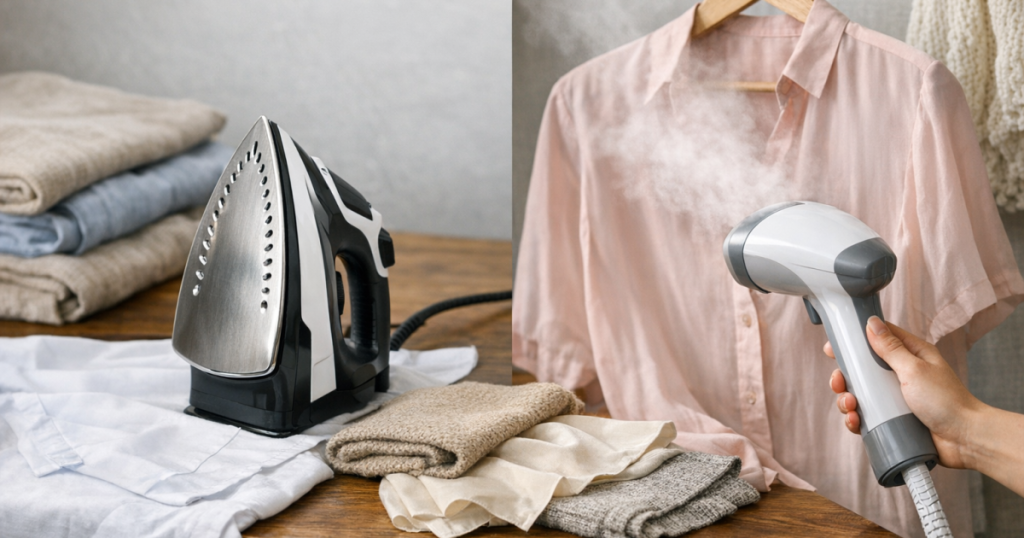
Choosing between an iron and a steamer is less about which tool is better and more about fabric, garment shape and how crisp you want the finish. The right answer to iron vs clothes steamer changes for linen shirts, wool trousers, chiffon blouses and school uniforms, because heat, pressure and moisture affect fibres differently.
An iron gives control, flatness and sharp edges. A clothes steamer relaxes fibres with hot vapour while the garment hangs, so it is gentler on shape, texture and decoration. Most UK wardrobes benefit from both methods, but not always on the same garments.
The short version
- Use an iron for cotton shirts, linen, denim, workwear, school shirts, table linen, seams, hems, pleats and anything that needs a crisp finish.
- Use a clothes steamer for light creases in wool, viscose, many synthetics, knits, lined jackets, embellished clothing and garments that lose shape when pressed flat.
- Use both carefully on wool tailoring, linen blends and stubborn creases: steam first to relax the fibres, then press only the areas that need structure.
- Avoid direct pressure on pile, velvet, embroidery, sequins, delicate chiffon and fabrics with raised texture.
- Always check the care label and test a hidden area if the fabric is dark, shiny, delicate, coated or unfamiliar.
Why irons and steamers behave differently
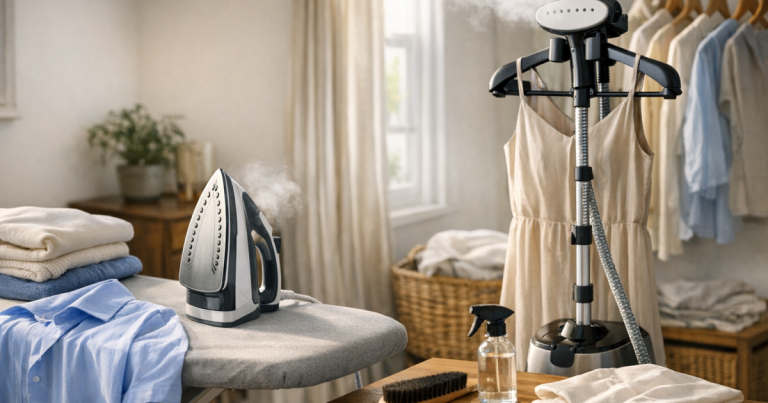
An iron works through heat, moisture and pressure. That pressure is what makes it so effective on cotton cuffs, linen collars and trouser creases. It flattens fibres into place and can create a neat, polished result when used with the correct temperature and enough moisture.
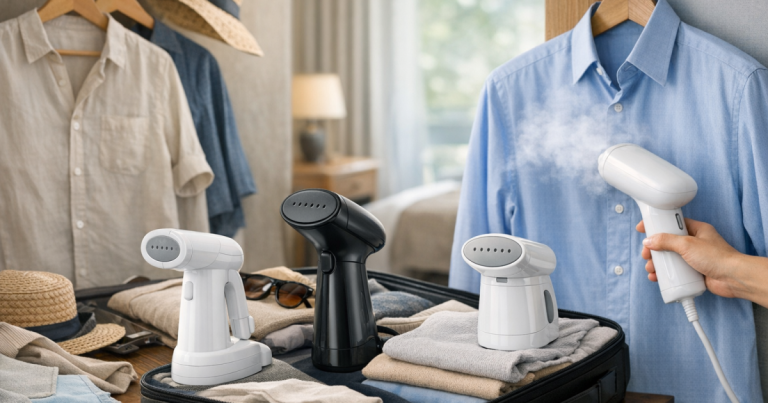
A steamer uses heat and moisture without much pressure. It relaxes the fibre rather than pressing it flat. This is why steaming is useful for garments with drape, volume or texture: dresses, blouses, wool coats, jumpers and occasionwear. The trade-off is that a steamer usually cannot create the same crisp collar, crease or seam as an iron.
Fabric finish matters as much as fibre content. A plain cotton shirt can take firm pressing, while a coated cotton jacket or printed fabric may need a lighter touch. A wool trouser leg can be improved with steam, but a hard ironed shine mark is difficult to reverse. For delicate pressing, a cloth barrier is often the difference between a smooth finish and a damaged surface; if you are unsure which barrier to use, it is worth reading how to choose the right pressing cloth for silk, wool and other sensitive fabrics.
Fabric-by-fabric: which tool gives the better result?
Cotton shirts, school uniform and everyday tops
An iron is usually better for cotton. It smooths flat panels, sharpens collars and cuffs, and gives school shirts or office shirts the neat finish most people expect. Steam helps, but pressure does the real work. A steamer can freshen a cotton top or soften minor wardrobe creases, but it may leave collars, button plackets and hems looking slightly rumpled.
For heavy cotton, iron while the fabric is very slightly damp or use the iron’s steam setting if the care label allows. Press from the inside where possible on dark colours to reduce shine.
Linen and linen blends
Linen responds well to an iron because it creases deeply and benefits from heat, moisture and pressure. If you want a crisp linen shirt, dress or napkin, ironing is the stronger choice. A steamer is useful for a more relaxed look, especially on summer dresses and loose shirts where a perfectly flat finish is not the goal.
For linen blends, check the other fibre content. Linen mixed with viscose, polyester or elastane may need a lower temperature than pure linen. Avoid dragging the iron over seams and textured areas; lift and press instead.
Wool trousers, coats and tailoring
Steam is often safer than direct ironing for wool because wool can shine, flatten or develop pressure marks. A steamer can lift light creases in hanging trousers, coats and jackets while preserving the fabric’s surface. For trouser creases, hems and seams, an iron can still be useful, but use a pressing cloth and avoid heavy pressure.
Do not squash wool pile or textured weaves. Hovering steam, then gently reshaping by hand, is often enough for a coat or blazer after wear. Let wool dry fully before putting it back in the wardrobe, as warm damp fibres can distort if crowded.
Silk and satin finishes
Neither tool should be used carelessly on silk. Some silk tolerates careful steaming; some water-spots, puckers or loses its finish. An iron can smooth silk beautifully, but only at a suitable low setting, normally from the reverse, and with a clean pressing cloth where appropriate.
For silk satin, charmeuse or glossy finishes, avoid direct steam bursts and direct soleplate contact unless the care label supports it. Test a hidden seam allowance first. If the garment is structured, lined or labelled dry clean only, refreshing between professional cleans may be safer than attempting a full press at home.
Viscose, modal and drapey semi-synthetics
A clothes steamer is often the easier option for viscose and modal because these fabrics crease but can distort when pulled or pressed too aggressively. Hang the garment, steam lightly, then let it cool and dry before wearing. Do not tug hard while steaming, as damp viscose can stretch.
If ironing is needed, use a low to moderate setting according to the care label and press from the reverse. Avoid leaving the iron still on one spot, which can cause shine or marks.
Polyester, nylon and other synthetics
Steamers are useful for light creases in synthetic blouses, dresses and linings because they reduce the need for direct heat. However, some synthetics can react poorly to high heat, whether from a steamer nozzle or an iron. Keep the steamer moving and avoid pressing the nozzle hard against the fabric unless the appliance instructions allow it.
An iron can work well on polyester blends at a suitable low setting, especially for hems and seams. Use a pressing cloth on dark or shiny fabrics. If a synthetic garment looks glazed, coated or heat-sensitive, take a cautious approach and test first.
Chiffon, georgette and sheer blouses
A steamer is usually kinder to chiffon than an iron because it avoids dragging a soleplate across fine yarns. The fabric should be supported on a hanger, steamed lightly and allowed to fall back into shape. Keep jewellery, rough nails and zips away from the surface while handling it.
If a sheer blouse has stubborn creases, ironing may still be possible, but only with very low heat, no dragging and a protective cloth. Fine fabrics snag easily, so follow a more detailed method if you need to wash chiffon blouses without pulling threads before you deal with the creases.
Knits and jumpers
Steaming is generally better for knits because it relaxes creases without flattening the loops. Lay heavy knitwear flat after steaming if the weight of the damp garment could stretch the shoulders. For light jumpers on a hanger, steam gently and reshape cuffs, hems and necklines with your hands.
Ironing knits can leave them flat, shiny or stretched if you push the iron along the fabric. If you must use an iron, press lightly through a cloth rather than sliding.
Denim, canvas and sturdy workwear
An iron is better for denim, canvas and robust cotton twill when you want a smooth, structured finish. These fabrics can take more pressure than delicate garments, provided the care label allows it. Steam helps soften stubborn creases, especially around hems, pockets and seams.
A steamer can refresh jeans or a casual jacket, but it will not usually give the same flattened result. For dusty or heavily soiled workwear, clean the fabric properly first; heat can set some residues and stains.
Velvet, corduroy, embroidery and beading
A steamer is usually the safer choice, but use it carefully. Raised pile and decoration can be crushed by an iron. Steam from the reverse where possible, hold the garment so the surface is not pressed against anything flat, and let it dry undisturbed.
Do not iron directly over sequins, beads, transfers, embroidery or flocked prints. Heat and pressure can melt, loosen or flatten decorative finishes.
Iron vs clothes steamer for garment shape
The fabric tells you a lot, but the garment’s construction often decides the method. A flat cotton pillowcase, shirt front or apron suits ironing. A pleated skirt, gathered blouse or lined blazer needs more caution because the wrong pressure can alter the design.
- Flat panels: iron for a crisp, even finish.
- Collars, cuffs and plackets: iron, using the tip and edge carefully.
- Draped dresses and blouses: steam to preserve movement.
- Tailored jackets: steam lightly; press only specific areas if you know the construction can tolerate it.
- Pleats: iron only if you can align and protect them properly; steaming can soften pleats if overdone.
- Delicate trims: steam from a safe distance and avoid direct pressure.
When using both gives the best finish
For some garments, the best result comes from combining methods. Steam first to relax the fabric, then use the iron only where structure matters. This works well on linen shirts, wool trousers, cotton dresses and some viscose blends.
A sensible routine is to hang the garment, steam the main body, let it cool for a minute, then press collars, cuffs, hems or trouser creases with a cloth if needed. This reduces the time the iron spends on the fabric and lowers the risk of shine or over-flattening.
Your setup also affects how often you reach for each tool. A full-size board gives better support for shirts and linen, while a compact board or mat can be enough for quick cuffs and hems in a small flat. If cables and positioning are part of the frustration, the trade-offs around cordless steam irons may be worth considering before changing your routine.
Checks before you apply heat or steam
- Read the care label first: symbols for ironing, steaming and dry cleaning matter, especially on blends and coated fabrics.
- Test a hidden area: check for shine, water spotting, colour change or texture loss.
- Use clean equipment: residue on an iron soleplate or mineral build-up in a steamer can mark clothing.
- Follow the appliance manual on water: this is particularly relevant in hard-water parts of the UK, where limescale can affect steam performance.
- Let garments dry before storing: warm steam leaves moisture behind, and damp clothing can smell musty in a crowded wardrobe.
- Avoid overworking one area: repeated heat and steam can weaken finishes, distort seams or create shine.
Common questions
Can a clothes steamer replace an iron completely?
Not for most wardrobes. A steamer is excellent for refreshing and relaxing creases, but an iron is still better for crisp cotton shirts, linen, pleats, hems and sharp trouser creases.
Is steaming always safer for delicate fabrics?
No. Steam can still water-spot silk, distort viscose or affect trims. It is gentler than pressure in many cases, but the care label and a hidden test are still important.
Why do my clothes feel damp after steaming?
Steam adds moisture. Use lighter passes, keep the head moving and allow the garment to hang until fully dry before wearing or storing it.
Should I iron clothes inside out?
For dark, shiny, printed or delicate fabrics, yes, ironing from the reverse reduces the risk of shine and surface marks. A pressing cloth adds extra protection.
Which is better for quick morning touch-ups?
A steamer is often faster for a hanging dress, blouse or jumper. For a shirt collar, cuffs or a sharp front placket, an iron usually gives a neater result.
Final thoughts
There is no single winner across every fabric. Choose the iron when you need flatness, sharpness and control. Choose the steamer when you need to relax creases without crushing texture, shape or decoration. The safest habit is to match the tool to the fibre, the finish and the part of the garment you are treating, rather than using one method for everything.
For everyday UK garment care, that usually means ironing cotton, linen and sturdy workwear; steaming wool, knits, drapey fabrics and decorated pieces; and using a pressing cloth whenever heat, shine or delicacy is a concern.