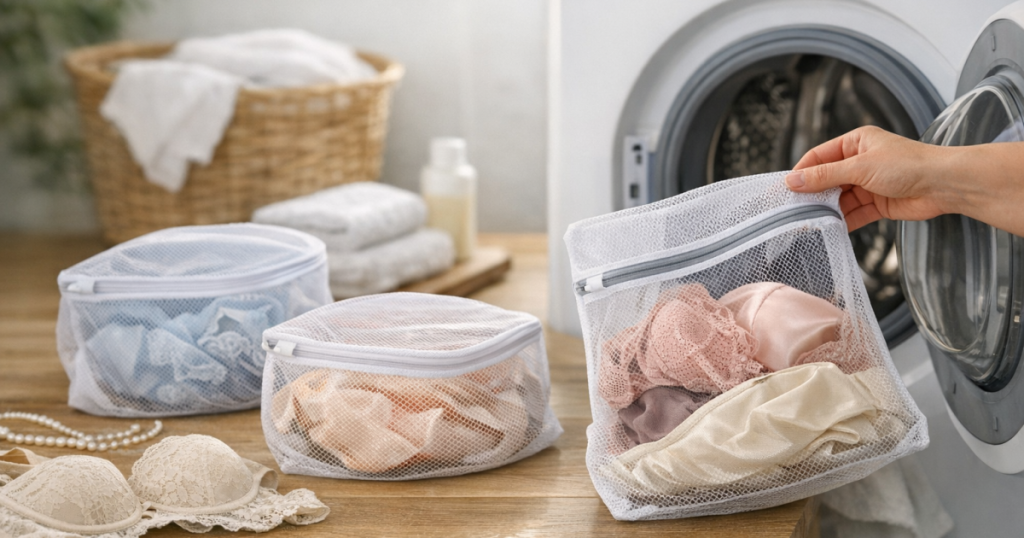
A zipped net pouch is not magic, but mesh laundry bags can make a real difference when a garment is vulnerable to snagging, twisting or rubbing in the drum. They work best for lace, hosiery, fine straps, embellished pieces and lightweight knits that are machine-washable. The important bit is using the bag as part of a gentler wash routine, not as permission to put every delicate through a hot, heavy cycle.
The short version
- A wash bag helps reduce friction, tangling and snagging inside the drum.
- It does not prevent shrinkage, dye transfer, detergent damage or heat damage.
- One or two items per bag usually gives better protection than stuffing it full.
- Fine mesh is useful for lace, hosiery and small fastenings; larger pouches suit light knitwear and delicate tops.
- The cycle, temperature, detergent amount and drying method matter just as much as the bag.
If the care label says hand wash only, dry clean only or do not wash, a net pouch does not override that. Treat the label as the starting point, then use the bag to lower the risk of avoidable damage during a suitable wash.
How mesh laundry bags protect fabric
During a machine wash, clothes do not simply sit in water. They tumble, lift, drop, twist and rub against the drum, other garments, buttons, zips and seams. A laundry bag creates a light barrier between the delicate item and the rest of the load. That barrier reduces direct abrasion and keeps straps, hooks and trims from catching.
The bag also keeps small items together. Socks, removable pads, silk scrunchies, lace briefs and fine camisole straps are less likely to be pulled into the door seal, wrapped around heavier garments or stretched by the movement of a full cotton load.
What it cannot do is change the chemistry or mechanics of the wash. If the water is too hot for wool, the spin is too fierce for lace, or a dark garment bleeds dye, the bag will not stop the fabric reacting. Think of it as a protective sleeve, not a separate mini hand-wash cycle.
Where a wash bag helps most
Lace lingerie and fine underwear
Lace is one of the clearest cases where a bag is useful. The open structure can catch on hooks, zips and rough seams, while elastic trims can stretch when tangled with heavier clothes. Fasten bra hooks, place similar colours together and use a cool delicate cycle where the care label allows machine washing. For more detail on preventing catches and distortion, see our guide to washing lace lingerie without snagging the fabric.
Hosiery, tights and fine socks
Tights and sheer socks can ladder when they rub against zips, Velcro-style fastenings or rough denim seams. A small fine-mesh pouch keeps them contained and reduces stretching. Avoid washing them with towels, jeans or garments with exposed hardware. A low spin is usually kinder than a high-speed spin, especially for very fine denier items.
Lightweight knitwear
Machine-washable fine knits can benefit from a larger bag because it stops sleeves twisting tightly around other items. The bag should be big enough for the jumper to move, not compressed into a ball. Use a wool or delicate cycle if the label permits, reshape while damp and dry flat away from direct heat.
Embellished and trimmed garments
Sequins, decorative buttons, beading, tassels and fine ties can be vulnerable in a mixed load. A bag may reduce catching, but it will not protect weak stitching or glued embellishments from water and agitation. If trims feel loose before washing, machine washing is risky even inside a pouch.
What they do not protect against
The most common disappointment comes from expecting too much. A laundry bag can help with mechanical damage, but many laundry problems are caused by heat, chemistry, colour movement or poor drying.
- Shrinkage: Wool, viscose, silk blends and some structured garments can shrink or distort if the wash is too warm or the agitation is too strong.
- Colour bleed: A bag does not isolate dye in the wash water. Keep dark, bright and pale items separate, and be extra cautious with new clothes.
- Fading: Dark clothes still need low temperatures, gentle detergent use and inside-out washing. If dark basics are your main concern, read our advice on preventing black clothes fading in the wash.
- Detergent marks: Too much detergent, overloaded drums and poor rinsing can leave residue whether or not a bag is used.
- Pilling: Less friction may reduce some bobbling, but knitwear can still pill through normal wear and laundering. Existing bobbles need careful removal; our guide to choosing a fabric shaver for bobbly knitwear explains the safer checks.
- Heat damage in drying: A delicate that survives washing can still be ruined by tumble drying if the care label says to avoid it.
How to use a laundry bag properly
Step 1: Read the care label before anything else
Check whether the garment is machine-washable and whether it needs a delicate, wool, hand-wash or cool cycle. Symbols matter more than the presence of a bag. If the item is marked dry clean only, heavily structured, lined, leather-trimmed or strongly embellished, the bag is not enough protection for a standard home wash.
Step 2: Sort by fabric weight and colour
Do not put a lace camisole in a bag and then wash it with jeans, bath towels and hoodies. The heavy items still create force inside the drum, and the bag can be crushed between them. Delicates do better in a smaller, lighter load with similar textures and colours. Pale lace, dark hosiery and bright synthetic gym pieces should not all be treated as one delicate category.
Step 3: Fasten, fold and turn garments inside out
Fasten hooks, close zips and tie loose straps gently before placing items in the pouch. Turning garments inside out protects the visible surface from rubbing and helps reduce wear on prints, dark dyes and fine finishes. For bras, fastening the hooks also stops them snagging the mesh or other items inside the same bag.
Step 4: Do not overfill the bag
A common mistake is packing a pouch tightly because the items are small. Fabric still needs room for water and detergent to circulate. As a rule of thumb, the bag should close easily and the contents should be able to shift when you hold it. One bra, a few pairs of briefs, one lightweight top or a small group of hosiery items is more effective than a packed pouch.
Step 5: Choose a gentler cycle
Use the gentlest cycle that suits the fabric and the soil level. For many delicates, that means 30°C or cold water, a reduced spin and a liquid or powder detergent used in the correct amount. Non-bio detergents can be a sensible choice for some delicate or skin-contact items, but always prioritise the care label and avoid over-dosing, which can leave residue in lace and elastic.
Step 6: Remove promptly and dry with care
Take the bag out as soon as the cycle ends. Leaving damp delicates bundled up can encourage creasing, odour and distortion. Open the pouch, gently reshape garments and dry them according to the label. Many delicate fabrics prefer air drying on a rack or flat towel rather than being pegged by the shoulders or put in a tumble dryer.
Fine mesh, coarse mesh or padded bags?
Different bag styles suit different garments. Fine mesh gives better containment for hooks, lace edges, hosiery and tiny trims. Coarser mesh allows water to move through easily and can be enough for larger delicate tops, washable scarves or light knits. Padded or structured bags are usually intended for shaped items such as bras, where the aim is to reduce crushing as well as snagging.
The zip matters more than many people expect. A covered zip end helps stop the puller knocking against the drum or catching on fabric. Seams should feel smooth, not scratchy. If the mesh has holes, rough edges or a zip that opens during washing, replace it; a damaged pouch can create the very snags it is meant to prevent.
Common mistakes that reduce protection
- Using the bag in an overloaded machine: Delicates need space in the drum as well as space inside the pouch.
- Mixing with rough garments: Towels, denim, workwear and items with exposed zips are poor companions for lace and hosiery.
- Putting stained items straight in: Deodorant, body oils and make-up may need gentle pre-treatment before washing, otherwise residue can set or remain trapped.
- Choosing a high spin: Fast spinning can stretch straps, distort fine knits and crease delicate synthetics.
- Leaving items zipped inside afterwards: Damp fabric needs air. Empty the bag promptly and let the pouch dry too.
When hand washing is still the better option
Some garments are too fragile, valuable or structurally complex for machine washing, even in a bag. Consider hand washing for very fine silk, heirloom lace, loose beading, delicate embroidery, fragile vintage pieces and items with unknown fibre content. Use cool water, minimal agitation and a detergent suited to the fabric. Support the garment fully when lifting it from the water, as wet fibres can stretch under their own weight.
If a garment has sentimental or financial value, do not use a routine wash as an experiment. The lower-risk route is to follow the label precisely or use a specialist cleaner for fabrics that need professional handling.
The short version
Mesh bags do protect delicates from many of the physical hazards of a washing machine: snagging, tangling, rubbing and stretching caused by contact with other garments. They are genuinely useful for lace, hosiery, underwear, washable trims and light knits.
The catch is that they only solve one part of the problem. For proper fabric care, pair the bag with correct sorting, a cool gentle cycle, sensible detergent dosing, a lightly loaded drum and careful drying. Used that way, a simple zipped pouch can be one of the most useful low-effort tools in a home laundry routine.