Lace catches easily on hooks, zips, rough nails and even the inside of a busy laundry basket. The safest way to wash lace lingerie is to slow the process down: separate it, use cool water, minimise rubbing and support the fabric while it dries. A few extra minutes at the sink can prevent pulled threads, distorted cups and tired-looking elastic.
At a glance
- Hand washing is usually the lowest-risk method for fine lace, underwired bras, silk trims and delicate elastics.
- Use cool or lukewarm water, ideally no warmer than 30°C unless the care label says otherwise.
- Fasten hooks before washing so they cannot catch on lace panels or mesh.
- Never scrub, twist or wring lace; press water out gently instead.
- Dry flat or supported away from direct heat to protect shape and stretch.
Check the garment before it goes near water
Start by looking closely at the label, trims and construction. Lace lingerie can be made from nylon, polyester, cotton, silk, elastane or a blend, and each behaves differently when wet. Underwires, bonded seams, embroidery, bows, sliders and moulded cups also affect how much movement the garment can tolerate.
If the care label says dry clean only, hand washing at home carries more risk, especially with silk lace, heavily embellished pieces or structured lingerie. For washable items, check the wash symbol, maximum temperature and whether bleaching or tumble drying is ruled out. If label symbols feel unclear, it is worth using this guide to fabric labels and heat levels before you choose a method.
Next, inspect the lace for loose threads, stretched areas or existing snags. Washing will not repair damaged lace; agitation can make weak points worse. If a thread is already pulled, do not cut it immediately unless you can see it is a loose end rather than part of the lace structure. A tiny pulled loop is often better eased back gently from the reverse side than trimmed off.
Prepare lace lingerie so it cannot catch
Most snags happen before or during washing because lace meets something harder or sharper than itself. Good preparation reduces those contact points.
- Fasten bra hooks and clasps before washing. This stops them acting like little claws in the water.
- Remove detachable straps, pads or decorative chains if the garment allows it.
- Wash lace items separately from towels, denim, zips, Velcro, sequins and heavily textured fabrics.
- Turn items inside out only if it protects the lace without crushing moulded cups or twisting straps.
- Use a clean basin or sink with no rough residue, jewellery, hair grips or grit inside it.
For sets, wash matching pieces together so they age at a similar rate, but still keep light, dark and vivid colours separate. Red, black, navy and bright fashion shades can release dye, particularly in the first few washes. White lace is especially vulnerable to greying and colour pick-up.
The safest hand-washing method
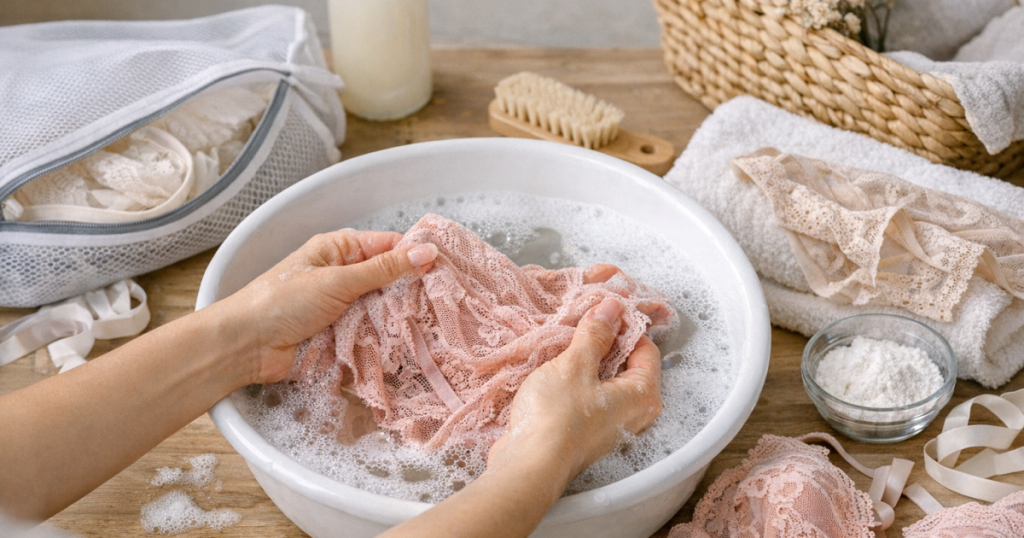
Hand washing gives you the most control because the lace is not being thrown around a drum. The aim is to move water through the garment rather than rub the fabric against itself.
Step 1: Fill the basin with cool water
Use cool to lukewarm water, around 30°C or below unless the label gives a different instruction. Hot water can weaken elastane, encourage colour bleed and affect adhesives or bonded details used in some modern lingerie.
Step 2: Add a small amount of gentle detergent
Use a mild detergent suitable for delicates and dissolve it fully before adding the garment. Too much detergent is not kinder; it can leave residue in lace holes, elastic channels and padded areas, making rinsing harder. Avoid bleach and strong stain removers unless the care label clearly permits them.
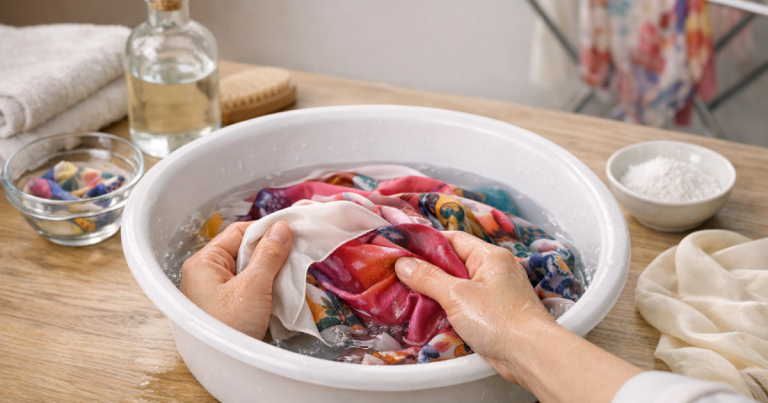
Step 3: Submerge and gently press
Place the lingerie in the water and press it down with open hands. Let it soak briefly, usually around five to ten minutes for lightly worn items. Very long soaking is not ideal for elastic, colour-rich lace or bras with structured cups.
Step 4: Move the water, not the lace
Swirl the water gently and press through areas that need cleaning, such as the underband, gusset or straps. Do not scrub lace panels together. For perspiration on bra bands, use the pads of your fingers to press and release the fabric rather than rubbing back and forth.
Step 5: Rinse until the water runs clear
Drain the soapy water and refill with clean cool water. Press the garment gently to release detergent, then repeat as needed. Rushing the rinse leaves residue behind, which can make lace feel stiff and can shorten the life of elastic over time.
If you need to use a washing machine
Machine washing is not the first choice for fragile lace, but it can be acceptable for sturdier everyday lingerie if the care label allows it. The key is to reduce friction, snagging and spin stress as much as possible.
- Use a fine mesh lingerie bag and do not overfill it; items need space to move without being crushed.
- Fasten hooks before putting bras in the bag.
- Choose a delicates or hand-wash cycle with cool water.
- Use a low spin speed or remove the items before the final spin if they are very delicate.
- Keep lace away from garments with zips, hooks, heavy buttons, Velcro or rough seams.
When you wash lace lingerie by machine, treat the load as a delicates-only wash rather than adding it to a mixed weekly wash. Even if the cycle is gentle, a single zip or trouser hook can cause damage that no detergent choice can undo.
How to remove water without stretching the lace
Wet lace is more vulnerable because the fibres and elastics are carrying extra weight. Never wring lace lingerie, twist bra cups or pull straps to squeeze water out. These actions can distort the garment and create strain at stitched joins.
Instead, lift the item from underneath with both hands. Press it gently against the side of the basin, then lay it flat on a clean towel. Roll the towel loosely around the garment and press down with your palms. The towel absorbs excess water without dragging on the lace.
For moulded or padded bras, reshape the cups while damp. Smooth lace overlays into position and check that underwires have not shifted. If the centre gore, cup edge or strap joins look distorted, ease them back gently before drying.
Drying lace lingerie without marks, bumps or sagging
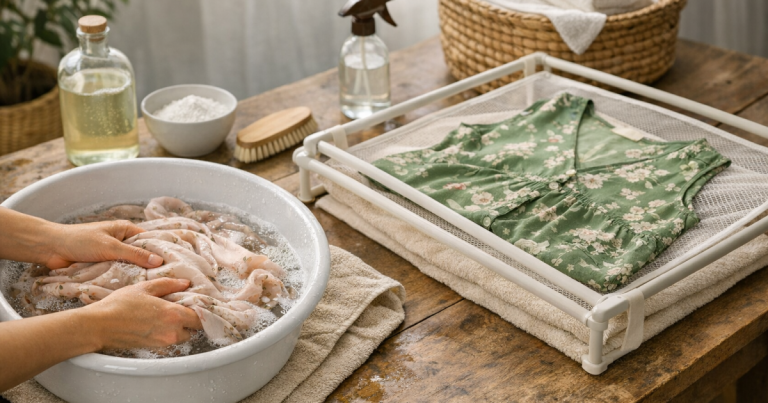
Air drying is the right approach for most lace lingerie. Tumble drying is usually too hot and too abrasive for lace, elastic and delicate trims. Radiators and heated rails can also create localised heat that weakens stretch fibres or leaves cup shapes uneven.
- Dry flat on a clean towel for very delicate, silk-trimmed or heavily detailed pieces.
- For bras, support the centre gore or lay them over a drying rack so the cups are not hanging by the straps.
- Keep items away from direct sunlight if they are dark, bright or prone to fading.
- Allow padding and underbands to dry fully before storing to prevent musty odours.
- Do not peg lace directly with tight pegs; they can leave pressure marks or catch threads.
If drying indoors, give lingerie space and airflow rather than hiding it under layers of heavier laundry. In damp UK homes, slow drying can become a bigger problem in winter, so keep the room ventilated and avoid crowding airers.
Stains, colour run and delicate trims
Deal with stains before the main wash, but keep the treatment gentle. For fresh perspiration marks or body oil on bands, cool water and mild detergent are usually the safest first step. Dab and press rather than brushing the lace. A soft cloth can help on plain elastic sections, but avoid using even a soft brush directly on open lace.
Make-up marks need patience. Blot first, then work from the reverse side where possible so you are pushing the mark out rather than deeper into the lace. Avoid hot water on unknown stains because heat can set some marks more firmly.
If a coloured item has bled onto pale lace, stop and keep it damp until you decide what to do next. Drying can make dye transfer harder to shift. For a step-by-step approach, use the advice on how to remove colour run stains from mixed laundry before trying stronger treatments.
Storage habits that prevent future snags
Snag prevention is not only about washing. Lace can catch in drawers just as easily as in the laundry basket, especially when bras, tights, shapewear and embellished pieces are all pushed together.
- Close hooks before storing bras so they cannot catch neighbouring lace.
- Keep lace away from jewellery, beaded garments, Velcro and rough woven bags.
- Store bras with cups nested rather than folded in half, unless the design is completely soft and unstructured.
- Use drawer dividers or fabric pouches for very fine lace pieces.
- Avoid overstuffed drawers, which force lace against sliders, hooks and seams.
Some lingerie is better laid flat, while soft camisoles or slips may be hung if the straps and fabric can take the weight. For a broader wardrobe approach, this guide to which clothes should be hung, folded or boxed is useful when organising delicate fabrics alongside everyday clothing.
Common mistakes that cause snags
- Putting lace in a mixed wash: zips, jeans, towels and sportswear seams are common snag risks.
- Using too much detergent: residue can stiffen lace and make it feel rougher than it should.
- Scrubbing stains: friction can break fine threads and distort openwork patterns.
- Wringing after rinsing: twisting stresses elastic and seams, particularly around cups and straps.
- Drying by the straps: wet bras are heavier than they look, and strap drying can stretch them.
Common questions
Can lace lingerie go in a normal 40°C wash?
Usually, no. Many lace and elastic garments need cooler water and less agitation than a standard 40°C cotton or mixed load. Always follow the care label, but cool washing is generally safer for shape, colour and stretch.
Should I use fabric conditioner on lace lingerie?
It is usually better to avoid it. Fabric conditioner can leave residue on lace and elastic, and it may affect how supportive fabrics feel. A thorough rinse after a small amount of mild detergent is normally enough.
How often should bras and lace knickers be washed?
Knickers should be washed after each wear. Bras depend on wear time, heat and perspiration, but rotating them between wears helps the elastic recover and reduces the need for harsh washing.
What should I do if lace catches during washing?
Stop handling the area roughly and do not pull the snag tighter. Let the garment dry flat, then inspect the reverse side. If the lace is torn or a structural thread has snapped, delicate hand repair is safer than trimming randomly.
Is a lingerie bag enough to protect lace in the machine?
A mesh bag helps, but it is not complete protection. You still need a gentle cycle, cool water, fastened hooks and a load without zips, Velcro or heavy fabrics.
Key takeaways
Lace lingerie lasts longer when washing is gentle, separate and controlled. Fasten hooks, use cool water, avoid rubbing, rinse well and press moisture out with a towel rather than wringing. Dry the garment supported and store it where lace cannot catch on hardware or rough fabrics. The small habits matter: most snags come from friction and contact, not from washing alone.