Velvet marks easily because the surface is made from a raised pile rather than a flat weave. You can steam velvet safely at home, but the aim is to relax the fibres without pressing, rubbing or wetting the fabric too heavily.
The safest method is usually indirect steam: hang the garment, keep the steamer or iron away from the surface, work from the reverse where possible, and let the pile dry fully before wearing or storing. If the care label says dry clean only, treat steaming as a light refresh rather than a full clean.
The short version
- Do not press a hot iron directly onto velvet, even through a cloth, unless the care label specifically allows it and you have a proper velvet board.
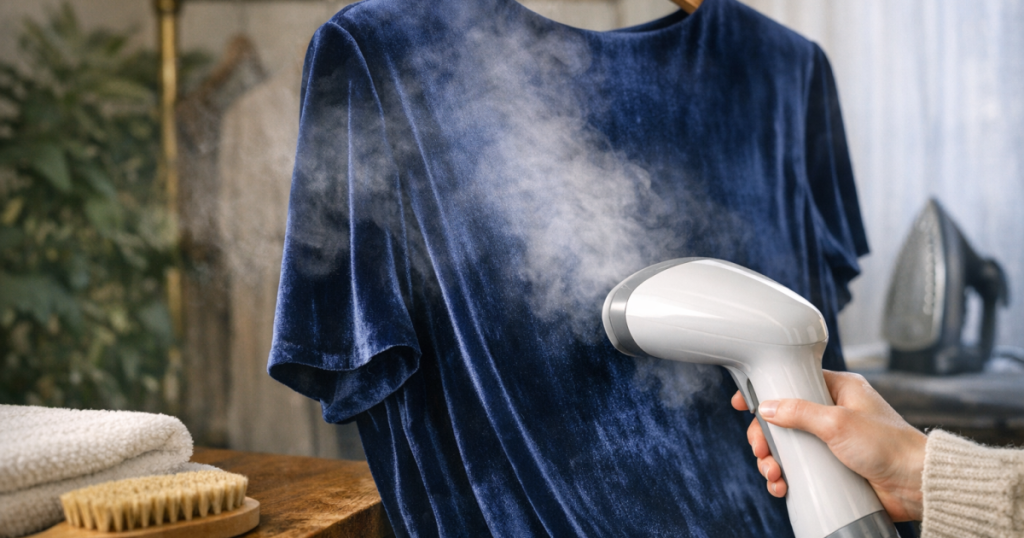
- Steam from the inside of the garment where possible, or hover steam from the front without touching the pile.
- Keep the fabric hanging freely so the pile is not squashed against an ironing board.
- Use short bursts of steam, then let the area cool and dry before deciding whether it needs more.
- Brush only very lightly in the direction of the nap once the velvet is dry.
Why velvet crushes so easily
Velvet has upright fibres that catch the light. When those fibres are flattened by heat, pressure or moisture, the surface can look shiny, bruised or patchy. This is why a crease in velvet is not always just a wrinkle; it may also be a change in the direction or height of the pile.
The fibre content matters too. Silk and viscose velvet can be more sensitive to water marks and pressure than many polyester velvets, while cotton velvet can hold stubborn compression marks. Stretch velvet and crushed velvet behave differently again because the texture may be part of the design. Always read the care label before steaming, and test any method on an inside seam, hem allowance or hidden area first.
If the garment also has lace, beading, fine mesh or delicate trims, treat those areas separately rather than blasting them with steam. The slow, low-agitation habits used for hand-washing lace lingerie are a useful mindset here: support the fabric, avoid snagging, and never force a fragile surface to behave like everyday cotton.
What to prepare before you start
Set up the garment so steam can move through it without trapping the pile against a hard surface. A padded hanger is helpful for jackets and dresses, while trousers can be hung from the waistband or cuffs depending on where the creases sit. Make sure the item has space around it and is not touching a wall, radiator or wardrobe door.
- Check the care label: look for fibre content, dry-clean instructions and any warnings about steam or heat.
- Empty pockets: heavy items can pull velvet out of shape while it is damp from steam.
- Fasten closures: do up buttons, hooks or zips so the garment hangs in its intended shape.
- Use clean water: follow the appliance instructions, especially if you live in a hard-water area.
- Have a soft clothes brush ready: it should be clean and gentle, not stiff like a cleaning brush.
If you are using a steam iron rather than a handheld garment steamer, use the steam function without placing the soleplate on the velvet. The iron should hover; it should not press.
Step by step: removing creases without flattening the nap
1. Hang the velvet and find the direction of the pile
Run your hand lightly over a hidden area. One direction will usually feel smoother and look darker or more even; the opposite direction may look lighter or rougher. This is the nap. Knowing the direction helps you brush and assess the fabric without creating mixed patches.
2. Test a hidden area first
Hold the steamer or steaming iron away from the fabric and give the test area a brief pass. Wait until it cools and dries, then check for water spotting, colour change, shine or texture change. Velvet can look temporarily darker when warm or damp, so do not judge it instantly.
3. Steam from the reverse where possible
Turn the garment inside out if the construction allows it. Hover the steam source around 10–15 cm from the fabric and work in small sections. This lets warmth and moisture relax the base fabric while reducing direct impact on the pile.
For lined jackets, structured bodices or garments that cannot be turned inside out easily, steam from the front with extra distance and restraint. Keep the steamer moving, and avoid holding steam over one spot.
4. Let gravity do some of the work
After steaming a creased section, gently pull the garment into shape with your hands at the seams or edges, not by stretching the pile itself. For a dress, this might mean smoothing the side seams and hem. For velvet trousers, align the legs and allow them to hang straight.
5. Leave it alone while it dries
This is the step people often rush. Warm velvet is more vulnerable to pressure marks, so do not sit down in it, fold it, put it in a crowded wardrobe or cover it with a garment bag straight away. Leave it hanging in a ventilated room until it feels completely dry and cool.
6. Restore the surface gently
Once dry, use your hand or a very soft clothes brush to smooth the pile in its natural direction. Do not scrub. If an area still looks crushed, repeat a short, indirect steam treatment and let it dry again rather than increasing pressure.
What not to do with velvet
- Do not iron velvet flat on a standard ironing board. The board presses the pile from below while the iron presses from above.
- Do not use heavy steam until the surface looks wet. Damp velvet is more likely to show water marks and pile distortion.
- Do not rub crushed areas with a cloth. Friction can change the nap and create dull patches.
- Do not use a lint roller aggressively on delicate velvet. It can pull at the surface or leave adhesive residue.
- Do not shave velvet pile. If you are dealing with bobbles on other fabrics, read about whether fabric shavers thin clothes over time, but keep shavers away from velvet unless the manufacturer specifically says otherwise.
Different velvet items need slightly different handling
Velvet dresses and occasionwear
Most creases appear around the waist, seat, hem and sleeve bends. Hang the dress in a steamy bathroom for a short pre-relaxation if you like, but do not rely on that alone for deep creases. Follow with controlled hover steaming and plenty of drying time before wearing.
Velvet blazers and jackets
Structured velvet needs care because steam can soften shaping if overused. Focus on small creased areas rather than steaming the whole jacket heavily. Keep shoulders supported on a broad hanger and avoid pressing lapels flat.
Velvet trousers
Seat and knee creases are common. Hang trousers so the weight of the fabric helps release wrinkles, then steam from the reverse. Avoid creating a sharp front crease unless the care label and garment style clearly support it.
Velvet cushions and soft furnishings
Check whether covers are removable and whether the fabric is suitable for steam. Upholstery velvet can vary widely, and some finishes are more sensitive to moisture. Use minimal steam, test discreetly, and avoid soaking seams, piping or backing fabrics.
How to deal with stubborn crushed marks
A crushed mark is harder to fix than a simple crease. Start with indirect steam from the reverse, then hold the fabric so the pile is not resting against anything while it cools. If the pile has dried in the wrong direction, a light brush with the nap may improve the look.
For a localised pressure mark, try steaming the back of the area briefly, then lifting the pile with your fingertips from the front once it has cooled slightly but before it is fully dry. Be gentle. Pulling, scraping or over-brushing can make the patch more obvious.
Some marks are permanent, especially if the velvet has been compressed under weight, stored folded for a long time, or exposed to high heat. In that case, repeated steaming is unlikely to help and may make the surface less even.
Drying and storing after steaming
After you steam velvet safely, drying and storage matter just as much as the steaming itself. Keep the garment on a shaped hanger until the surface is fully dry, then store it with breathing room so the pile is not pressed against other clothes.
Avoid plastic garment bags for long-term storage if they trap moisture. For seasonal velvet pieces, use a breathable cover and give the item enough wardrobe space. If you use indoor drying equipment for other laundry, the same principle applies: controlled drying is better than pushing heat too far. Our guide to using a heated airer without overdrying clothes explains why gentle drying habits help protect fabric texture.
Questions people ask
Can I steam velvet with a normal iron?
Yes, but only by using the steam function while the iron hovers above the fabric. Do not place the soleplate directly on velvet or press it against an ironing board.
Should velvet be steamed inside out?
Inside out is usually safer because it reduces direct steam impact on the pile. If the garment is lined or structured, hover steam from the front carefully and test first.
Why does my velvet look darker after steaming?
It may be temporarily damp or warm, which can change how the pile reflects light. Let it dry fully before deciding whether the colour or texture has changed.
Can crushed velvet be made smooth?
Not usually. Crushed velvet is designed to have an irregular texture, so steaming it flat can spoil the intended finish. Only remove unwanted creases, not the overall crushed effect.
How long should velvet dry after steaming?
Leave it until it feels completely cool and dry to the touch. For heavier garments, allow several hours before wearing, folding or putting them back into a crowded wardrobe.
Main lessons
Velvet responds best to patience: low pressure, indirect steam, small sections and proper drying time. The biggest mistake is treating it like a flat fabric and trying to iron creases out by force.
If you remember one rule, make it this: steam to relax the fabric, never to flatten it. That approach gives you the best chance of refreshing velvet while keeping the pile soft, even and wearable.