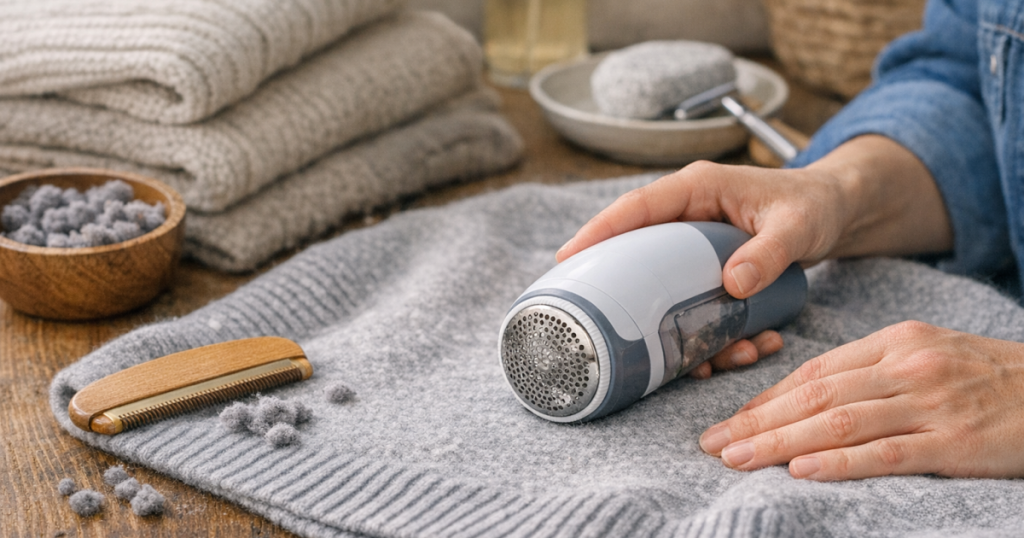
The safest way to remove bobbles from jumpers is to lift the pills from the surface rather than scrape away the knit underneath. Use light pressure, work on a dry garment, and choose a tool that suits the fibre: a fine comb for delicate woollens, a guarded fabric shaver for sturdier knits, and your fingers for fluffy or brushed yarns.
The aim is not to make an older jumper look factory-new in one heavy pass. It is to tidy the visible bobbles while keeping as much of the original fibre structure intact as possible.
The short version
- Work only on a clean, fully dry jumper laid flat on a firm surface.
- Test the tool on a hidden area, such as the inside hem, before treating the front.
- Hold the fabric smooth, but do not stretch ribbing, cuffs or fine knit panels.
- Use short, gentle strokes and stop as soon as the pills are removed.
- Avoid aggressive scraping, razors without guards, and repeated passes over the same patch.
- After de-bobbling, reduce friction in washing, drying and storage to slow new pilling.
Why jumpers bobble in the first place
Bobbles, also called pills, form when loose fibres work their way to the surface and tangle into small balls. This is most common where the fabric rubs: under the arms, across the lower front, along side seams, inside cuffs, and where a coat, bag strap or seat belt sits.
Natural fibres such as wool and cashmere can pill because the short, soft fibres gradually migrate from the yarn. Synthetic fibres such as acrylic and polyester blends can pill too, and the bobbles may cling more firmly because synthetic strands can be stronger. Mixed-fibre jumpers can be awkward because one part of the yarn may release easily while another holds on.
The important point is that pilling is not always a sign of poor care. Soft, warm, lofty yarns are often more prone to surface fuzz than tightly spun, compact yarns. The right removal method tidies the surface without repeatedly shaving away healthy fibres.
Pick the gentlest tool for the knit
Different jumpers need different handling. Before using anything sharp or abrasive, look at the fibre label, the thickness of the knit and the texture of the yarn.
Fine wool, merino and cashmere
Use a fine knitwear comb or cashmere comb with very light pressure. These fibres can be delicate, and the goal is to catch surface pills rather than rake through the yarn. Work slowly in one direction, especially on lightweight merino or fine-gauge cashmere.
Chunky wool and sturdy everyday knits
A guarded electric fabric shaver can work well on thicker, flatter surfaces. An example is the Philips GC026/80 Fabric Shaver, but whichever model you use, check that the cutting head sits behind a guard and that you can glide it without pressing down. Empty the lint compartment as needed so the tool does not drag.
Acrylic and wool-blend jumpers
These often tolerate a fabric shaver better than very fine wool, but they can still thin if you keep going over the same area. Use brief passes, clear the loosened fluff, then inspect the fabric in good light before deciding whether another pass is needed.
Mohair, angora and brushed yarns
Avoid electric shaving on fluffy, haloed yarns unless the care label or maker specifically supports it. These jumpers are meant to have a raised surface, so shaving can flatten the character of the knit. Pick off larger pills by hand, or use a very gentle comb only on obvious bobbles.
Step-by-step: de-bobble without thinning
1. Clean and dry the jumper first
Do not remove pills from a damp jumper. Wet fibres stretch more easily, and a shaver or comb can pull the knit out of shape. If the jumper has food marks, body oils or deodorant residue, deal with those before de-bobbling because grime can make fibres cling and snag. For everyday stain decisions, see our guide to choosing a stain remover kit for everyday clothes.
2. Lay it flat on a firm surface
A table, ironing board or clean worktop covered with a smooth towel is better than a soft bed. The surface needs to support the knit so the tool glides over the bobbles rather than dipping into the fabric. Fasten buttons or zips if the jumper has them, and smooth the garment into its natural shape.
3. Test an inside area
Try the tool on the inside hem, an inner side seam or another hidden patch. Make three or four short strokes, brush away the loose fibres, then check for thinning, snagging or a fuzzy scraped appearance. If the yarn looks disturbed after a tiny test, switch to a gentler method.
4. Hold the fabric smooth, not stretched
Place one hand on either side of the section you are treating and gently flatten the fabric. Do not pull hard. Stretched stitches sit higher and are easier to catch, especially on ribbed cuffs, hems and necklines.
5. Use short, light movements
With a comb, move in one direction using small strokes. With an electric fabric shaver, glide over the surface in slow, light passes rather than pushing into the knit. A manual tool such as the Gleener Ultimate Fuzz Remover can be useful where you want more control, but the same rule applies: let the tool catch the bobbles; do not force it through the fabric.
6. Work in sections
Start with the most visible areas, usually the front body and underarms. Treat a patch about the size of your hand, stop, remove lint, and inspect it. This prevents the common mistake of overworking one area until it becomes flatter and thinner than the rest of the jumper.
7. Leave difficult seams alone
Raised seams, cable textures, embroidery, pockets and ribbed trims are where fabric shavers are most likely to catch. Use fingers or tiny scissors only for obvious loose pills in these areas. If using scissors, snip the bobble itself rather than cutting into the yarn, and never pull a pill away if it is still anchored.
What not to use on good knitwear
- Unprotected razors: A bare razor can slice surface fibres and thin the fabric quickly, particularly on fine wool.
- Heavy pumice stones: These can be too abrasive for soft jumpers and may leave the surface rougher.
- Sticky lint rollers as a main method: They remove loose fluff, but they do not properly cut or lift established pills.
- Hard brushing: Brushing against the knit can raise more fibres, making future bobbling worse.
- Repeated shaving after every wear: De-bobbling is maintenance, not a daily refresh. Too much removal gradually reduces surface fibre.
How to treat common bobble zones
Underarms
Underarm pilling is usually caused by movement and friction. Turn the jumper so the area lies flat, but avoid pulling the sleeve seam tight. Use a comb for fine yarns and a guarded shaver only if the knit is stable and not stretched.
Lower front and sides
This area often rubs against desks, coats and bags. It is usually safe to treat in flat sections. If the pilling is dense, do two very light passes rather than one heavy pass.
Cuffs and hems
Ribbing is vulnerable because raised ridges can catch. Pick off loose pills by hand first. If you use a comb, follow the line of the rib rather than dragging across it.
Shoulders
Bag straps and coat linings can cause concentrated bobbling. Smooth the shoulder over a rounded surface, such as a folded towel, so the tool does not hit creases or seams.
Aftercare that slows new bobbles
Once the jumper looks smoother, the next job is to reduce friction. Wash knitwear inside out, use a gentle cycle or wool programme where the care label allows, and avoid overloading the drum. A crowded wash makes garments rub against each other more aggressively.
Choose detergent according to the fibre and care label. Wool and cashmere usually need a wool-safe detergent rather than a strong biological wash. Avoid fabric conditioner if the label advises against it or if it leaves the yarn limp; softness is useful only if it does not coat or weaken the handle of the knit.
Dry flat where possible, reshaping the shoulders, sleeves and hem while the jumper is damp. Hanging wet knitwear can stretch it, while over-drying can leave fibres more brittle and prone to surface fuzz. If you use indoor drying equipment, our guide to choosing a heated airer that won’t overdry knitwear explains how to protect woollens from excessive heat and airflow.
Storage matters too. Fold jumpers rather than hanging them, keep rough fastenings away from soft knits, and allow garments to air before putting them back in a drawer. If knitwear smells stale after being packed away, freshen it safely rather than masking the odour; start with these steps to remove musty smells from stored clothes safely.
How often should you do it?
For most jumpers, a light tidy once or twice during the main wearing season is enough. A favourite everyday acrylic or wool-blend jumper may need more frequent attention, while a fine cashmere piece should be treated sparingly and gently.
A useful rule is to stop when the garment looks neat from normal viewing distance. If you can still see a few tiny pills only when inspecting the fabric closely, leave them. Chasing every small imperfection is how thinning usually happens.
Common questions
Can I remove bobbles from jumpers with scissors?
Yes, but only for larger, loose pills and only with small, sharp scissors. Snip the bobble at the surface without pulling it away from the knit. Scissors are slow, but they offer good control around seams and textured areas.
Is an electric fabric shaver safe on cashmere?
It can be risky on fine cashmere because the fibres are soft and easy to flatten. A cashmere comb or careful hand removal is usually gentler. If you do use a shaver, test first and use the lightest possible contact.
Why does my jumper bobble again after I have cleaned it up?
Removing pills does not stop friction. If the jumper rubs against coats, bags, rough seats or other clothes in the wash, new loose fibres can tangle on the surface. Washing inside out and reducing abrasion helps slow the cycle.
Should I de-bobble before or after washing?
Wash first if the jumper is dirty, then let it dry fully before treating it. Clean, dry fibres are easier to assess, and you are less likely to pull damp stitches out of shape.
Can de-bobbling fix a badly worn jumper?
It can make the surface look neater, but it cannot replace lost fibre or repair thin patches. If the fabric already looks threadbare, use only hand removal on obvious pills and avoid shaving the weak area.
Main lessons
The best results come from restraint. Choose the mildest tool that will lift the bobbles, support the jumper on a flat surface, work in short sections and stop before the fabric starts to look overly smooth or flattened.
To remove bobbles from jumpers without thinning them, treat pilling as light surface maintenance rather than a deep clean. A careful five-minute tidy can revive a favourite knit, but the aftercare matters just as much: less rubbing, gentler washing, flat drying and sensible storage will keep the jumper looking better for longer.