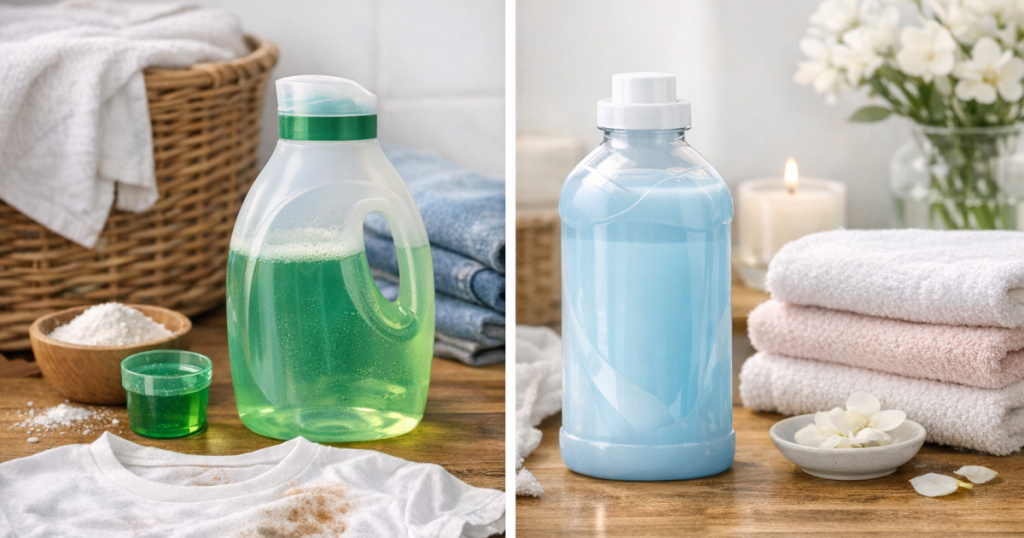
Persil Bio vs Lenor is not a straight swap between two laundry liquids; it is a choice between cleaning performance and fabric feel. One is a biological detergent for removing everyday soil and stains, while the other is a fabric conditioner used after cleaning to soften, scent and reduce friction in the load. The right answer depends on whether your wash problem is dirty clothes, stiff fibres, lingering odour, fading, or irritation from over-treated fabrics.
Quick Buying Links
Persil Bio Laundry Liquid
Persil Bio Laundry Liquid is the product doing the cleaning work in this comparison.
Lenor Fabric Conditioner
Lenor Fabric Conditioner goes in the fabric conditioner compartment and is released during the rinse stage.
What to know first
If clothes are coming out with food marks, underarm residue, dullness or general grime, start with a proper detergent. Persil Bio Laundry Liquid is the product doing the cleaning work in this comparison. It belongs in the detergent compartment or dosing device, following the bottle instructions and garment care labels.
If clothes are clean but feel scratchy, hold static, or lack the soft finish you prefer on everyday cottons and bedding, Lenor is the finishing product. Lenor Fabric Conditioner goes in the fabric conditioner compartment and is released during the rinse stage. It is not designed to remove stains, sweat, cooking oil, make-up or detergent build-up.
For many UK households, the sensible answer is not either-or. Use detergent for cleaning, then use conditioner selectively where softness and scent suit the fabric. The mistake is expecting conditioner to rescue an under-cleaned wash, or using it automatically on fabrics where it can reduce performance, absorbency or breathability.
Persil Bio vs Lenor: the real difference
- Main job: Persil Bio Laundry Liquid cleans; Lenor Fabric Conditioner softens and scents after the wash stage.
- Best problem to solve: Persil is for stains, body soil, food marks and general dirt. Lenor is for stiffness, static and a softer handle.
- Where it sits in the wash: detergent goes in at the beginning of the cycle; conditioner is held back for the rinse.
- Fabric caution: biological detergent is not the default for wool, silk or some delicate protein fibres. Conditioner is not ideal for towels, sportswear, microfibre cloths or specialist performance finishes unless the care label allows it.
- Fragrance impact: Lenor will usually be the more noticeable fragrance choice, while detergent scent is secondary to cleaning.
- Most common misuse: using too much of either product. Overdosing detergent can leave residue; overdosing conditioner can coat fibres and make fabrics feel heavy.
How Persil Bio Laundry Liquid performs in everyday fabric care
Persil Bio Laundry Liquid is the more practical choice when the laundry basket contains school shirts, workwear, gym tops, tea towels, pillowcases or clothes with visible soil. Biological detergents use enzymes to help break down common organic marks such as food residue, body oils and sweat. That does not mean every stain will vanish in one wash, but it gives you a more suitable starting point than fabric conditioner.
It is also useful when you wash at lower temperatures, provided the care label and product directions support that choice. Many households wash mixed everyday loads at 30°C or 40°C, but soil level matters. A lightly worn cotton T-shirt is different from a chef jacket, a gardening hoodie or a child’s muddy sports kit. For heavily soiled items, pretreating marks and choosing the right programme matters as much as the detergent brand.
The main trade-off is fabric suitability. Bio detergent is not the most cautious option for wool, silk, cashmere and some delicate fibres. It can also be the wrong direction for households where skin comfort is a priority and a non-bio product is preferred. A non-bio alternative such as Fairy Non-Bio Laundry Detergent may be worth comparing if you want to avoid enzymes, but you should still follow garment labels and product instructions rather than relying on brand familiarity alone.
Dark clothing needs a little extra care. A strong cleaning product used with an aggressive programme can contribute to a tired look over time, particularly if garments are washed too hot, overloaded, or dried in harsh sunlight. For black jeans, navy school uniform and dark cotton tops, combine sensible dosing with a cooler suitable cycle and turn garments inside out. For more detail, see our guide to stopping dark clothes fading in the wash.
Where Lenor Fabric Conditioner makes more sense
Lenor Fabric Conditioner is about the feel and finish of already-clean laundry. It can make everyday cottons, polycotton bedding and some casual clothing feel smoother after drying, and it gives the wash a more deliberate fragrance. This is why many people notice it most on sheets, pyjamas, loungewear and items that can feel stiff after line drying.
It is less useful when the garment’s performance matters more than softness. Towels are the classic example. Fabric conditioner can leave a coating that makes towels feel plush at first but less absorbent with repeated use. If your towels smell stale after washing, the answer is usually better washing habits, drying and residue control, not more conditioner. Our guide to stopping towels smelling musty after washing explains the common causes.
Sportswear is another category where caution pays off. Stretch fabrics, moisture-wicking tops and gym leggings are often designed to move sweat away from the skin. A softening product can interfere with that feel, especially when used repeatedly. Check the care label, wash promptly after wear, avoid overloading the machine, and let the detergent do the cleaning rather than masking odour with scent.
Lenor can still be a good finishing step for selected loads. If bedding feels board-like after air drying, or cotton T-shirts dry with a slightly rough handle in a hard water area, a measured amount of conditioner can improve comfort. The key is selective use, not automatic use in every wash.
Side-by-side: which one solves which laundry problem?
Visible stains
Choose Persil Bio Laundry Liquid first. Stains need cleaning chemistry, contact time and the correct wash programme. Fabric conditioner does not remove tomato sauce, collar grime, deodorant residue or cooking splashes. For set-in marks, pretreating is often more effective than increasing the dose across the whole load.
Softness after drying
Choose Lenor Fabric Conditioner if the load is suitable. Conditioner is designed for the rinse stage, so it affects the feel of the fabric rather than the cleaning of the wash. It is most useful when clothes are clean but dry stiff, particularly after line drying or washing in hard water.
Fragrance
Lenor is the stronger choice if scent is the reason you are buying the product. Detergent may leave a fresh smell, but it should not be used simply as perfume for clothes. If garments smell musty, sour or sweaty after washing, investigate drying time, machine hygiene, load size and temperature before adding more fragrance.
Delicates
Neither product should be used blindly on delicate fabrics. Persil Bio is not the safest default for wool, silk or cashmere, while conditioner may not suit items with special finishes, elastane-heavy garments or fabrics that need to retain structure. Use a gentle detergent made for the fibre where appropriate, and protect small or fragile items in the drum. Our advice on using mesh laundry bags without damaging delicates is a useful next step for bras, lace, hosiery and embellished clothing.
Uniforms and workwear
For chef whites, school shirts, healthcare tunics, aprons and other frequently washed garments, cleaning comes before softness. Persil Bio is the more relevant product if the fabric label allows biological detergent. Lenor can be used selectively afterwards, but avoid it if the clothing needs maximum absorbency, breathability or a crisp professional finish.
Cost, dosing and waste: the practical bit people overlook
The best-value product is the one you use correctly. With detergent, underdosing can leave soil behind; overdosing can leave residue, make rinsing harder and waste product. Water hardness varies across GB, so the correct amount is not always the same for every household. Always check the dosing guidance for load size, dirt level and water hardness.
With conditioner, more is rarely better. Too much can leave fabrics feeling coated rather than genuinely soft, and it can build up in the machine drawer. If you like the finish but dislike heavy fragrance, start with the lower end of the recommended dose rather than filling the compartment by habit.
It is also worth separating loads by outcome. Bedding that benefits from softness does not need to be washed with sports kit. Towels do not need the same finish as office shirts. Dark clothing may need a gentler approach than pale cottons with food marks. Sorting this way reduces the temptation to use one product combination for everything.
If you prefer powder for certain white cottons or heavily soiled loads, Ariel Original Washing Powder is another mainstream option to compare against liquid detergent. Powder, liquid and capsules all have different strengths, but the same rule applies: match the product to the fabric, the soil and the wash programme.
When using both is the right answer
Using Persil Bio Laundry Liquid and Lenor Fabric Conditioner together can make sense for everyday loads where the fabric label allows both. The detergent cleans during the main wash, and the conditioner is added separately during the rinse. This combination is most likely to suit cotton T-shirts, casual trousers, bedding, pyjamas and mixed household laundry that is not heavily technical or delicate.
There are two important conditions. First, the clothes must be properly rinsed, so avoid overfilling the machine. A packed drum stops garments moving freely and can leave detergent or conditioner unevenly distributed. Second, do not use conditioner to cover up a washing problem. If clothes still smell after washing, the issue may be a dirty machine, too much product, low-temperature washing on heavily soiled items, or slow drying indoors.
Which should you choose?
Choose Persil Bio Laundry Liquid if your priority is cleaning. It is the better match for stains, body soil, food marks, everyday grime and frequently worn clothing, as long as the garment care label allows biological detergent. It is the product to reach for when laundry looks or smells unclean before it goes into the machine.
Choose Lenor Fabric Conditioner if your priority is softness, fragrance and a smoother finish after drying. It is most useful for suitable everyday fabrics and bedding, but it should be used selectively. Avoid making it a default addition for towels, sportswear, microfibre cloths, specialist finishes and delicate fibres unless the label clearly supports it.
For most households, the strongest routine is detergent first, conditioner only where it adds something useful. Persil Bio solves the cleaning problem; Lenor solves the feel-and-scent problem. If you are buying one product because clothes are actually dirty, choose detergent. If your clothes are already cleaning well but feel stiff or lack the finish you want, add conditioner carefully to the right loads.
Quick Buying Links
Persil Bio Laundry Liquid
Persil Bio Laundry Liquid is the product doing the cleaning work in this comparison.
Lenor Fabric Conditioner
Lenor Fabric Conditioner goes in the fabric conditioner compartment and is released during the rinse stage.
Things readers ask
Can Lenor replace laundry detergent?
No. Lenor Fabric Conditioner is used in the rinse stage to soften and scent fabrics. It does not replace detergent and should not be relied on to remove stains, sweat, oils or everyday dirt.
Can I use Persil Bio and Lenor in the same wash?
Yes, for suitable fabrics. Put Persil Bio Laundry Liquid in the detergent compartment or dosing device, and Lenor in the conditioner compartment. Follow both labels and avoid using conditioner on fabrics where it can reduce absorbency or performance.
Is Persil Bio suitable for wool or cashmere?
It is not the safest default. Wool, silk and cashmere usually need a detergent designed for delicate protein fibres. Always follow the garment care label, especially for jumpers and fine knits.
Why do clothes still smell if I use fabric conditioner?
Conditioner adds fragrance, but it does not fix trapped soil, slow drying, machine residue or under-washing. Reduce load size, check dosing, clean the machine drawer and make sure clothes dry fully and promptly.
Should I use fabric conditioner on towels?
Use it sparingly or skip it. Repeated conditioner use can reduce absorbency, so towels usually do better with correct detergent dosing, enough drum space and thorough drying.