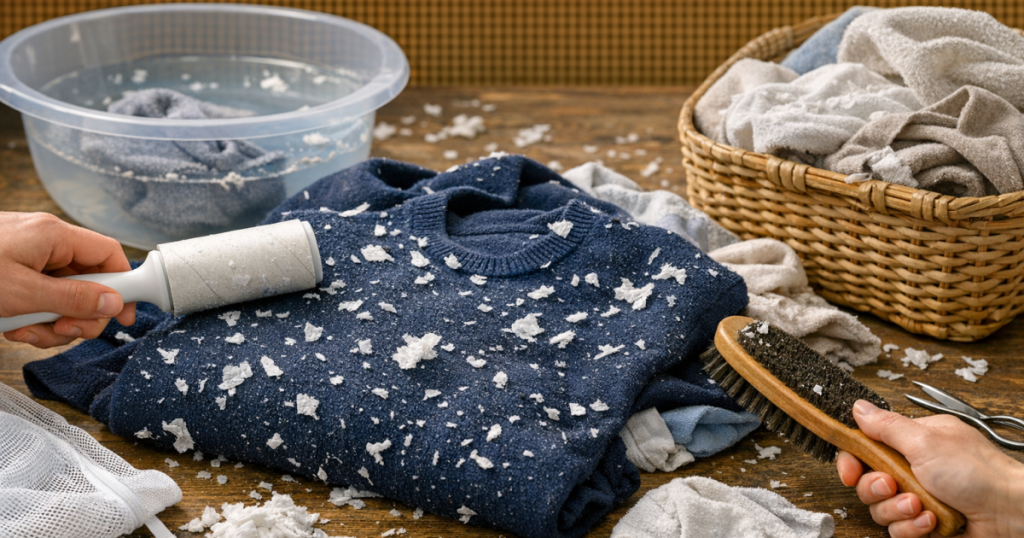
Opening the washing machine to find washed tissue on clothes is annoying, but it is usually fixable if you avoid setting the fibres into the fabric. The right rescue method depends on whether the garments are still wet, already dry, dark, delicate or heavily textured.
Do not panic-rewash everything straight away. Start by removing loose paper, checking care labels and separating fabrics so you do not make the mess worse.
The quickest safe fix
If the load is still wet, take the clothes out one item at a time, shake each piece over a bin or outside, then run a rinse and spin cycle once the worst paper clumps are gone. If the clothes have already dried, use a lint roller or clothes brush first, then decide whether they need a short rinse or a full wash.
- Do not tumble dry a wet, tissue-covered load immediately. Heat and tumbling can spread paper fibres into seams, ribbing and fleece.
- Do not overload the machine for the rescue wash. Clothes need room for loosened fibres to rinse away.
- Do not add fabric conditioner as the main fix. It can soften fabrics, but it will not dissolve the paper pulp.
- Do not scrub delicate fabrics aggressively. Satin, viscose, wool blends and embellished items need gentler handling.
Step 1: Remove the wet tissue clumps first
Lift garments out of the drum carefully rather than dragging the whole load into a basket. Large bits of soggy tissue can transfer from one item to another, especially onto black cotton, fleece, towelling, jersey and brushed fabrics.
Hold each garment by the shoulders or waistband and give it a firm shake. For shirts, school uniform, pyjamas and T-shirts, turn them inside out and shake again, as tissue often collects inside sleeves, pockets and hems. Use your fingers to pick out bigger pieces from pocket corners, hoodie cuffs and the waistband channel on joggers.
Empty the washing machine drum before starting another cycle. Wipe around the rubber door seal, check the door glass and remove visible paper from the detergent drawer if any has washed back into it. If your machine has an accessible filter, check the manufacturer’s instructions before opening it, as some designs release water when the filter is removed.
Step 2: Sort the load before rewashing
A tissue disaster is easier to fix when similar fabrics are handled together. Separate the load into small groups rather than sending everything back into the drum at once.
Good groups to make
- Dark cottons and schoolwear: black trousers, navy polos, dark T-shirts and sweatshirts show every fleck, so they need the most careful finish.
- Light everyday items: white shirts, bedding and pale cottons may hide some tissue but can still hold pulp in seams.
- Textured fabrics: fleece, towelling, brushed sweatshirts and knitted items trap fibres deeply.
- Delicates: viscose, satin, wool blends, lace and embellished pieces should be rescued by hand or on a very gentle cycle if the care label allows.
If the accident happened in a mixed-colour load, check whether any dye has moved before you rewash. A quick dab test is useful on brighter garments; see our guide to testing clothes for colourfastness before washing before giving anything a longer cycle.
Step 3: Run a rinse and spin, not a heavy detergent wash
For most wet loads, a rinse and spin cycle is the best first machine fix. You are trying to flush away paper fibres, not clean a new stain. Too much detergent can leave residue, and a full wash can keep the tissue circulating for longer than necessary.
Use a moderate spin that suits the fabrics in the load. Cotton shirts, uniform polos and towels can usually tolerate a stronger spin if the care label allows it, while viscose, wool blends and delicate synthetics need a gentler approach. Keep the load loose, ideally no more than half full, so water can move through the garments properly.
If the first rinse improves things but leaves visible specks, repeat with another rinse and spin. Two short rinses often work better than one long, crowded wash. Avoid adding extra products unless you are dealing with a separate stain as well as tissue debris.
Step 4: Use drying to help, but choose the right method
A tumble dryer can help loosen lint once most of the tissue has been removed, but it should not be the first move for a wet, paper-covered load. If the care label allows tumble drying, use a low or suitable setting and clean the lint filter before and after. Stop the cycle part-way through and check the filter again if the load is very fluffy.
For garments that should not be tumble dried, air dry them on a rack, then remove the remaining lint once the fabric is fully dry. Dry tissue fibres lift more cleanly than damp pulp. Place dark items in good natural light so you can see what remains before wearing them.
Watch dark clothes closely during the rescue. Extra rinsing, friction and over-drying can all contribute to dullness over time, so use the gentlest method that clears the paper. For everyday black and navy items, the principles in stopping dark clothes fading in the wash are useful after a laundry mishap too.
Step 5: Finish with lint removal
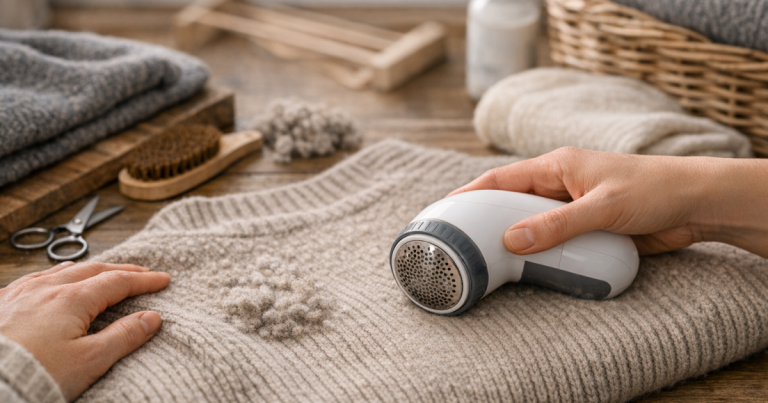
Once garments are dry or nearly dry, use a lint roller, clothes brush or clean rubber glove to lift the remaining flecks. Work from top to bottom, following the fabric grain rather than rubbing in circles. Circular rubbing can roughen cotton jersey and make knitwear look fuzzy.
A lint roller such as Scotch-Brite Lint Roller is handy for dark trousers, blazers, cotton shirts and smooth jersey. For textured fabrics, a clothes brush can be more effective because it reaches into ribbing and seams. A strip of wide sticky tape can help in an emergency, but press lightly and avoid using it on delicate, loosely woven or embellished fabrics.
Best tools by fabric type
- Black cotton and school trousers: lint roller first, then a soft brush along seams and pockets.
- Fleece and sweatshirts: dry fully, shake hard, then brush in one direction.
- Towels: shake outside, tumble dry only if the label allows, then clean the filter thoroughly.
- Satin and viscose: air dry flat or on a hanger, then use a very light touch with a soft brush.
- Wool or wool blends: avoid strong rubbing; lift debris gently by hand or with a garment brush.
What to do if the clothes are already dry
If the load has gone through the dryer with tissue still attached, the paper fibres may be more spread out but they are often easier to lift. Start with a lint roller or brush while the clothes are completely dry. Pay attention to side seams, sleeve cuffs, inside pockets, waistbands and collars.
After brushing, shake each item firmly. If the fabric still looks dusty, run a short cool rinse and spin in small batches, then dry correctly for that garment. Do not keep repeating hot drying cycles just to chase the last flecks; heat can shrink, fade or distort some fabrics, and it will not help garments that are already holding static.
If creasing becomes the next problem after rewashing or air drying, use steam carefully rather than pressing hard over remaining lint. Our guide to steaming creased clothes without leaving water marks explains how to refresh fabrics without creating new marks.
How to handle delicate or special fabrics
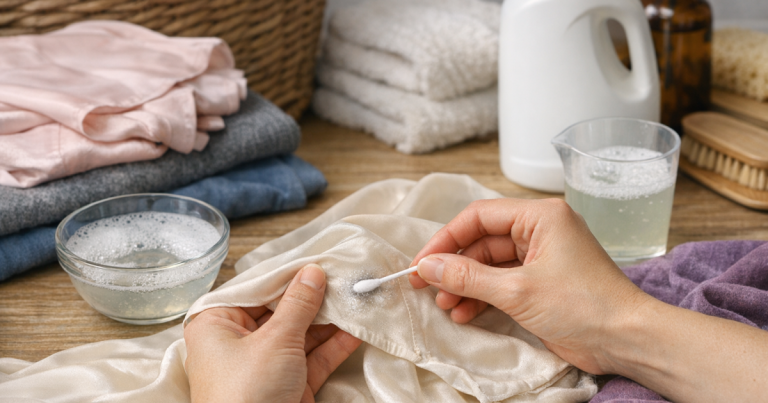
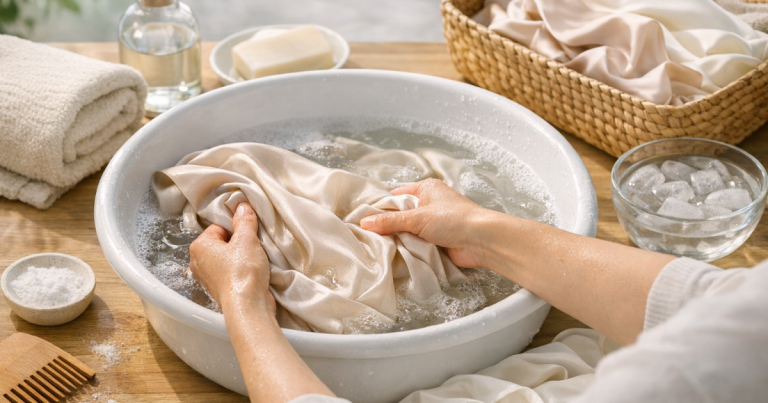
Delicate fabrics need slower treatment because the wrong rescue method can cause more damage than the tissue itself. If a satin blouse, viscose dress or wool jumper is covered in tissue, avoid vigorous shaking while it is wet. Support the garment’s weight, remove large pieces by hand and let it dry according to the care label before brushing gently.
For embellished clothing, do not pull tissue from around beads, sequins or embroidery with force. Use tweezers only for loose paper sitting on the surface, not for anything caught under stitching. If the garment is labelled dry clean only, tissue removal should be limited to gentle surface lifting unless the care label or cleaner confirms another method is suitable.
Knitted items can stretch when wet, so never hang a heavy damp jumper to dry just because you want the tissue to fall off. Lay it flat on a towel, reshape it, then remove the paper once the fibres have dried and firmed up again.
Clean the washing machine afterwards
Even if the clothes look fine, some paper can remain in the machine. Wipe the drum, door seal and inside of the door with a damp cloth. Remove any visible pulp from the seal folds, as this can transfer to the next wash.
Run a short rinse cycle with the drum empty if you can still see bits of tissue. Check the lint or drain filter only according to your washing machine manual. Keep a towel nearby if the filter area is likely to release water, and do not force any component that is not designed for routine access.
Before washing another dark load, inspect the drum with a torch or phone light. A few remaining white specks can be enough to mark black leggings, navy school trousers or workwear.
Why tissues make such a mess
Facial tissues are designed to break down when wet, but they do not dissolve completely during a normal domestic wash. The fibres separate, float through the load and cling to fabric surfaces. The problem is worse when the drum is full, the tissue was trapped in a pocket, or the load contains textured fabrics that act like lint magnets.
Paper fibres are also very visible on dark clothing because of the colour contrast. That does not mean dark fabrics are harder to clean; it simply means the last residue is easier to spot. Smooth pale cotton may look clean sooner, while a black sweatshirt may need a final brushing even after the same rinse cycle.
Prevent it happening again
The easiest prevention is a pocket check, but it works best when it becomes part of the laundry routine rather than a last-second thought. Check school trousers, hoodie pockets, coat pockets, dressing gowns and bedding corners before loading the machine. Tissues often hide in pyjama pockets and children’s uniform, especially during colder months.
- Keep a small waste bin or laundry basket beside the washing machine for pocket finds.
- Turn trousers and hoodies inside out before washing if pockets are often missed.
- Use mesh wash bags for small items so they do not trap tissue fragments in larger garments.
- Do not cram the drum; crowded laundry makes any tissue problem spread further.
- Teach children to empty blazer, trouser and PE kit pockets before clothes go in the wash basket.
Fast answers
Can I just wash the clothes again?
Yes, but remove the biggest tissue pieces first and use a rinse and spin rather than a heavy detergent wash. A crowded full wash can simply move the fibres around again.
Should I use fabric conditioner to get rid of tissue lint?
Fabric conditioner is not a reliable tissue remover. It may reduce static on some fabrics, but rinsing, drying correctly and brushing are the main steps.
Will the tumble dryer remove all the paper bits?
It can help if the care label allows tumble drying and most tissue has already been shaken or rinsed out. Clean the lint filter before, during and after the cycle.
How do I get tissue off black clothes?
Dry the garment fully, then use a lint roller or clothes brush in good light. Check seams, hems and pockets, where white flecks tend to cling.
What if tissue is stuck to wool or satin?
Let the fabric dry in the correct shape, then lift the paper gently by hand or with a soft brush. Avoid hard rubbing, sticky tape and strong spinning on delicate fibres.
Key takeaways
Most tissue-covered laundry can be rescued with patience: shake, sort, rinse in smaller loads, dry according to the care label, then finish with a lint tool. The main mistake is rushing straight into heat or vigorous rubbing, which can spread fibres, flatten texture or damage delicate garments.
Once the clothes are clean, give the washing machine a quick wipe and empty rinse so the next load does not inherit the same white flecks. A simple pocket-check habit is still the best long-term fix.