Bulky jumpers, cashmere, wool coats and embellished tops do not all tolerate the same storage setup. The best storage bags for wool, knitwear and delicates keep fabric clean, dry, uncrushed and easy to inspect, while avoiding the two common wardrobe problems: trapped moisture and sharp contact points. For most UK homes, that means breathable fabric covers for longer storage, structured bags for folded knitwear, and only cautious use of vacuum bags.
The short answer
For wool and cashmere, choose breathable cotton, canvas or good-quality non-woven fabric bags rather than fully sealed plastic for long-term storage. Knitwear is usually safest folded flat in a structured bag or lidded fabric box, not hung in a garment cover where it can stretch at the shoulders. Delicates need smooth interiors, covered zips and enough room to avoid crushing beads, lace, pleats or embroidery.
Vacuum storage bags can be useful for saving space, but they are not the first choice for fine wool, cashmere, structured garments or anything with delicate surface detail. Compression can flatten loft, set creases and distort shape if the clothing is left tightly packed for a long period.
Step 1: Match the bag to the fabric
Start with the garment, not the cupboard. A bag that works well for spare cotton bedding may be wrong for a lambswool jumper or silk blouse. Wool and cashmere need protection from dust, moths and abrasion, but they also benefit from airflow. Delicate fabrics need low-friction storage and space around trims, fastenings and folds.
- Wool jumpers and cardigans: fold and place in breathable, structured storage bags or fabric boxes. Avoid hanging heavy knits for months at a time.
- Cashmere: use a soft, breathable bag with a smooth lining or place tissue between folds if the garment is prone to creasing or friction marks.
- Fine merino and lightweight knits: fold loosely, avoid overfilling, and keep the bag shallow enough that garments are not crushed under a heavy stack.
- Silk, lace and embellished pieces: use individual garment bags or soft fabric covers so beads, hooks and embroidery do not catch on other clothes.
- Wool coats and tailored jackets: use a breathable hanging garment cover with enough depth for the shoulders and sleeves to sit naturally.
Clean and fully dry clothes before storing them. Even slight dampness can turn into a musty smell in a closed wardrobe, especially in cooler UK bedrooms and spare rooms. If you are unsure whether a garment should be air dried, dried flat or kept away from heat, use this guide to choosing the right drying method for each fabric before packing it away.
Step 2: Choose breathable protection for long storage
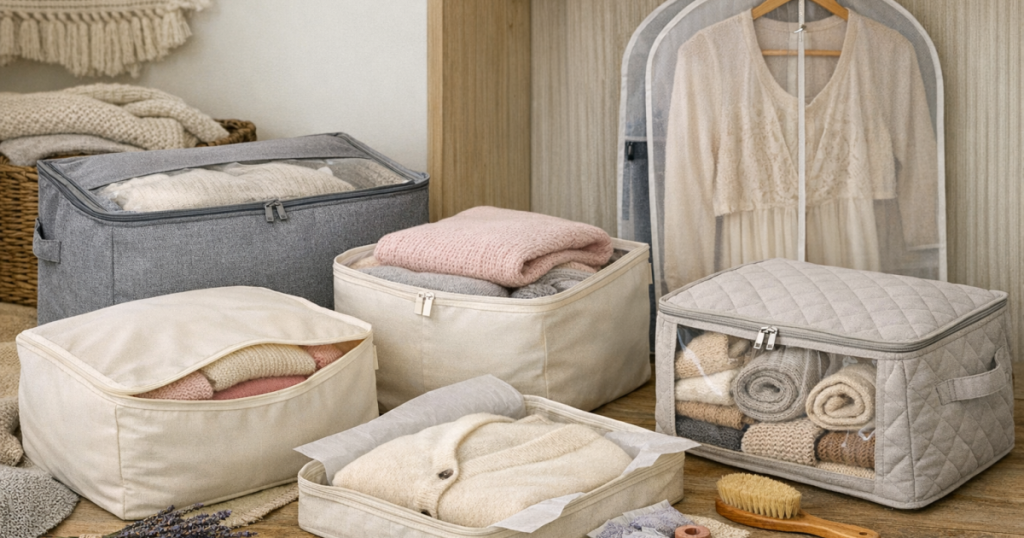
For storage bags for wool used over a season or longer, breathability matters more than an airtight seal. Cotton and canvas garment bags are usually the most fabric-friendly for longer-term wardrobe storage because they reduce dust exposure without trapping as much condensation as plastic. Non-woven fabric bags can also work well for everyday wardrobe organisation, provided they feel smooth, have tidy seams and do not shed fibres onto dark clothing.
Clear plastic garment bags are convenient because you can see what is inside, but they are better for short-term cover than long storage. In a warm room, loft space or cupboard against an external wall, plastic can trap humidity and encourage stale smells. If you want visibility, look for a fabric bag with a small viewing panel rather than a fully plastic cover.
Step 3: Use the right shape, not just the right material
The shape of the storage bag is as important as the fabric it is made from. A deep, floppy bag can make knitwear slump into a dense pile; a narrow garment cover can squash sleeves and shoulder pads; and a zip that sits directly against lace or knit loops can snag when the bag is moved.
- Flat under-bed bags: useful for folded jumpers if they are not overfilled and can slide without dragging across the floor.
- Structured cube or case-style bags: good for knitwear stacks because they help prevent the bottom garments from being crushed unevenly.
- Hanging garment covers: better for coats, dresses, tailored jackets and occasionwear than for heavy knitwear.
- Individual sleeves: useful for delicate blouses, beaded tops and fine scarves that snag easily when stored in a crowded rail.
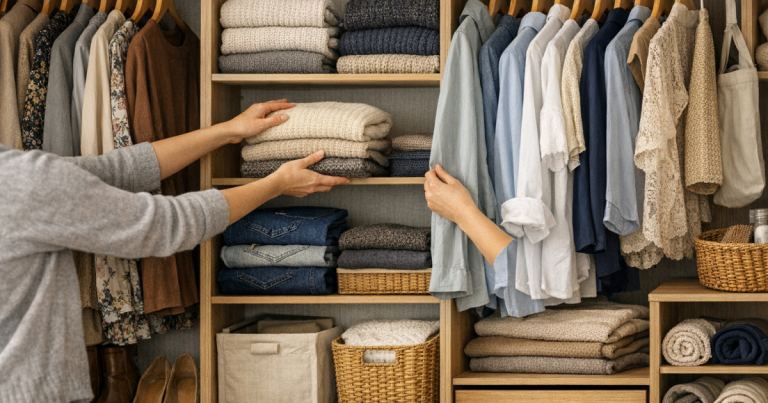
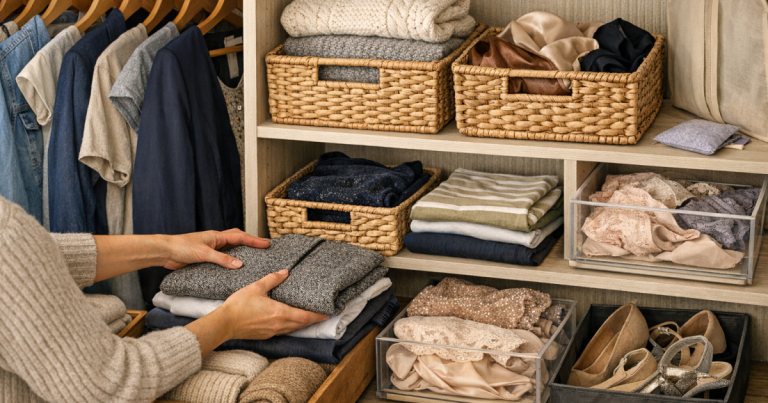
If you are reorganising a mixed wardrobe, separate what should hang from what should fold before buying or repurposing storage bags. Heavy knits, relaxed cardigans and soft wool jumpers usually do better folded, while tailored wool coats need shaped hangers and a breathable cover. For a fuller breakdown, see this fabric-safe guide to hanging versus folding clothes.
Step 4: Be careful with vacuum bags
Vacuum bags are tempting in small flats, shared wardrobes and homes with limited airing cupboard space. They can reduce bulk dramatically, but they are not gentle storage for every fabric. Avoid using them for cashmere, chunky wool, mohair, alpaca, tailored wool coats, pleated garments, beaded pieces or anything where loft and shape matter.
If you do use vacuum bags for knitwear, keep them for short-term overflow rather than season-long compression, and do not remove every bit of air. A lightly compressed bag is less harsh than a hard, flat pack. Fold garments carefully, avoid sharp creases, and open the bag periodically so fabric can relax.
Step 5: Check zips, seams and interiors before storing delicates
Delicate fabrics are often damaged by the storage bag itself rather than by the wardrobe. Before placing anything fragile inside, run your hand along the zip, seams, corners and inner panels. If you feel rough stitching, exposed plastic teeth or scratchy binding, use the bag for sturdier garments instead.
- Choose covered or smooth-running zips where possible.
- Avoid hook-and-loop fastenings near lace, knitwear or chiffon.
- Do not store heavily embellished garments pressed against plain wool, as beads and sequins can abrade the surface.
- Use acid-free tissue or a clean cotton layer between folds for pieces that mark easily.
- Leave a little air space rather than packing bags until they bulge.
Real-world examples worth comparing
You do not need a cupboard full of specialist bags, but it helps to compare familiar formats before deciding what suits your wardrobe. The exact choice should depend on garment weight, storage location, visibility and whether the clothes will be accessed weekly or only between seasons.
- IKEA SKUBB Storage Case: a common case-style format to compare for folded items, especially where you want tidy stacking in a wardrobe or under-bed space. Check the dimensions and material against your own knitwear pile.
- Compactor Life Vacuum Storage Bag: a space-saving format to consider for less delicate overflow items, but use compression cautiously with wool and avoid it for cashmere or structured garments.
- Brabantia Clothes Cover: a hanging cover style worth comparing for coats, jackets and occasionwear where a garment needs dust protection without being folded.
Whichever format you choose, look beyond neatness. The bag should protect fibres, allow sensible access and fit the storage space without forcing garments into awkward folds.
Step 6: Prepare clothes before they go into storage
Storage bags cannot rescue clothes that are packed away with body oils, food marks, perfume, deodorant build-up or residual damp. These are exactly the things that attract pests and create stale wardrobe smells. Wash or dry clean according to the care label, then let the garment air fully before packing.
For wool and cashmere, remove surface lint and loose hair with a suitable clothes brush or fabric comb before storage. Do not shave aggressively just before packing, as weakened fibres can look worse after months of friction. Close buttons, fasten zips and remove heavy items from pockets so garments keep their shape.
If you are storing seasonal knitwear, coats or occasionwear for several months, this guide to protecting fabrics between wears with seasonal clothes storage is a useful next step.
Step 7: Place bags in the right part of the home
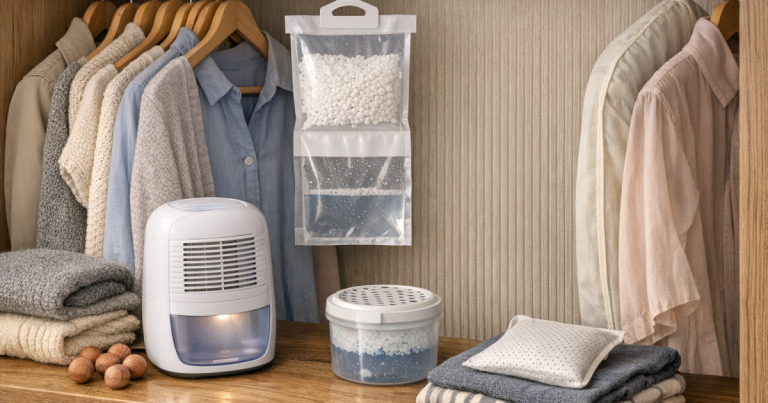
The best bag will struggle in the wrong location. Avoid storing wool and delicates against damp external walls, near radiators, in humid utility rooms or in loft spaces with large temperature swings. A cool, dry bedroom wardrobe or internal cupboard is usually a safer choice.
Do not place fabric bags directly on dusty floors if the base is not wipeable or sealed. If you use under-bed storage, make sure the area is clean and dry, and avoid dragging soft bags across rough carpet grippers or unfinished boards. In wardrobes, leave small gaps between bags so air can move and you can inspect items easily.
Key checks before you buy or reuse a storage bag
- Material: breathable fabric for long-term wool storage; plastic only for short-term cover or where moisture is very well controlled.
- Closure: smooth zip, covered zip path or drawstring that will not catch fibres.
- Depth: enough room for folded knitwear without forcing deep creases.
- Visibility: labels or small windows help you find items without rummaging.
- Cleanability: choose bags you can wipe, shake out or air between uses.
- Structure: reinforced sides or a stable base help prevent heavy stacks crushing delicate pieces.
- Pest control: storage bags should reduce access, not replace cleaning and regular inspection.
Common questions
Are plastic storage bags bad for wool?
Plastic is not automatically harmful, but it is a poor choice for long-term wool storage if there is any risk of trapped moisture. Use breathable fabric bags for seasonal storage and keep plastic covers for short-term dust protection.
Should cashmere be stored in a hanging garment bag?
Most cashmere jumpers should be folded, not hung. A hanging bag can protect a cashmere coat or wrap, but soft jumpers may stretch at the shoulders if left on hangers for a long time.
Do cedar balls or lavender sachets replace storage bags?
No. They can be part of a wardrobe routine, but they do not remove the need for clean garments, suitable bags and regular inspection. Keep sachets from direct contact with delicate fabrics in case oils or colour transfer mark the cloth.
How tightly should knitwear be packed?
Pack knitwear loosely enough that the bag closes without pressure. If the zip strains or the stack springs up when opened, the garments are too compressed for fabric-safe storage.
Can I store wool in the loft?
It is usually better to avoid loft storage for wool and delicates because temperature and humidity can fluctuate. If you have no alternative, use breathable protection inside a clean, lidded container and inspect the garments regularly.
Main points
The safest wardrobe storage bags for wool, knitwear and delicates are breathable, smooth inside, correctly shaped for the garment and not overfilled. Fold most knitwear, hang tailored pieces in breathable covers, keep delicate surfaces away from rough closures, and treat vacuum bags as occasional space savers rather than a default solution for fine fibres. Good storage is not just about making the wardrobe look tidy; it is about giving each fabric enough protection, airflow and space to come out wearable when you need it.