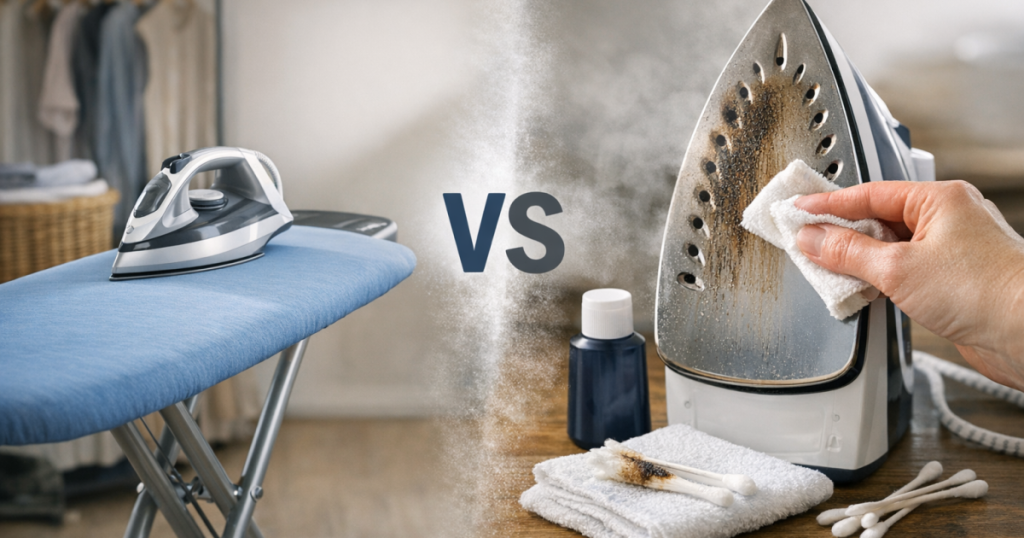
A wobbly ironing setup and a sticky iron soleplate cause different problems, so Minky vs Dylon is not a straight like-for-like choice. The better upgrade depends on whether your clothes are coming out creased because the surface underneath them is poor, or marked because the iron itself needs attention.
Quick Buying Links
Minky Homecare Ironing Board
The big picture The Minky Homecare Ironing Board is the more useful upgrade if your ironing feels slow, uneven or physically awkward.
Dylon Iron Cleaning Solution
The Dylon Iron Cleaning Solution is the more targeted purchase if the iron is leaving drag marks, shiny residue, brownish deposits or melted synthetic build-up on the soleplate.
For many UK households, the ironing bottleneck is not the iron alone. Shirt sleeves twist on a narrow board, trouser seams print through thin covers, and synthetic residues can transfer from the soleplate onto pale fabrics. A good board helps you press more evenly; a cleaning solution helps restore contact between the iron and fabric when the soleplate is dirty.
Use iron-cleaning products only as directed on the packaging, and keep them away from trims, printed areas and delicate fibres unless the label confirms suitability. A cleaner can help with residue on the iron, but it is not a stain remover for clothing and should not be used as a substitute for fabric-safe stain treatment.
The big picture
The Minky Homecare Ironing Board is the more useful upgrade if your ironing feels slow, uneven or physically awkward. It changes the working surface, which affects how garments sit, how seams line up and how much pressure you can apply without dragging fabric out of shape.
The Dylon Iron Cleaning Solution is the more targeted purchase if the iron is leaving drag marks, shiny residue, brownish deposits or melted synthetic build-up on the soleplate. It does not improve board stability, but it can help when the iron is the source of the problem.
Put simply: choose the board for better pressing workflow; choose the cleaner for soleplate maintenance. If both your setup and iron are poor, clean the iron first if it is marking clothes, then consider whether the board is still holding you back.
Minky vs Dylon: where the difference really sits
- Main job: the Minky board supports fabric while you press; the Dylon cleaner deals with residue on the iron’s soleplate.
- Best problem to solve: the board suits persistent creasing, awkward garment handling and poor ironing posture; the cleaner suits sticky glide, transfer marks and build-up.
- Effect on fabrics: a better board can reduce distortion and repeated pressing; a cleaner can reduce the risk of residue being dragged across clean fabric.
- How often it matters: the board affects every ironing session; the cleaner is an occasional maintenance product used when the iron needs cleaning.
- Limitations: the board will not clean a dirty iron; the cleaner will not fix a thin, unstable or unsuitable ironing surface.
What the Minky ironing board changes in practice
An ironing board is easy to underestimate because it looks passive, but it affects almost every movement. A steadier surface helps when you are pressing cotton shirts, school uniform, work trousers and bedding. A more suitable board shape can also make it easier to rotate garments without creating new creases while removing old ones.
Before buying, check the current Minky model’s board size, height adjustment, leg stability, cover quality and storage footprint. Do not assume every board in the range has the same dimensions or padding. If you press mostly shirts, blouses and uniforms, a stable full-size board is usually more helpful than a compact board that saves cupboard space but makes sleeves and hems awkward.
The board upgrade is also about fabric control. Wool-blend trousers, pleated skirts and cotton-rich shirts all benefit from being laid flat rather than tugged across a sagging cover. Less repositioning means less chance of stretching seams, glazing dark fabric or pressing in accidental folds.
There is a trade-off. A board takes up more room than a small bottle of cleaner, and it needs somewhere sensible to live. If you iron once a month and only touch up the odd hem, a new board may feel excessive. If you iron uniforms, office clothes or household linens weekly, it is more likely to earn its keep.
If you are weighing up whether to improve the board or the iron itself, the separate comparison of the Minky Homecare Ironing Board and Tefal FV4970 steam iron is a useful next step because it looks at two bigger ironing upgrades rather than a maintenance product.
What the Dylon iron cleaner changes in practice
Dylon’s iron-cleaning product is a maintenance choice, not a general ironing upgrade. It is most relevant when the soleplate no longer glides cleanly or when residue from starch, fusible interfacing, melted synthetic fibres or previous fabric treatments has built up on the iron.
A dirty soleplate can cause more than cosmetic marks. It can snag slightly on fabric, catch on seams and leave shiny or dull trails depending on the residue. On pale cottons, bedding and shirts, even a small amount of transfer can be noticeable. On dark synthetics, residue can create unwanted shine if the iron drags or overheats a local area.
Before using any iron-cleaning solution, check the iron manufacturer’s care instructions as well as the cleaner’s label. Pay attention to whether it is suitable for your soleplate type, how warm the iron should be, and whether steam vents need particular care. Avoid guessing, because using the wrong method can spread residue into the holes or onto the next garment.
The cleaner’s limitation is scope. It can help with an iron that is dirty, but it cannot correct poor steam output, a scratched soleplate, an unstable board or an unsuitable heat setting. If marks continue after careful cleaning, inspect whether the issue is fabric staining, detergent residue, limescale, heat damage or a garment finish reacting to ironing.
Fabric risks: which option protects clothes better?
For fabric protection, the winner depends on the risk you are trying to reduce. A better board helps prevent distortion, repeated pressing and seam impressions. It is useful for structured garments, cotton shirts, schoolwear and anything that needs smooth, even pressure.
An iron cleaner is more protective when the iron is actively contaminating clothes. If you have already noticed brown flecks, sticky patches or drag marks, cleaning the soleplate should come before ironing another white shirt or pale uniform top. Pressing with a dirty soleplate can set or spread marks, making the laundry problem worse.
Do not treat fabric stains by turning up the heat or ironing over them. Heat can make some stains harder to remove, especially protein-based marks and certain greasy residues. If you are building a small laundry kit, the guide to choosing a stain remover kit for everyday clothes explains what to keep on hand before stains reach the ironing stage.
Delicate fabrics need extra judgement. Velvet, lace, embellished fabrics and heat-sensitive synthetics should not be treated like everyday cotton. A board can help you create a safer setup, but it does not make a fabric suitable for direct pressing. If pile fabrics are part of your wardrobe, read how to steam velvet without crushing the pile before using pressure or direct soleplate contact.
When the Minky board is the better buy
- Your clothes are clean but still look badly finished. If shirts, blouses and uniforms keep coming off the board with new creases, the surface may be too small, unstable or thinly padded.
- You iron several garments in one session. Comfort and stability matter more when you are doing a week’s worth of laundry rather than one emergency shirt.
- You press seams and larger panels. Work trousers, cotton dresses, table linen and bedding benefit from a flatter, more predictable surface.
- Your current board rocks or sags. An unstable board makes you compensate with extra pressure, which can distort fabric and slow the job down.
- You already keep the iron clean. If the soleplate is in good condition, improving the support surface is likely to make a bigger everyday difference.
When Dylon Iron Cleaning Solution makes more sense
- The iron is dragging. If the soleplate no longer moves smoothly, residue may be increasing friction against the fabric.
- You have visible build-up. Marks, sticky patches or deposits on the soleplate should be dealt with before pressing clean clothes.
- You use starch, sprays or fusible products. These can leave deposits if used heavily or at unsuitable temperatures.
- You only need a maintenance fix. If your board is stable and comfortable, a cleaner may solve the immediate problem without replacing larger equipment.
- You iron pale garments often. White shirts, school polo shirts and light bedding show transferred residue quickly, so soleplate cleanliness matters.
Where a steam iron fits into the decision
Some readers will be deciding between a board, a cleaner and a new iron. A steam iron such as the Philips Azur Elite Steam Iron may be worth comparing if your current iron is unreliable, damaged or no longer producing steam properly, but it is not the same purchase as a cleaning solution. Do not replace a working iron just because the soleplate needs basic care, and do not expect a premium iron to compensate for a flimsy board.
A sensible order is: remove any soleplate residue first, assess the iron’s condition, then look at the board if the ironing still feels awkward. This avoids spending more than necessary and helps you identify the actual weak point in your routine.
What to remember
Choose the Minky Homecare Ironing Board if your main frustration is poor garment handling, slow ironing, unstable support or creases that keep reappearing as you work. It is the more practical long-term upgrade for households that iron regularly and want a better pressing surface.
Choose Dylon Iron Cleaning Solution if the iron itself is the problem: sticky glide, soleplate build-up or visible residue that risks transferring onto clothes. It is a smaller, more targeted fix and should be part of occasional iron maintenance rather than a replacement for a proper ironing setup.
The most fabric-safe decision is to solve contamination before comfort. If the iron is marking clothes, clean it before pressing anything else. If the iron is clean but the results still look untidy, the board is the more meaningful upgrade.
Quick Buying Links
Minky Homecare Ironing Board
The big picture The Minky Homecare Ironing Board is the more useful upgrade if your ironing feels slow, uneven or physically awkward.
Dylon Iron Cleaning Solution
The Dylon Iron Cleaning Solution is the more targeted purchase if the iron is leaving drag marks, shiny residue, brownish deposits or melted synthetic build-up on the soleplate.
Things readers ask
Can Dylon Iron Cleaning Solution replace a new ironing board?
No. It cleans residue from the iron’s soleplate when used as directed, but it will not improve board stability, padding, height or garment support.
Should I clean the iron before buying a better board?
Yes, if the soleplate is dirty or dragging. Cleaning the iron first prevents residue transfer and helps you judge whether the board is still causing poor results.
Can a better ironing board stop shiny marks?
It can help by giving steadier support, but shiny marks usually relate to heat, pressure, fabric type or direct contact. Use a pressing cloth and lower heat where the care label requires it.
Is Dylon Iron Cleaning Solution suitable for every iron?
Check both the cleaner label and the iron manufacturer’s instructions. Soleplate coatings and steam-hole designs vary, so suitability should not be assumed.
Which is better for school uniforms?
For regular uniform ironing, the board usually makes the bigger everyday difference. If the iron is leaving marks on white shirts or polo tops, clean the soleplate first.