Scrubs fade and shrink fastest when they are washed like ordinary dark laundry: overloaded drum, too much heat, strong stain products and rushed drying. The safest way to wash healthcare scrubs is to keep hygiene requirements separate from fabric preservation, then choose the gentlest method your workplace policy and care label allow.
Most NHS and private healthcare uniforms are cotton-rich, polyester-cotton or stretch blends, so the right routine is usually more about consistency than harsh treatment.
Professional guidance: Workplace laundering of scrubs contaminated with blood, body fluids or infection-risk material should be handled through the approved employer or professional laundry process, following NHS or local infection prevention policy and UK workplace safety requirements.
At a glance
- Check the care label and your employer’s uniform policy before choosing temperature or detergent.
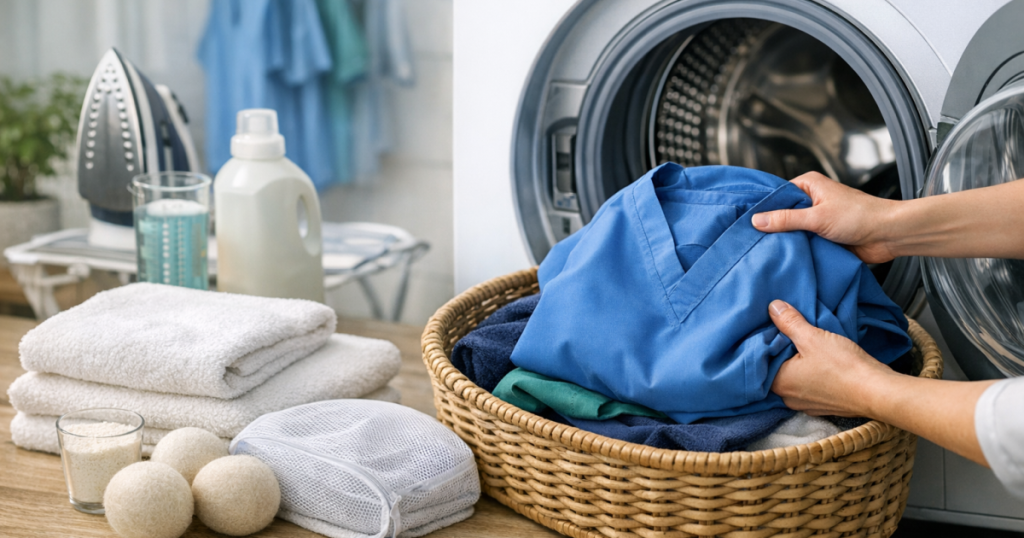
- Wash scrubs separately from heavy towels, denim, bedding and lint-shedding fabrics.
- Turn tops and trousers inside out to reduce surface abrasion and colour loss.
- Use a measured dose of detergent; too much can leave residue and dull the fabric.
- Dry on low heat or air dry where possible to reduce shrinkage and seam twisting.
- Treat stains before washing, but avoid harsh bleaching unless the care label and workplace rules allow it.
Start with the label and uniform policy
The care label tells you the fabric’s limits; the workplace policy tells you the hygiene standard expected. When they seem to conflict, hygiene requirements come first, particularly in clinical settings. For non-contaminated scrubs, many fabrics tolerate routine machine washing well, but repeated high heat can fade darker colours and shorten the life of elastic, stitching and stretch fibres.
If your employer requires a specific wash temperature, laundry route or bagging process, follow that instruction. If you launder your own non-contaminated scrubs at home, use the highest temperature that is both allowed by the care label and appropriate for your workplace expectations. For colour protection, a 30°C or 40°C wash is gentler; for hygiene-driven laundering, a warmer cycle may be required. The key is not to guess.
Sort scrubs before they reach the machine
Good sorting prevents a lot of fading. Wash dark navy, black, burgundy and bottle green scrubs away from pale garments, especially for the first few washes. New dark scrubs can release loose dye, while older pale scrubs can pick up greying from mixed loads.
- Close pockets and remove items: Pens, tape, gloves, receipts and paper towels can stain or shred in the wash.
- Turn garments inside out: This protects the face of the fabric from rubbing against the drum and other clothes.
- Separate by fabric weight: Lightweight scrub tops should not be washed with rough towels or heavy work trousers.
- Keep workwear separate: A dedicated scrub load reduces lint transfer and avoids cross-contamination with household laundry.
If your scrubs are visibly soiled, keep them apart from ordinary laundry until they are processed according to your workplace rules. Do not shake soiled garments, as that can spread particles into the surrounding area.
Pre-treat stains without stripping the colour
Healthcare scrubs can pick up a mix of stains: hand gel splashes, food, tea, ointment, ink, make-up, body fluids and cleaning-product marks. The safest approach is targeted pre-treatment rather than adding stronger products to the whole wash.
Rinse water-based marks with cool water as soon as practical. Dab, rather than scrub, because vigorous rubbing can roughen the fabric and create a pale patch. For oily marks from creams or ointments, use a small amount of liquid detergent directly on the stain, leave it for 10–15 minutes, then wash as usual. For a broader home setup, our guide to choosing a stain remover kit for everyday clothes explains which treatments are useful without overcomplicating the laundry shelf.
Avoid chlorine bleach on coloured scrubs unless the label clearly allows it and your workplace process requires it. Bleach can weaken fibres, fade panels unevenly and yellow some finishes. Oxygen-based stain removers can be gentler on colour, but they still need a patch test on an inside seam if the garment is dark or branded.
Choose a wash cycle that cleans without punishing the fabric
Use a normal cottons or mixed-fabric cycle for everyday non-contaminated scrubs, rather than a very short quick wash. Quick cycles often use less water and less agitation time, which can leave detergent residue, odour and soil behind. A full cycle gives the detergent time to work without needing excessive heat.
- Temperature: Use the care-label temperature unless your workplace requires a different hygiene standard. Lower temperatures protect colour; higher temperatures can accelerate fading and shrinkage.
- Spin speed: A moderate spin is usually enough. Very high spin speeds can crease cotton-rich scrubs heavily and strain seams over time.
- Load size: Leave room for garments to move. An overfilled drum causes poor rinsing and extra friction.
- Detergent dose: Measure for your load size and water hardness. Using extra detergent does not make scrubs cleaner; it can leave a dull film and trap odour.
Non-biological detergent can be a sensible choice for people with sensitive skin, while biological detergent can help with protein-based stains if the care label and wearer’s skin tolerate it. The fabric-care point is simple: use enough detergent to clean, not so much that the rinse cycle cannot remove it.
Handling common scrub stains
Ointment, moisturiser and barrier cream
These marks often look darker than the surrounding fabric and can survive a cool wash. Work a small amount of liquid detergent into the area, wait 10–15 minutes, then wash. If the mark remains, avoid tumble drying until it is gone, as heat can set oily residue. For tougher workwear oil marks, the principles in our guide to removing grease stains from work trousers are also useful for robust scrub fabrics.
Ink and pen marks
Blot fresh ink with kitchen roll, keeping the stain from spreading. Do not scrub across the fabric. Use a suitable stain remover according to its label, then wash separately so loosened dye does not transfer.
Deodorant and antiperspirant build-up
White or waxy marks under the arms can make dark scrubs look faded even when the dye is intact. Pre-treat the area with detergent and use a full rinse cycle. Avoid fabric conditioner here, as it can add more coating to fibres.
Dry scrubs carefully to prevent shrinking
Drying is where many scrubs lose their shape. Cotton-rich scrubs are more vulnerable to shrinkage, while polyester-cotton blends are usually more stable but can still suffer from seam puckering, static and heat damage.
Air drying is the safest option for colour and fit. Hang tops on a hanger or drying rail, smooth seams by hand and reshape trousers before they dry. Keep dark scrubs away from strong direct sunlight, which can fade shoulders, sleeves and hems unevenly.
If you use a tumble dryer, choose a low heat setting and remove scrubs while they are just dry, not baked. Overdrying makes cotton fibres contract more and increases creasing. It can also shorten the life of elasticated waists and stretch panels.
Ironing and finishing without shine
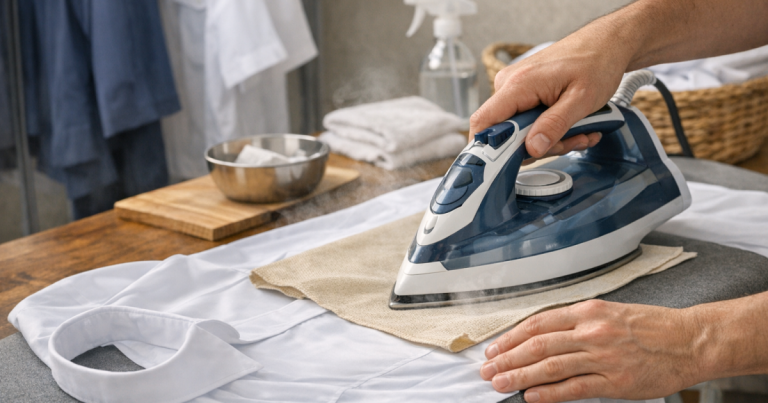
Some workplaces expect scrubs to look crisp, even when the fabric is practical rather than formal. Iron inside out on the care-label setting, especially for dark colours, to avoid shine. Use steam only if the label permits it and the fabric responds well. For printed logos, heat-sealed names or reflective trims, avoid direct ironing unless the garment label says it is safe.
If your scrubs are coming out stiff, dull or scratchy, the cause is often detergent residue, hard-water minerals or overloading rather than the fabric itself. Run a proper rinse, reduce detergent slightly next time and avoid adding fabric conditioner automatically.
Keep colour strong over repeated washes
Colour loss is cumulative, so small habits matter. Keep dark scrubs inside out, wash similar colours together, avoid unnecessary hot cycles and remove garments promptly once the cycle ends. Leaving damp scrubs in the machine encourages creasing and musty smells, which then tempts people to rewash them harshly.
For workwear with visibility panels or reflective elements, follow the specific care label because bright finishes can be damaged by heat, bleach and abrasion. The same fabric-preservation thinking applies in our advice on keeping hi-vis workwear bright safely, particularly where brightness and safety markings matter.
Store clean scrubs so they stay fresh
Scrubs should be fully dry before folding or hanging. Even slight dampness can lead to odour in a locker, drawer or kit bag. Store clean uniforms away from shoes, used laundry and damp outerwear, and avoid sealing them in plastic bags for long periods unless your workplace has a specific process.
If you rotate several sets, put freshly washed scrubs at the back and use the oldest clean set first. This prevents one pair from being washed constantly while others sit unused. For uniforms that have been packed away between placements, seasons or job changes, use the steps in removing musty smells from stored clothes safely before wearing them again.
Common questions
How often should I wash healthcare scrubs?
Wash them after each wear, or more often if your employer’s infection-control policy requires it. Scrubs worn in clinical environments should not be treated like ordinary casual clothing.
Can I wash scrubs with towels or bedding?
It is better not to. Towels and bedding add lint, bulk and abrasion, which can dull colour and increase pilling. A separate scrub load gives a cleaner rinse and protects the fabric surface.
What temperature stops scrubs shrinking?
There is no single safe temperature for every fabric. Lower temperatures are gentler on fit and colour, but you must follow the care label and any workplace hygiene requirement. Shrinkage is often caused by repeated high heat during drying as well as washing.
Should I use fabric conditioner on scrubs?
Use it cautiously, if at all. Fabric conditioner can leave a coating that traps odour, reduces absorbency and builds up under the arms. A good rinse and correct detergent dose usually matter more.
Why do my dark scrubs look faded after only a few washes?
The usual causes are hot washing, tumble drying on high heat, overloaded drums, harsh stain products or detergent residue. Turning scrubs inside out and using a measured detergent dose can make a visible difference.
What stands out
The best scrub-care routine is not the harshest one; it is the most controlled one. Follow workplace hygiene rules first, then protect the fabric by sorting properly, pre-treating stains, avoiding unnecessary heat and drying with care. That balance keeps scrubs professional-looking for longer without compromising the standards expected in healthcare settings.