Satin is unforgiving because droplets sit visibly on its smooth face before they spread or dry. The safest way to steam satin dresses is to keep moisture moving, avoid direct spitting from the steamer, and let the fabric dry undisturbed before wearing or storing it.
The key is not simply using less steam. It is controlling where the moisture lands, checking the fibre content, and treating the glossy surface as a finish that can mark, flatten or shine if handled roughly.
The short version
- Check the care label first, especially for silk, acetate, viscose and embellished satin.
- Use clean water recommended by your steamer’s instructions, and purge the steamer away from the dress before starting.
- Steam from the reverse side where possible, keeping the nozzle off the fabric.
- Work in short downward passes rather than holding steam over one patch.
- Let the dress dry fully on a hanger before touching, wearing or storing it.
Why satin gets water marks so easily
Satin is a weave, not a fibre. A satin dress might be polyester satin, silk satin, acetate satin, viscose satin or a blend. The common feature is the smooth, light-reflecting face of the fabric. That glossy surface shows changes in moisture, pressure and nap direction much more clearly than a plain cotton or wool weave.
Water marks usually happen for one of four reasons: mineral deposits in the water, large droplets from a steamer that has not warmed up properly, uneven dampness across the surface, or rubbing while the fabric is still moist. In hard-water parts of the UK, mineral spotting can be more noticeable, particularly on dark or jewel-coloured satin.
Silk and acetate satin need the most caution. Silk can develop rings if water dries unevenly, while acetate can be sensitive to heat and moisture. Polyester satin is often more forgiving, but it can still show shiny pressure marks if pressed or steamed too aggressively.
Before you start: the fabric checks that matter
Read the care label before any steaming. Look for the fibre content, washing or dry-cleaning advice, and ironing symbols. If the label warns against steam, heat or water, do not try to override it with a quick refresh.
Check the dress in daylight before steaming. Water marks are easier to avoid than remove, so deal with visible residue first. Make-up, body lotion, deodorant and perfume can all react badly with heat and moisture. If the neckline or straps have foundation transfer, clean that area before refreshing the garment; the steps in removing foundation stains from shirt collars are useful for understanding how make-up can set when heat is applied.
Test in a hidden place, such as an inside seam allowance or the underside of the hem. Hold the steamer at the distance you plan to use, give one short pass, then let the area dry completely. Do not judge the result while it is still damp; satin often looks darker until moisture has evaporated.
Set up the dress and steamer properly
Hang the dress on a sturdy hanger that supports the shoulders without stretching them. A padded hanger is useful for bias-cut or strappy satin because it reduces stress on narrow seams. Fasten zips, buttons or hooks so the garment hangs in its intended shape.
Choose a bright, well-ventilated room rather than a damp bathroom. Bathroom steam can add uncontrolled moisture to the fabric and make drying slower. Place a clean towel beneath the dress if you are worried about drips from the steamer, but do not let the dress rest against a wet surface.
Fill the steamer with the type of water recommended by the appliance instructions. Many people reach for deionised water in hard-water areas, but some steamers are designed for tap water or a specific mix, so check the manual. Old water left in the tank can carry odour or sediment, so empty and refill before working on occasionwear.
Let the steamer heat fully. Then point it away from the dress and press the steam trigger for a few seconds. This clears spitting, condensation and the first uneven bursts of steam that are most likely to leave droplets.
Step-by-step: steaming satin without water marks
1. Turn the dress to the safer side
Where the dress design allows, steam from the reverse side. This protects the glossy face from direct droplets and reduces the chance of shine changes. For lined dresses, lift the lining away from the outer satin so you are not trapping moisture between layers.
2. Keep the nozzle off the fabric
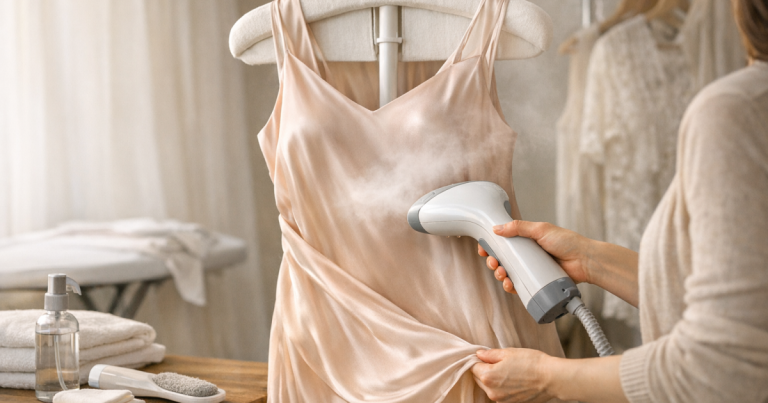
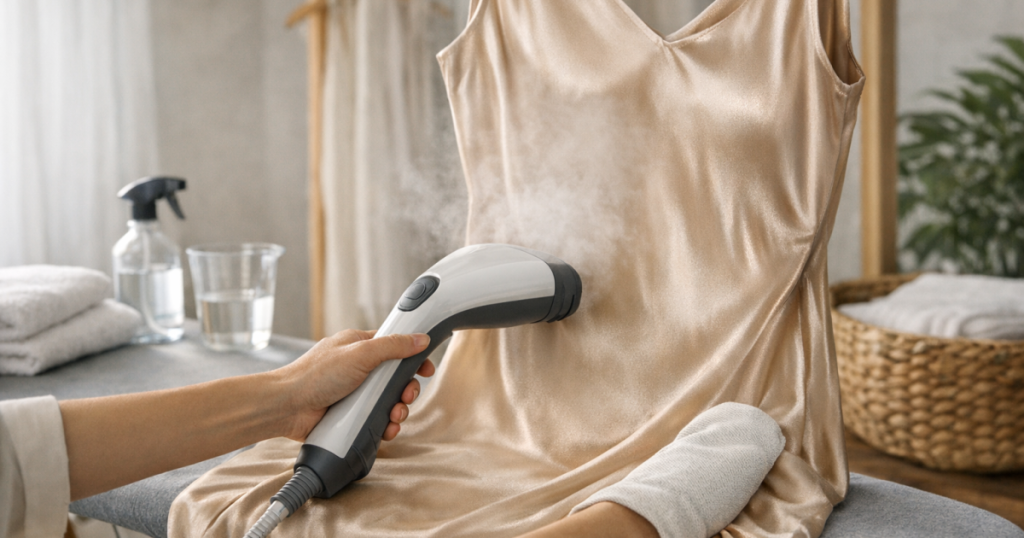
Do not press the steamer head onto satin. Hold it a short distance away, close enough for steam to relax the creases but far enough that condensation is not transferred directly. Keep your other hand below or to the side of the steam path, gently tensioning the fabric without pulling seams out of shape.
3. Work top to bottom in short passes
Use smooth downward movements, pausing only briefly over creased areas. Avoid holding steam over one spot until it becomes visibly wet. Satin responds better to several light passes than one heavy blast.
4. Let gravity do some of the work
After steaming a panel, leave it hanging while you move to another section. Do not smooth the surface with your palm while it is damp, as hand pressure can create dull patches or finger marks. If a crease is stubborn, return to it after a minute rather than saturating it immediately.
5. Treat seams, hems and darts gently
Thicker areas such as side seams, bust darts and hems hold moisture longer than flat panels. Use less steam around them and allow more drying time. If the hem is rippled, hold the dress so the hem hangs freely and steam from the inside, rather than forcing it flat against a board.
6. Respect pleats, ruching and bias cuts
Pleated satin needs a lighter touch because steam can soften the set of the folds. Steam along the direction of the pleat, not across it, and do not tug the fabric sideways. If your dress has permanent pleats, the care principles are similar to those used when you wash a pleated skirt without flattening the pleats: support the shape, avoid heavy moisture and let the garment dry in its natural lines.
What to do if droplets land on the satin
Stop steaming as soon as you see droplets. Do not rub them, even with a soft cloth. Rubbing wet satin can disturb the surface and leave a dull patch that looks worse than the original water spot.
If the droplet is sitting on the surface, touch it very lightly with the corner of a clean white absorbent cloth to lift excess moisture. The aim is to blot the droplet, not scrub the fabric. Then leave the area to dry naturally on the hanger.
If a faint ring appears after drying, test a hidden area before doing anything else. Sometimes a very light, wider mist of steam from the reverse side can even out the moisture boundary, but this is risky on silk and acetate. For expensive, vintage, embellished or sentimental dresses, a specialist dry cleaner is the safer route than repeated home attempts.
Common mistakes that cause marking
- Starting too soon: A steamer that has not fully heated is more likely to spit water.
- Using stale tank water: Standing water can contain sediment or odour that transfers to fabric.
- Steaming over stains: Heat and moisture can set make-up, perfume residue or food marks.
- Touching the satin while damp: Finger pressure can leave uneven shine or dull patches.
- Using a wet pressing cloth: A cloth that is too damp can create broad water marks on the face of the fabric.
- Rushing drying time: Storing or wearing satin before it is dry can trap creases and moisture shadows.
When a steam iron is better left alone
A steam iron can release creases from some satin fabrics, but it also increases the risk of shine, edge marks and accidental water spotting. If you use an iron, use the lowest suitable setting on the care label, work from the reverse side, and place a clean dry pressing cloth between the iron and the fabric. Do not press hard.
For most satin dresses, a garment steamer is gentler than ironing because it does not flatten the weave under pressure. The exception is a crisp construction detail, such as a sash or tailored fold, where a careful press may be needed. Even then, test first and avoid dragging the iron across the satin.
After steaming: drying and storage
Leave the dress hanging in open air until it is completely dry to the touch. Check thicker seams and lined areas, not just the front panel. Satin can feel dry on the surface while still holding moisture inside a hem or waistband.
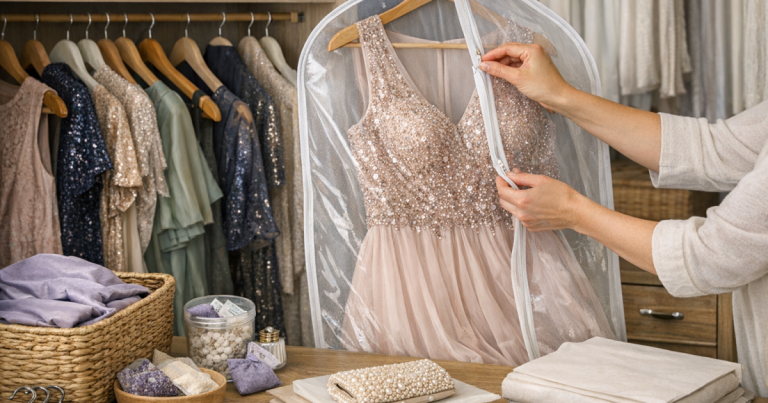
Once dry, store the dress with enough space around it so the surface is not crushed. Use a breathable garment cover rather than a plastic dry-cleaning sleeve for longer storage, as trapped humidity can encourage odour and marking. If the dress needs laundering before storage, protect trims and delicate straps in the wash; choosing the right mesh laundry bags for delicates can help reduce snagging and abrasion.
Straight answers
Can I steam satin dresses on the outside?
You can on some polyester satin, but the reverse side is safer. If you must work on the outside, keep the steamer moving, avoid contact with the fabric, and test first in a hidden area.
Should I use distilled or deionised water?
Use the water type recommended by your steamer’s instructions. In hard-water areas, deionised water can reduce mineral spotting only if the appliance allows it.
Can I steam a satin dress on the morning of an event?
Yes, but allow drying time. Satin should be completely dry before you put it on, otherwise straps, waistbands and seated areas may crease or show damp shadows.
Why did my satin go dull after steaming?
Dullness usually comes from rubbing, pressure, over-wetting or heat that is too strong for the fibre. Let the area dry first; if the dull patch remains, avoid further home treatment on silk or acetate.
Is it safe to steam embellished satin?
Be cautious. Beads, sequins, glue, metallic threads and trims may react differently from the main fabric. Steam from the reverse side where possible and keep moisture away from glued or delicate decoration.
Key takeaways
Water marks on satin are usually caused by uneven moisture, steamer spitting or handling the fabric while it is damp. The safest routine is to check the label, test a hidden area, clear the steamer away from the garment, work from the reverse side and let the dress dry fully on the hanger.
Use the least steam that relaxes the crease. Satin rewards patience: light passes, clean water and careful drying will do more for the finish than heavy steam or last-minute pressing.