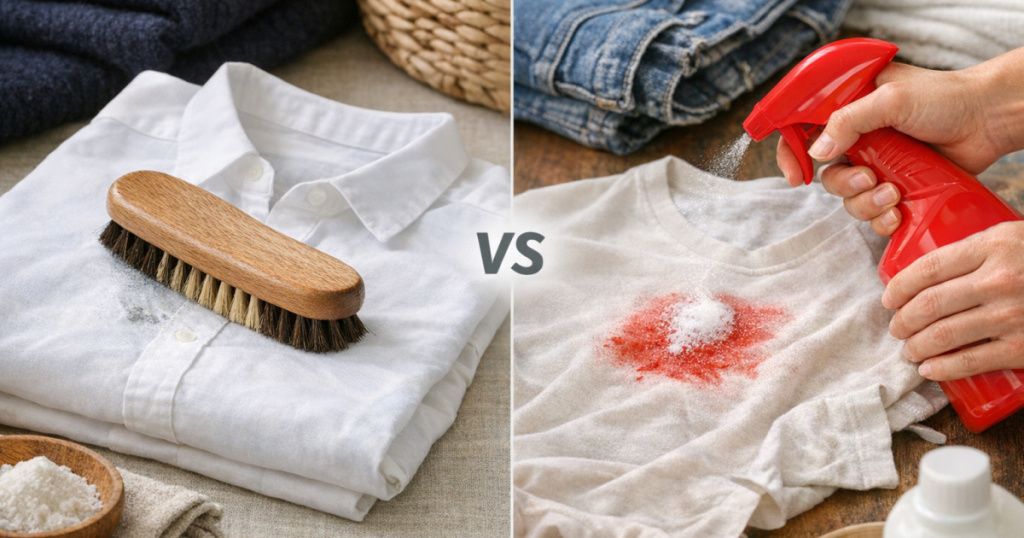
The Laundress Clothing Brush vs Zout is not a like-for-like battle: one is for dry surface care, the other for targeted stain treatment before washing. The right choice depends on whether you are dealing with lint, dust and flattened fibres, or a visible mark that needs lifting from washable fabric.
Quick Buying Links
The Laundress Clothing Brush
The Laundress Clothing Brush vs Zout is not a like-for-like battle: one is for dry surface care, the other for targeted stain treatment before washing.
Zout Laundry Stain Remover
Zout Laundry Stain Remover is a pre-wash treatment.
For many UK wardrobes, the more useful answer is not simply one product over the other. A brush can keep wool coats, tailoring and knitwear looking fresher between cleans, while a stain remover is for spills, collar grime and food marks that would otherwise go through the wash untreated. Used in the wrong situation, either can disappoint or even make fabric harder to rescue.
The big picture
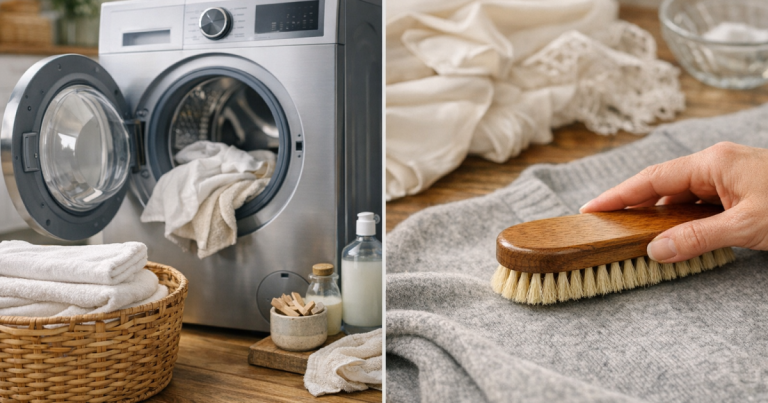
The Laundress Clothing Brush is a maintenance tool. It removes surface lint, dust, fluff, pet hair and loose debris by brushing the fabric dry. It is most useful before storage, before wearing a coat, or after a garment has picked up fibres from scarves, car seats or wardrobes.
Zout Laundry Stain Remover is a pre-wash treatment. It is designed to be applied to stains before laundering, so it belongs in the washing routine rather than the wardrobe-refresh routine. It is the more relevant option for washable shirts, school uniform, cotton tops, workwear and casual clothes with localised staining.
The key distinction is moisture. A clothing brush does not add liquid, detergent or chemicals, so it is useful when you want to tidy a garment without washing it. Zout introduces a stain-treatment formula, so you need to check the garment care label, fabric type and colourfastness before using it. That difference matters most on wool, silk, satin, suede, embroidery and structured garments.
Best choice by problem
- Choose The Laundress Clothing Brush for: wool coats, tailored jackets, trousers, dry lint, dust, pet hair, loose fluff and refreshing garments between wears.
- Choose Zout Laundry Stain Remover for: washable garments with food marks, collar build-up, cuff grime, everyday stains and stains that need treatment before going into the machine.
- Do not use a brush as a stain remover: brushing wet or greasy marks can spread residue and push it deeper into the weave.
- Do not use a stain remover as a general refresher: unnecessary wet treatment can stress dyes, finishes and delicate fibres.
- For mixed problems: remove dry debris first, then treat only the stained area if the care label allows washing and stain treatment.
Side-by-side comparison
- Main job: The Laundress option is for dry grooming and surface debris. Zout is for pre-wash stain treatment.
- Best fabric match: A brush suits robust wool, coats, suiting and textured outerwear when used gently with the grain. Zout suits washable everyday fabrics where the care label allows stain treatment.
- Risk area: A brush can roughen delicate fibres if used aggressively. Zout can affect colour, trims or fibre-sensitive fabrics if used without testing.
- When you use it: Brush before wearing, airing or storing. Use Zout before laundering and follow the product label for timing and rinsing or washing.
- What it cannot do: A brush will not remove set-in stains. Zout will not remove pilling, dust, lint or pet hair.
- Running cost: A brush is a reusable tool. A stain remover is a consumable, so it needs replacing as you use it.
- Storage: The brush belongs near coats, wardrobes or your laundry shelf. Zout should be stored with laundry liquids, away from children and used according to the label.
Where The Laundress Clothing Brush performs best
A good clothing brush earns its place if your biggest frustration is clothing looking tired even when it is not dirty. Wool coats, dark tailoring and heavier winter garments show lint and dust quickly, particularly in homes with pets or central heating. Brushing can restore a neater surface without sending a coat to the dry cleaner after every wear.
The Laundress brush is most useful on garments that benefit from dry, directional care. With wool or structured outerwear, work in short strokes and follow the nap rather than scrubbing back and forth. The aim is to lift loose matter, not abrade the cloth. If you are comparing brush tools for outerwear, the guide to choosing a clothes brush or lint roller for coats explains when a brush is preferable to sticky adhesive sheets.
Its value is partly about fabric longevity. Repeated washing can be hard on wool blends, linings, shoulder structure and tailored finishes. A brush gives you another option: tidy the surface, air the garment, spot-check for actual stains, then decide whether it really needs cleaning. That is particularly helpful for coats, blazers, formal trousers and darker office wear.
Pros of the brush
- Reusable and low-waste compared with disposable lint sheets.
- Useful between washes and dry cleans.
- Good for surface dust, lint and light pet hair.
- Helps maintain the look of wool coats and tailoring.
- No wetting, rinsing or drying time needed.
Limits of the brush
- It will not dissolve oily marks, food stains or perspiration build-up.
- Too much pressure can disturb delicate weaves or raised fibres.
- It is not the right tool for wet stains, mud that has not dried, or pollen.
- It needs occasional cleaning so debris is not transferred back onto clothing.
Where Zout Laundry Stain Remover makes more sense
Zout belongs in the pre-wash stage. It is the more practical option when a garment is washable and the problem is a defined stain rather than general dullness. Think school shirts with food marks, cotton T-shirts with sauce splashes, work tops with cuff grime, or casual trousers with everyday marks around pockets and hems.
The important word is washable. Before applying any stain remover, check the care label and test colourfastness on a hidden area. Avoid assuming that every fabric can tolerate the same treatment. Wool, silk, leather, suede, embellished fabrics and dry-clean-only garments need a more cautious approach, and some stains are best handled without rubbing or wetting. Pollen is a good example; the safest first step is usually lifting loose grains rather than smearing them, as covered in the guide to removing pollen stains from clothes without smearing them.
For everyday family laundry, Zout can be useful because stains often need attention before they set. A detergent alone may not deal evenly with collars, cuffs and localised food marks, especially on garments that are washed at lower temperatures. A pre-treatment gives the stained area more focused attention before the item goes into the machine.
Pros of Zout
- Targets visible stains before washing.
- Useful for washable cotton, polyester and everyday blends when the label allows.
- More suitable than brushing for greasy, food-based or ingrained marks.
- Fits easily into a normal laundry routine for uniforms and workwear.
- Can reduce the temptation to over-wash a whole garment repeatedly.
Limits of Zout
- Not a dry-care product for coats or tailoring.
- Requires label checks, colourfastness testing and correct washing afterwards.
- May be harder to find in some UK shops than more common stain-remover brands, so check the exact product and seller before buying.
- Not suitable for every fibre, finish, trim or embroidered area.
Fabric situations where the decision changes
Wool coats and tailored jackets
The brush is the better first tool. Dust, scarf fibres and lint usually sit on the surface, and a dry brush lets you improve appearance without wetting the cloth or lining. Zout is not the natural choice for structured coats unless the care label specifically allows wet stain treatment, which is uncommon for many tailored outerwear pieces.
School uniform and washable workwear
Zout is more relevant for shirts, polos, washable trousers and PE kit when there are food, grass or grime marks. A brush can still help remove dry fluff from blazers or trousers, but it will not deal with collar staining. If logos or stitching are involved, use stain treatment carefully around raised threads and read the advice on how to wash embroidered workwear without loosening logos before rubbing or soaking branded areas.
Delicates, satin and embellished fabrics
Neither product should be used casually on delicate pieces. A brush can snag loose threads, beads or fine weaves. A stain remover can leave rings, affect dyes or disturb finishes. For satin, silk-like fabrics, pleats, lace or decorative trims, spot-test only if the care label permits and avoid aggressive rubbing. When in doubt, prioritise the garment label over the promise of any product.
Pet hair and lint on dark clothes
The brush wins here. A stain remover cannot remove hair or lint. Use steady strokes, clean the brush as debris builds up, and avoid grinding hair into the weave. On very smooth synthetic fabrics, a lint roller may sometimes be quicker, but a brush is often better for wool and textured outerwear.
Food spills and greasy marks
Zout is the better candidate if the garment is washable. Blot fresh residue first rather than brushing it across the fabric. Apply stain remover only to the affected area and follow the product label. Avoid heat drying until the mark has gone, because tumble drying or ironing can make some stains more difficult to shift.
What to check before buying either one
- Your fabric mix: If your wardrobe is heavy on wool coats, knitwear and tailoring, a brush will be used more often. If you mostly manage school uniform, casual cottons and washable workwear, stain remover may deliver more value.
- Your tolerance for care steps: A brush is quick and dry. Zout requires testing, applying, waiting as directed and washing afterwards.
- Storage and mess: A brush is simple to store and does not spill. A stain remover needs upright storage and careful use near coloured garments, trims and laundry baskets.
- Garment finish: Raised nap, embroidery, pleats, satin finishes and delicate trims all need extra caution.
- UK availability: The Laundress brush and Zout may not sit beside the same supermarket laundry products. Check current UK retailer listings, delivery costs and the exact item name before comparing value.
- Existing products: If you already use a reliable detergent such as Fairy Non-Bio Laundry Detergent for sensitive family laundry, a separate stain remover may be reserved for specific marks rather than every wash.
How they fit into a sensible garment-care routine
For a balanced setup, treat these products as different tools rather than rivals. Start with the least invasive option that matches the problem. If a coat looks dusty, brush it and air it. If a washable shirt has a sauce mark, blot and pre-treat it. If a delicate dress has a mystery stain, avoid improvising with either until you have checked the care label and fabric behaviour.
A simple order of operations helps prevent mistakes: identify whether the mark is dry debris or an actual stain, check the care label, remove loose material gently, then decide whether wet treatment is appropriate. This matters because a brush can smear a wet stain, while a stain remover can over-treat a garment that only needed surface grooming.
Also think about what happens after treatment. Brushed garments may only need airing before returning to the wardrobe. Treated garments need washing according to the label, then checking before drying. If the stain is still visible, repeat the correct stain process before applying heat.
FAQ
Can I use Zout on wool?
Only use it if the product label and the garment care label both allow it. Many wool garments are sensitive to wet stain treatment, rubbing and enzyme-style stain removers, so a dry brush or professional cleaning route is often safer for structured wool pieces.
Will a clothing brush remove deodorant marks?
It may lift dry powdery residue from the surface, but it will not properly remove built-up deodorant or perspiration staining. Washable garments usually need suitable pre-treatment and laundering.
Is Zout better than normal laundry detergent?
It does a different job. Detergent cleans the whole wash load, while a stain remover targets a marked area before washing. For clean-looking laundry with a localised stain, pre-treatment can be more focused than simply adding more detergent.
Can I use both products on the same garment?
Yes, but only when the fabric allows it and the problems are separate. Remove dry lint or dust first, then treat a washable stain carefully. Do not brush wet stain remover into the fabric.
Which is more useful for a small flat?
If you wear wool coats or dark tailoring often, the brush earns its space because it is compact and reusable. If your laundry basket is mostly washable everyday clothing with spills and marks, Zout is likely to be used more often.
Which one should you choose?
For most wardrobes, the Laundress Clothing Brush vs Zout decision comes down to whether you are trying to maintain appearance or remove a stain. Choose The Laundress Clothing Brush if your priority is dry, regular upkeep for coats, blazers, trousers and knitwear. It is the neater, lower-intervention option for garments that are not dirty enough to wash but need to look sharper.
Choose Zout Laundry Stain Remover if your main issue is visible staining on washable clothing. It is the more useful laundry-shelf product for school shirts, casual tops, workwear and everyday fabrics that can tolerate pre-treatment. Check labels carefully, test colours, and avoid using it as a blanket solution for delicate or dry-clean-only garments.
The strongest setup is often both: a brush for preventing clothes from looking tired between cleans, and a stain remover for washable items that need targeted help before laundering. If you only buy one, match it to the problem you face every week, not the one you deal with once a season.
Quick Buying Links
The Laundress Clothing Brush
The Laundress Clothing Brush vs Zout is not a like-for-like battle: one is for dry surface care, the other for targeted stain treatment before washing.
Zout Laundry Stain Remover
Zout Laundry Stain Remover is a pre-wash treatment.