Lily and other flower pollen can leave a stubborn yellow-orange dust on fabric, but the biggest mistake is trying to rub it away. To remove pollen stains cleanly, lift the dry grains first, then treat the remaining colour only after the loose pollen has gone. Work slowly, keep water away at the start, and check the care label before using any detergent or stain treatment.
Pollen is not like mud or food residue. It is fine, powdery and highly transferable, so one rushed wipe can turn a neat speckled patch into a larger stain. The safest method is dry removal first, then targeted washing.
The short version
- Do not rub, brush hard or dab with a wet cloth while pollen is still sitting on the fabric.
- Take the garment outside or hold it over a bin and gently shake from the reverse side.
- Use sticky tape to lift remaining grains from sturdy fabrics, pressing lightly rather than dragging.
- Once loose pollen has gone, treat the coloured mark with a small amount of liquid detergent or a fabric-appropriate stain remover.
- Wash according to the care label, using the warmest temperature the garment safely allows.
- Air dry first. Heat from a tumble dryer or iron can set a remaining yellow mark.
Why pollen smears so easily
Pollen grains are designed to cling. On clothes, they catch in the weave, nap or surface texture of the fabric. Lily pollen is particularly noticeable because its pigment is strong and oily enough to leave a bright mark if it is pressed into the fibres.
Water can make the problem worse at the beginning. A wet cloth turns dry pollen into a paste and helps carry the colour deeper into cotton, linen, viscose and blends. Rubbing adds friction, which spreads the pigment and may roughen delicate fibres. That is why the first stage should be about lifting, not cleaning.
Before applying any stain treatment, especially on coloured garments, satin, silk-look polyester, viscose or printed fabric, test the garment for colourfastness on a hidden seam or hem. A pollen mark is annoying, but dye loss from an unsuitable treatment can be harder to disguise.
Step-by-step: removing pollen without spreading it
1. Stop wearing the garment if you can
If the pollen is fresh, avoid pressing a coat, cardigan or bag strap over it. Movement can grind the particles into the fabric. If you are out, leave the stain alone until you can deal with it properly. It is better to wait than to wipe it with a damp napkin.
2. Shake from the back of the fabric
Take the item outside, or hold it carefully over a bin or sink. Turn the stained area so the pollen is facing downwards and tap from the reverse side. The aim is to let gravity loosen the grains without pushing them further in.
For a shirt, blouse or dress, support the fabric with one hand and tap lightly with the other. For heavier cotton or denim, a firmer flick from the reverse side is usually fine. Avoid snapping delicate seams or stretching knitted fabric.
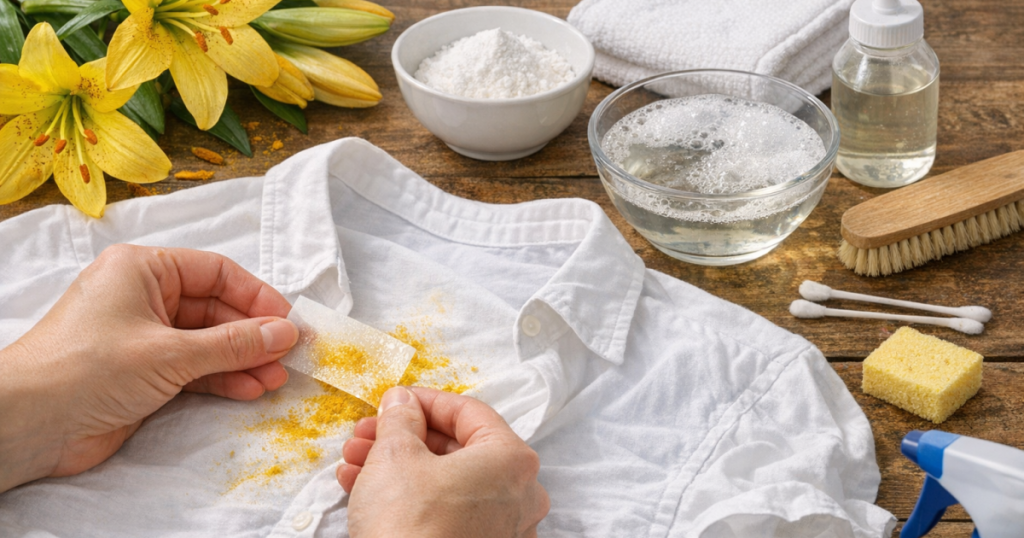
3. Lift remaining grains with tape
Use a piece of clean sticky tape on washable, reasonably sturdy fabrics. Press it gently onto the pollen and lift straight off. Replace the tape as soon as it picks up visible dust. Do not drag the tape sideways, as this can smear the pigment across the surface.
For textured fabrics, use an even lighter touch. Ribbed cotton, brushed fabric and fine knits can hold pollen in surface fibres, so several light lifts are safer than one heavy press. If the tape pulls fibres or distorts the fabric, stop and move to shaking only.
4. Vacuum very gently for heavier items
For coats, upholstery-weight skirts or thick jumpers, a vacuum hose held just above the surface can help draw away loose pollen. Keep the nozzle slightly off the fabric rather than rubbing it along the stain. Use low suction if your vacuum allows it, and avoid this method on beaded, embroidered or very fragile items.
5. Treat the remaining colour
Once no loose grains remain, treat the stain as a pigment mark. Put a small amount of liquid laundry detergent on the affected area and work it in gently with your fingertip from the outside of the mark towards the centre. Leave it for around 10 to 15 minutes, unless the care label or detergent instructions say otherwise.
For white cotton or robust light-coloured fabric, an oxygen-based stain remover may help with residual yellowing, provided the care label allows it. Avoid chlorine bleach on wool, silk, elastane-rich fabrics and coloured garments, and do not mix cleaning products.
6. Rinse from the back
Rinse the treated area under cool running water from the reverse side of the stain. This helps push colour out the way it entered rather than driving it through the face of the fabric. If the fabric is delicate, use a bowl of cool water and gentle squeezing instead of holding it under a strong tap.
7. Wash as the care label allows
Wash the garment normally using a suitable detergent and the warmest temperature permitted by the care label. For machine-washable delicates, consider placing the item in a laundry bag to reduce friction in the drum; there is more guidance on choosing the right bag in our guide to mesh laundry bags for delicates.
If the item is hand-wash only, keep the water cool to lukewarm and avoid twisting. Press water through the fabric gently, then rinse until the detergent is gone.
8. Check before drying
Do not tumble dry, iron or place the garment on a radiator until you are sure the mark has gone. Heat can make leftover pigment harder to remove. Blot excess water with a clean towel, reshape the garment if needed, and air dry away from direct heat and strong sunlight.
Fabric-specific checks
Cotton shirts and T-shirts
Cotton usually tolerates careful detergent treatment well, but it also absorbs pigment readily. Lift pollen dry, pre-treat the coloured area and wash promptly. If a faint yellow mark remains after drying, repeat the detergent treatment before using stronger stain products.
Linen and viscose
Linen can crease and abrade if scrubbed, while viscose can weaken and distort when wet. Use light tape lifting only if the fabric surface can take it. When treating the stain, dab or press gently rather than rubbing. Dry flat or on a hanger suited to the garment shape.
Wool and cashmere
Do not use enzyme-heavy stain treatments on wool unless the product clearly says it is suitable. Shake and lift dry pollen carefully, then use a wool-safe detergent in cool water if the care label permits washing. For tailored wool coats or expensive knitwear, dry cleaning is often the safer route after the loose pollen has been removed.
Silk, satin and delicate occasionwear
Silk and satin show water marks, shine marks and abrasion easily. Avoid rubbing, scrubbing or using a brush. Lift what you can dry, then assess the care label. If the garment is washable, treat a hidden area first and use minimal moisture. If the item is structured, embellished or labelled dry clean only, leave the remaining mark for a professional cleaner.
Delicate surfaces are easily changed by pressure and heat. If the pollen incident is part of a wider occasionwear rescue, the same careful, low-friction thinking applies to pressing; see our advice on how to remove creases from satin without shine marks.
Common mistakes that make pollen stains worse
- Using a wet wipe first: this can dissolve the pollen into a dye-like smear.
- Brushing firmly: a clothes brush can push pigment into the weave, especially on cotton and linen.
- Rubbing with a towel: towel loops can spread the stain and roughen the fabric surface.
- Putting it straight in the wash: loose pollen can transfer to other areas of the garment or nearby laundry.
- Using heat too soon: tumble drying or ironing before the stain has gone can set remaining colour.
- Over-treating delicates: repeated stain remover applications can damage fibres or alter colour.
If the stain has already been smeared
A smeared pollen stain is harder, but not always permanent. First, stop rubbing and let any dampness dry if the fabric can safely be left. Once dry, lift any remaining loose particles with tape or gentle shaking. Then treat the coloured area as a wider stain rather than a dust patch.
Apply a small amount of liquid detergent to the outer edge of the mark and work inward with light pressure. Rinse from the back, then wash according to the care label. If the stain is on a white washable cotton shirt, repeat treatment before drying. If it is on silk, wool, tailoring or a garment with sentimental or high replacement value, do not keep experimenting with stronger products.
For very pale fabrics, you may notice a faint shadow even after the main colour has gone. Air dry, check in natural light, and only repeat the process once the fabric has fully dried. Wet fabric can make stains appear darker than they are.
What to do with pollen on coats, suits and dry-clean-only clothes
Do the dry-removal steps only: shake, tap from the reverse side and lift gently if the surface allows. Do not add water, detergent or stain remover to dry-clean-only garments. Many tailored pieces have interlinings, padding or finishes that can react badly to spot cleaning.
When taking the item to a cleaner, explain that the mark is pollen and say what, if anything, you have already done. That helps them choose an appropriate treatment and avoid assuming it is a food or cosmetic stain.
How to prevent pollen marks on clothes
- Remove lily stamens as soon as flowers open, using tissue or gloves so the pollen does not transfer to your hands.
- Keep flower arrangements away from coat hooks, laundry piles, sofas and beds.
- Carry bouquets upright and away from light clothing, especially white shirts and summer dresses.
- Check sleeves and cuffs after arranging flowers, as pollen often lands there unnoticed.
- Let any pollen on a hard surface settle before wiping, then clean the surface so it does not transfer to clothes later.
Helpful questions
Can I use sticky tape on every fabric?
No. Tape is useful on many washable cottons and blends, but it can pull fibres on knits, brushed fabrics, velvet, lace and fragile silk. If the fabric surface lifts or distorts, stop and use gentle shaking only.
Should I wash the garment immediately?
Not before removing loose pollen. Put the item in the wash only after shaking and lifting the dry grains, otherwise the colour may spread or transfer to other areas.
Does sunlight remove pollen stains?
Sunlight may make some pale marks look less obvious, but it should not be the main treatment. Strong sunlight can fade coloured fabrics, so remove pollen stains properly first and air dry away from intense direct sun.
Can pollen come out after tumble drying?
Sometimes, but heat makes the stain more difficult. Re-treat with a suitable detergent and wash again, but avoid repeated harsh treatments on delicate fibres.
Is lily pollen worse than other pollen?
It is often more visible because the pigment is strong and transfers easily. The same dry-first method works for most flower pollen marks on clothing.
Main points
The safest way to deal with pollen is to resist the instinct to wipe. Keep the stain dry at first, lift the grains gently, then treat any remaining colour according to the fabric. For washable everyday clothes, detergent and a careful rinse are usually enough. For silk, wool, satin, tailoring and dry-clean-only garments, minimal handling is the better choice.
Quick action helps, but careful action matters more. A few minutes spent lifting pollen properly can save a shirt, dress or jacket from a much larger smeared mark.