
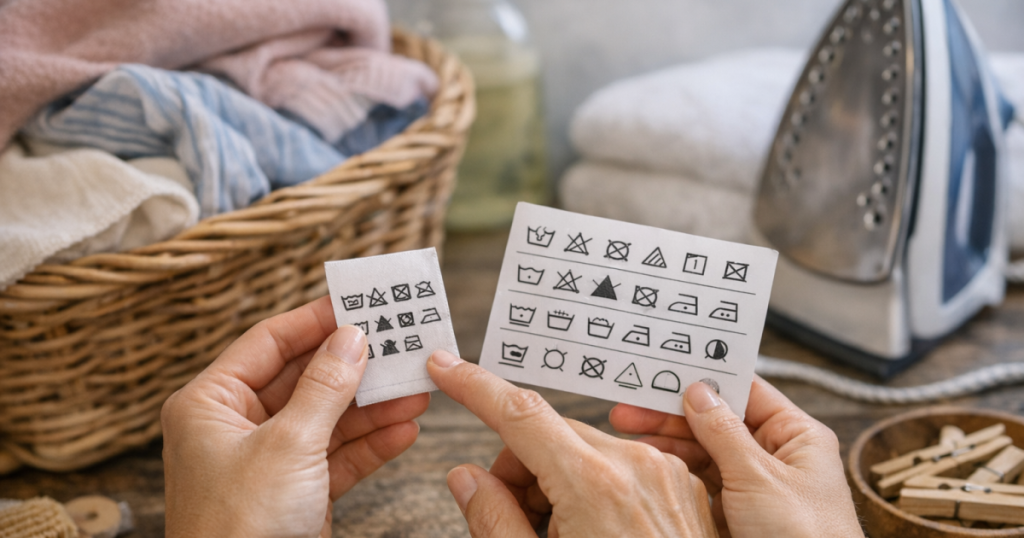
New clothes can look wash-ready, but the care label is the best clue to whether they will shrink, bleed dye, lose texture or need gentler handling. Reading laundry symbols before the first wash helps you choose the right temperature, cycle and drying method without relying on guesswork.
A few seconds with the label is especially useful for dark cotton, viscose dresses, knitwear, embellished workwear and anything marked as delicate. The aim is not to memorise every icon, but to understand the order of decisions the label is asking you to make.
In brief
- Read the whole care label before washing, not just the temperature mark.
- Treat the most restrictive instruction as the one that matters most.
- Use a cooler, gentler wash when a garment is new and you are unsure how it will behave.
- Check drying and ironing icons before washing, because heat damage often happens after the wash cycle.
- Keep new dark, red, navy, black and bright garments away from pale loads for the first few washes.
Start with the care label as a sequence
Most garment labels are arranged in a practical order: washing, bleaching, drying, ironing and professional cleaning. That sequence mirrors what happens at home. First you decide whether the item can be washed, then whether bleach is allowed, then how to dry it, then whether heat from an iron or steamer is safe.
Do not treat one icon as permission to ignore the rest. A top may be machine washable at 30°C but still unsuitable for tumble drying. A dress may allow a cool iron but need a gentle wash to protect its drape. The safest reading is the complete reading.
What the main laundry symbols mean
The washtub: washing method and temperature
The washtub icon tells you whether the garment can be washed and how much heat or movement it can tolerate. A number inside the tub, such as 30°C or 40°C, is the maximum wash temperature. It is not a target you must hit. For many new clothes, a lower-temperature programme is a sensible first wash, provided the garment is not heavily soiled.
A hand in the tub means hand wash or a very gentle hand-wash style programme, depending on your machine and the garment label wording. If the tub has a line underneath, the fabric needs reduced agitation, usually a synthetics or easy-care programme. Two lines mean a more delicate wash with minimal spin and movement.
A crossed-out washtub means do not wash at home. That does not automatically mean the garment is impossible to clean, but it does mean water and domestic washing could affect structure, dyes, trims, coatings or interlinings.
The triangle: whether bleach is allowed
The triangle is the bleach instruction. A plain triangle means bleaching is allowed if needed, while a crossed-out triangle means do not bleach. Some labels also distinguish between chlorine and oxygen-based bleach, but many everyday UK garments simply show whether bleach should be avoided.
For new clothes, the safest habit is to keep bleach away unless the label clearly permits it and the fabric genuinely needs it. Bleach can alter colour, weaken fibres and affect printed or embroidered areas. For stains on pale cotton, targeted treatment is usually safer than adding bleach to a whole wash. If the item is a cotton shirt with pen marks, use a fabric-safe method such as the steps in removing ink from cotton shirts without bleaching.
The square: drying instructions
The square tells you how to dry the garment. A square with a circle inside relates to tumble drying. Dots inside the circle show heat level: fewer dots mean lower heat. A crossed-out tumble-dry symbol means avoid the tumble dryer, even if the wash symbol looked straightforward.
Line-drying, flat-drying and drip-drying icons matter because wet fabric is vulnerable to distortion. Knitwear, viscose, loose weaves and heavy cotton jersey can stretch if they are hung from the shoulders while wet. If the label says dry flat, support the whole garment on a towel or mesh drying rack rather than hanging it on a hanger.
Drying is where many new clothes lose their shape, not the wash itself. For jumpers and cardigans, the method is as important as the programme; the detailed approach in air-drying knitwear without stretching the shoulders is useful whenever a label warns against tumble drying or recommends flat drying.
The iron: safe heat for pressing
The iron icon shows whether pressing is allowed and how hot the iron can be. One dot means low heat, two dots medium heat and three dots higher heat. A crossed-out iron means do not iron. Some labels also show restrictions on steam, which is important for fabrics that mark, ripple or become shiny under moisture and pressure.
Always match the iron to the most delicate part of the garment, not just the main fabric. A cotton shirt with synthetic trims, print, embroidery or heat-applied logos may need a lower setting than plain cotton. Press inside out where sensible, use a clean pressing cloth for delicate surfaces and test an inconspicuous area first.
The circle: professional cleaning
A circle refers to professional dry cleaning or wet cleaning. Letters inside the circle are intended for cleaners rather than home interpretation. A crossed-out circle means do not dry clean. If a new garment says dry clean only, washing it at home could affect linings, structure, colour, pleats or fabric finish.
Some labels say “dry clean” rather than “dry clean only”. That wording can indicate a recommendation rather than the only possible method, but it is still a sign to be cautious. If the garment is expensive, tailored, embellished or made from a fibre that changes shape easily, treat the professional cleaning instruction seriously.
How to check a new garment before the first wash
1. Read both the fibre content and the care icons
The fibre label helps explain why the care instructions are strict. Cotton may tolerate washing but can shrink. Wool and mohair can felt or mat with heat and agitation. Viscose can weaken and distort when wet. Polyester often washes easily but may hold odours or attract static. Blended fabrics should be treated according to the most sensitive fibre in the mix.
2. Look for trims, coatings and construction details
Care labels are not only about fabric. Buttons, embroidery, reflective strips, waterproof coatings, fusible interlinings, sequins and prints can all change the safest washing method. A garment that feels sturdy may still need a low spin or inside-out wash to protect surface details.
3. Separate strong colours for the first few washes
New dark denim, black T-shirts, red dresses and bright sportswear can release loose dye. Wash them with similar colours first, use a short gentle cycle when appropriate, and avoid leaving wet items bundled together in the drum. If you regularly wash mixed loads, the explanation on choosing colour catcher sheets for mixed washes can help you understand what they can and cannot do.
4. Choose the gentlest effective programme
If the label allows machine washing, pick a programme that matches the symbol. A 30°C wash with a reduced spin is often a good first wash for new garments that are not heavily worn. For delicates, use a mesh laundry bag where it helps prevent snagging, fasten zips and hooks, and turn printed or embellished items inside out.
5. Check drying before pressing start
Do not wait until the cycle finishes to discover the garment cannot be tumble dried. Plan where it will dry before you wash it. Clear a flat surface for knitwear, a hanger-free drying space for stretch-prone tops, or a well-ventilated indoor airer for garments that need gentle drying away from direct heat.
Common label situations and what to do
- Machine wash 30°C with one line: use a mild, reduced-agitation programme rather than a vigorous cotton cycle.
- Hand wash only: use cool water, minimal rubbing and a short soak; roll in a towel to remove excess water instead of wringing.
- Do not tumble dry: air-dry according to the shape of the garment; avoid radiators, direct heat and cramped drying where colours may transfer.
- Low iron only: press inside out, avoid lingering in one area and protect shiny or textured fabric with a pressing cloth.
- Dry clean only: do not put it through a normal wash; the risk is often structure, lining, dye or finish rather than surface dirt alone.
Fabric-aware examples
A new viscose dress may have a low-temperature wash symbol but still need careful handling because viscose can stretch, shrink or twist when wet. Use a gentle programme, avoid heavy spin and reshape it while damp. For more detail on this particular fibre, see the guide to washing viscose dresses without losing their shape.
A new wool jumper may show hand wash or dry clean instructions because heat, friction and sudden temperature changes can alter the fibres. The label is warning you about movement as much as water. Keep the wash cool, support the garment when wet and dry it flat.
A new white cotton T-shirt may look simple, but the label can still restrict bleaching, tumble drying or ironing over prints. Turn it inside out, wash with whites or very pale colours, and avoid high heat if there is any print, transfer or decorative finish.
Mistakes that ruin new clothes early
- Using the cotton programme for everything: it can be too vigorous for viscose, wool blends, lace, trims and lightweight synthetics.
- Assuming 40°C is safer because it cleans more: higher heat can increase shrinkage and dye loss on vulnerable fabrics.
- Ignoring spin speed: a harsh spin can crease, stretch or distort garments even when the temperature is correct.
- Drying on a radiator: direct heat can set creases, fade colour, stiffen fibres and damage elastic or coatings.
- Ironing before checking the icon: heat shine, melted prints and flattened texture are difficult to reverse.
Questions people ask
Is the temperature on the label a maximum or a recommendation?
It is usually the maximum safe wash temperature. You can often wash lower than the stated temperature, especially for lightly worn new clothes, but you should not exceed it.
What should I do if the label has been cut out?
Treat the garment cautiously. Wash separately or with similar colours, use cool water, choose a gentle programme and avoid tumble drying until you know how the fabric behaves.
Can I hand wash something marked dry clean only?
Not safely by default. “Dry clean only” can relate to linings, dyes, structure, trims or finish, not just the outer fabric. Home washing may permanently change the garment.
Do new clothes need washing before wearing?
Many people prefer to wash items worn next to the skin before wearing. Always follow the care label, keep strong colours separate and avoid high heat on the first wash.
Why did a garment shrink even though I followed the wash temperature?
Shrinkage can also come from agitation, spin speed, tumble drying or hot ironing. Read the drying and ironing icons as carefully as the wash icon.
Final thoughts
Care labels are small, but they give you the key decisions: water, heat, movement, drying and pressing. Before washing new clothes, slow down long enough to read the whole label, choose the gentlest suitable cycle and plan the drying method. That simple habit helps preserve colour, fit, fibre texture and finish from the very first wash.