A cotton shirt can usually tolerate gentle stain work, but it is not immune to abrasion. Used lightly, stain removal brushes help move detergent into the stained area; used aggressively, they can roughen the surface, raise lint and weaken already worn fibres. The safest approach is to let water, detergent and time do most of the work, with the brush providing controlled movement rather than force.
The short answer
A stain brush does not automatically damage cotton. Damage usually happens when the brush is too stiff, the shirt is scrubbed while dry, or pressure is concentrated on one small patch. Cotton is stronger than many delicate fabrics, but shirt cottons vary: a dense Oxford cloth is more forgiving than fine poplin, lightweight lawn or soft jersey.
- Soft brushing on damp fabric is usually low risk for sturdy cotton shirts.
- Hard, repeated scrubbing can break surface fibres and make the area look pale, fuzzy or worn.
- Old underarms, collars and cuffs are more vulnerable because sweat, deodorant, friction and laundering already weaken them.
- Brushing should be used to spread and work in treatment, not to scrape the stain out by force.
How stain removal brushes can harm cotton
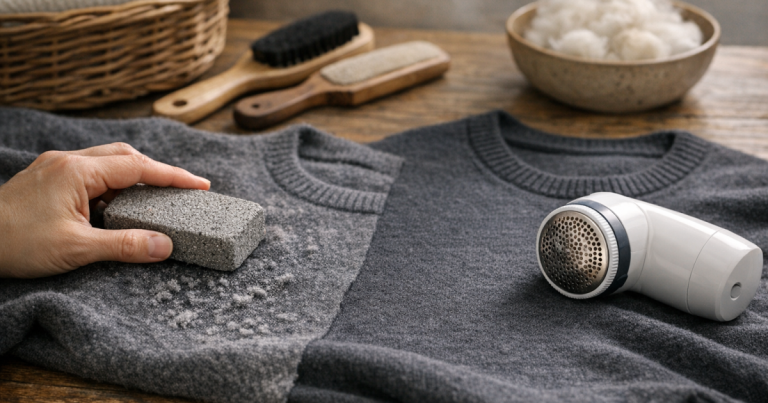
Cotton fibres are made from twisted plant fibres spun into yarn. On a smooth shirt fabric, those yarns sit neatly across the surface. Brushing adds friction. A little friction helps loosen soil from between fibres; too much friction lifts fibre ends from the yarn, creating fuzz, dullness and eventually thinning.
The most common problem is not a dramatic hole after one use. It is a small patch that looks slightly lighter, rougher or more matte than the surrounding fabric. On white shirts this can look like a greyed or fuzzy area. On coloured cotton, it may look like local fading, even when the dye has not technically been bleached.
Damage is more likely when the same spot is treated again and again. Shirt underarms are a good example: deodorant residue can bind with sweat and detergent minerals, so people often scrub harder when the stain does not shift quickly. A more targeted soaking and rinsing method is usually kinder; for that specific issue, see our guide to removing deodorant build-up from shirt underarms.
Step-by-step: how to brush a cotton shirt safely
1. Check the fabric before you touch the stain
Look at the shirt in good light. If the fabric is already thin, shiny, bobbly or frayed, avoid brushing that area. Pay particular attention to collars, cuffs, button plackets and underarms. These zones get more body oils, friction and repeated ironing, so they often weaken before the rest of the shirt.
2. Work from the back where possible
For many food, sweat and make-up marks, place the stained area face down on a clean white cloth and flush from the reverse with cool water. This helps push residue out of the fabric rather than deeper into it. Do not use hot water on unknown protein-based stains, such as blood or some food marks, because heat can make them harder to remove.
3. Dampen the fabric first
Never attack a dry cotton shirt with a stiff brush. Damp fibres move more easily and the cleaning product spreads more evenly. Add a small amount of suitable laundry detergent or stain treatment, then let it sit for a short period according to the product label. The waiting time matters because chemistry can loosen the stain before any mechanical action is needed.
4. Use short strokes, not harsh circles
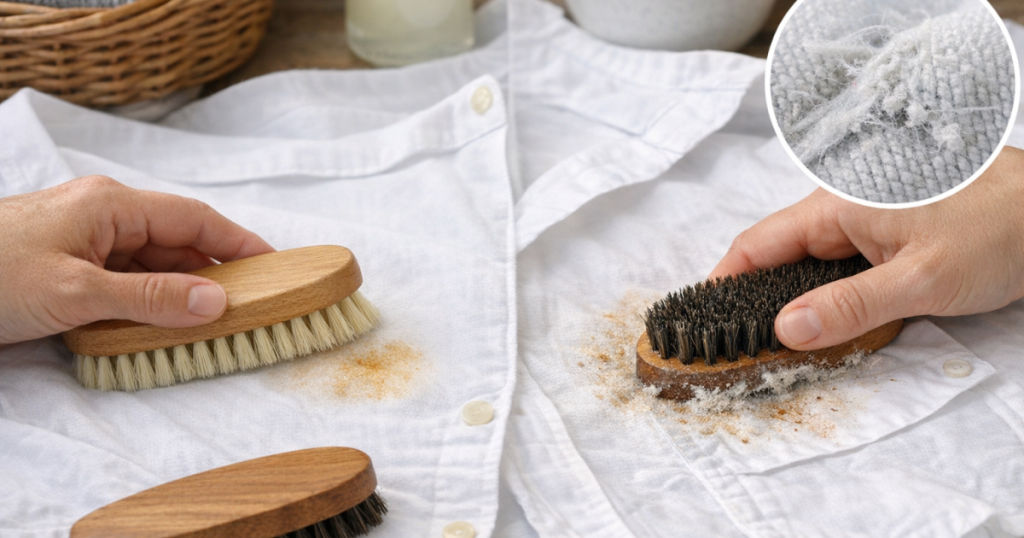
Brush lightly in short strokes across the stained area, using the least pressure that moves the treatment through the fibres. Avoid tight circular scrubbing, which concentrates abrasion in one place and can distort the weave. For shirt cotton, it is better to repeat a gentle pass after a short soak than to scrub hard for a minute.
5. Rinse and inspect before washing
Rinse the treated area and check whether the stain has lifted. If the fabric looks fuzzy, stop brushing. If the mark remains but the fabric looks stable, repeat the soak-and-light-brush process once. Then wash according to the care label. Avoid tumble drying until the stain has gone, as heat can set some residues.
When a brush is useful, and when it is the wrong tool
A soft brush can be useful for mud on cuffs, food marks on sturdy casual shirts, collar grime on thicker cotton and detergent pre-treatment on woven school shirts. It is less suitable for very fine dress shirts, brushed cotton, garment-dyed shirts, embroidered areas, printed logos or any fabric with a worn surface.
Paint is a separate case. Dried paint can tempt people into scraping, picking or heavy brushing, but that can shred cotton fibres before the paint shifts. The safer method depends on whether the paint is water-based or solvent-based and whether it is still wet. For clothing used during decorating or trade work, follow a dedicated process such as our guide to removing paint splashes from workwear safely.
Delicate fabrics need an even lighter touch. Tulle, lace, chiffon trims and loosely woven details should not be scrubbed like shirt cotton. If you are handling a mixed-fabric garment, protect the weakest part first; the principles in our guide to washing tulle skirts without tearing the netting are a useful reminder that friction can be as damaging as heat or harsh detergent.
Choosing and using the right brush shape
You do not need an aggressive bristle brush for most shirt stains. A compact laundry brush with soft to medium bristles gives more control than a large household scrubbing brush. An old soft toothbrush can work for tiny collar points and seam lines, but it should still be used gently because the small head concentrates pressure.
- Soft bristles: best for fine cotton, coloured shirts and routine collar treatment.
- Medium bristles: suitable for sturdier Oxford or twill shirts when used lightly.
- Hard bristles: better kept for non-garment cleaning tasks; they are usually too harsh for shirt fabric.
- Rubber or silicone nubs: can be gentler than stiff bristles, but pressure still matters.
Keep the brush clean. Residual detergent, old dye, grit or dried stain product can transfer back onto the next garment. Rinse the brush after use, shake out excess water and leave it to dry fully before storing it. A brush used for shoes, floors or household cleaning should not be used on shirts.
Signs you are over-brushing
Stop and change method if you notice any of these warning signs:
Some warning signs only become obvious once the shirt has dried, so inspect the area both wet and dry if you are unsure. Wet cotton can temporarily look darker and smoother, hiding early fuzzing. After air drying, hold the shirt at an angle near a window or under a bright lamp; surface damage often shows as a dull patch that catches light differently from the rest of the fabric.
On coloured cotton, be careful not to confuse remaining stain with abrasion. A greasy mark may still look dark, while over-brushing often looks pale, chalky or slightly grey. If the colour seems intact when damp but turns cloudy when dry, the issue is more likely raised fibre than leftover residue. Further scrubbing will usually make that cloudy area larger.
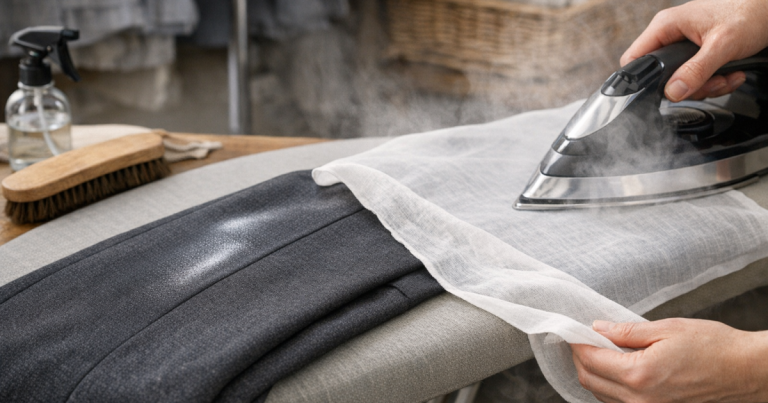
If you have already brushed too much, avoid ironing the patch hard to “flatten” it. Heat and pressure can make weakened fibres look shiny or set distortion into the weave. Instead, rinse out any remaining product, reshape the fabric gently by hand, let it dry naturally, and treat any remaining stain later with soaking rather than more friction.
- The treated patch looks lighter, cloudy or scuffed compared with the surrounding fabric.
- Small fibres are lifting from the surface.
- The weave looks distorted or puckered.
- The fabric feels thinner or softer in one spot.
- The stain is not improving after one or two gentle attempts.
At that point, more brushing is unlikely to help. Switch to soaking, targeted rinsing or a different stain treatment suited to the mark. If the stain is old, oxidised or heat-set from previous washing and drying, full removal may not be possible without visible wear.
Straight answers
Can I use a nail brush on a cotton shirt?
A nail brush is usually too firm for fine shirt cotton. It may be acceptable on sturdy workwear cotton if used very lightly, but for everyday shirts a softer laundry brush or soft toothbrush gives better control.
Is brushing better than rubbing fabric against itself?
Gentle brushing can be more controlled than rubbing fabric between your knuckles, which creates fabric-on-fabric abrasion and can crease or distort the area. Both methods can damage cotton if done with too much force.
Should I brush before or after applying detergent?
Apply water and detergent first, allow a short contact time, then brush lightly. Brushing dry fabric first increases friction and can push some residues further into the yarns.
The big picture
Stain brushes are useful fabric care tools when they are soft, clean and used with restraint. They damage cotton shirt fibres when they are treated like scrubbers rather than applicators. For most shirts, the winning order is simple: identify the stain, dampen the fabric, apply the right treatment, wait, brush lightly, rinse and inspect. If the fabric starts to look worn before the stain has gone, protect the shirt and stop brushing.