The safest way to wash flame-resistant workwear is to follow the garment label, avoid residue-building products, remove oily soil properly and inspect the item after every wash. Flame-resistant jackets, trousers, coveralls and hi-vis layers are not ordinary uniform pieces: they are protective garments, so the aim is to clean them without adding anything that could interfere with their performance.
Selection, certification, repair and replacement of flame-resistant PPE are safety-critical tasks and should be managed by a qualified PPE provider, competent workwear supplier or employer-appointed safety lead in line with UK workplace requirements and the relevant garment standards. Home laundering should only be done where the manufacturer or employer permits it.
The short version
- Read the care label first, including any PPE markings, washing temperature, drying limits and warnings about bleach, softener or industrial laundering.
- Wash FR garments separately from greasy household laundry, towels and items treated with fabric conditioner.
- Use a normal laundry detergent unless the label specifies otherwise, and skip fabric conditioner, dryer sheets, starch and bleach unless clearly permitted.
- Pre-treat oil and grease carefully before washing, because flammable contamination left in the fabric can matter as much as the wash method.
- Dry only as instructed, then check for holes, thinning, damaged trims, weakened seams, persistent odours or embedded contamination.
Why flame-resistant workwear needs different laundry habits
Flame-resistant clothing is designed to reduce ignition risk, limit flame spread or provide protection against specific heat and flame hazards. The exact protection depends on the garment type, fabric construction, finish, condition and certification. Some fabrics are inherently flame-resistant; others rely on a durable treatment. Either way, laundering should protect the fabric rather than coat, clog, weaken or contaminate it.
The main laundry risks are not usually dramatic one-off mistakes. They are repeated small habits: adding softener every wash, using too much detergent, leaving oily residue behind, overloading the machine so soil is not rinsed out, or drying too hot and shrinking the garment. Over time, these can affect fit, comfort, visibility, surface cleanliness and, in some cases, protective performance.
Care labels on FR garments often refer to standards such as EN ISO 11612, EN ISO 11611, EN ISO 14116 or high-visibility requirements where reflective tape is present. Do not treat those markings as washing instructions by themselves. They tell you what the garment is designed for; the laundry label tells you how to maintain it.
Step 1: Check the label before the garment goes near the machine
Start by reading the full label, not just the temperature symbol. Look for wording about domestic washing, industrial laundering, maximum wash cycles, tumble drying, bleach, softener, dry cleaning, ironing and repairs. Some garments are suitable for home washing; others may be issued with workplace laundering rules, especially in higher-risk settings.
If the workwear is employer-issued PPE, check whether home washing is allowed. In many workplaces, the employer will specify whether garments should be laundered at home, collected for professional laundering or removed from use after heavy contamination.
Also check whether the garment combines more than one protective feature. For example, a hi-vis FR jacket may have flame-resistant fabric, reflective tape, a waterproof or water-resistant layer, hook-and-loop fastenings and elasticated sections. The most delicate or safety-critical component often sets the care limit.
Step 2: Sort FR garments away from ordinary laundry
Wash flame-resistant items separately from heavily scented laundry, fabric-conditioned towels, bedding, greasy overalls and lint-shedding fabrics. This reduces cross-contamination and helps the rinse work properly.
Sorting matters because residues can transfer in the wash. A drum full of towels that have been repeatedly softened can leave deposits on other items. Greasy clothes can spread oily soil. Lint from cotton towels can cling to hook-and-loop panels or textured trims.
If colour transfer is a concern, particularly with navy, black or red uniforms, check new or rarely washed items before mixing them. Our guide to testing clothes for colourfastness before washing is a useful extra step for mixed uniform loads.
Step 3: Prepare the garment properly
Before washing, empty all pockets. Remove pens, metal swarf, cable ties, tissues, paper notes and small tools. These can stain, snag or damage both the garment and the machine.
Fasten zips, press studs and hook-and-loop closures. Turn the garment inside out if the label allows it, especially where reflective tape, printed logos or outer coatings need less abrasion. Do not wash FR garments with sharp items, heavy hardware or rough work gloves unless the care instructions say they can be washed together.
Brush off dried mud or loose debris outdoors before laundering. A washing machine is better at removing soil from fabric than dealing with gravel, grit or packed mud. Less loose dirt in the drum also means fewer abrasive particles rubbing against protective fabric and reflective trim.
Step 4: Deal with grease, oil and workplace contamination first
Grease and oil need attention before the main wash. Do not rely on a quick cool wash to remove workshop grime, food-service oils or machinery residue. If flammable contamination remains in the fabric, the garment may not be fit to wear in a heat or flame-risk environment.
Use a small amount of suitable liquid detergent on the stained area, gently work it into the fabric with your fingers or a soft cloth, and allow a short dwell time as permitted by the label. Avoid solvent-based spot cleaners, oily stain sticks, waxy products and anything that leaves a coating unless the garment manufacturer specifically approves it.
For school, catering, workshop and maintenance uniforms where grease is a recurring problem, the same careful pre-treatment principles apply. The method in our guide to getting grease stains out of school uniforms is helpful for understanding how to lift grease without turning the whole wash into a residue problem, but always put the FR garment label first.
If the clothing smells strongly of petrol, solvent, chemical residue or unknown contamination after airing, do not put it into a domestic machine. Isolate it from other laundry and follow the workplace procedure for contaminated PPE. Some contamination calls for professional laundering, assessment or replacement rather than repeated home washing.
Step 5: Choose detergent carefully and leave out softener
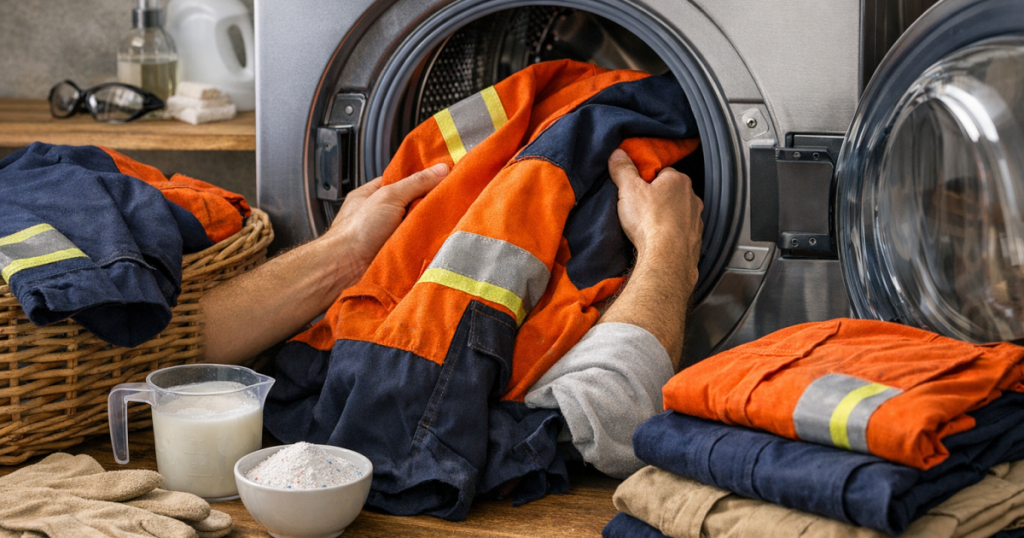
A standard laundry detergent is usually the right starting point, provided the care label does not specify a particular type. Use the recommended dose for your water hardness and soil level. In hard-water areas of Great Britain, under-dosing can leave dirt behind; over-dosing can make rinsing less effective.
Avoid fabric conditioner unless the garment label specifically permits it. Softener can leave a lubricating, scented film on fibres and trims, which is exactly what you do not want on protective workwear. Dryer sheets and starch can create similar residue issues.
Bleach is another common problem. Chlorine bleach is widely unsuitable for many protective fabrics and trims, and oxygen bleach should also be treated cautiously unless the label allows it. If whites or pale FR garments look dull, focus first on correct dosing, enough drum space and thorough rinsing rather than reaching for brighteners or bleaching agents.
If you are unsure why detergent and conditioner behave differently in a wash, our explainer on laundry liquid versus fabric conditioner sets out the difference clearly. For FR garments, the important point is simple: cleaning is useful; coating the fabric is not.
Step 6: Use the right machine cycle
Set the wash temperature and cycle according to the label. Do not assume hotter is better. Higher temperatures can help with some soils, but they can also shrink fabric, stress seams, affect reflective tape or damage coatings if the garment is not designed for that treatment.
Do not overload the drum. FR coveralls and lined jackets need room to move so detergent solution can pass through the fabric and rinse away properly. A packed machine may leave dirt, sweat, detergent and workplace residue trapped in folds.
Use an extra rinse if the garment is very dirty, if you have used a pre-treatment, or if the fabric feels slippery or smells strongly of detergent after washing. The aim is a clean fabric surface with no obvious residues.
Step 7: Dry without overheating or adding residues
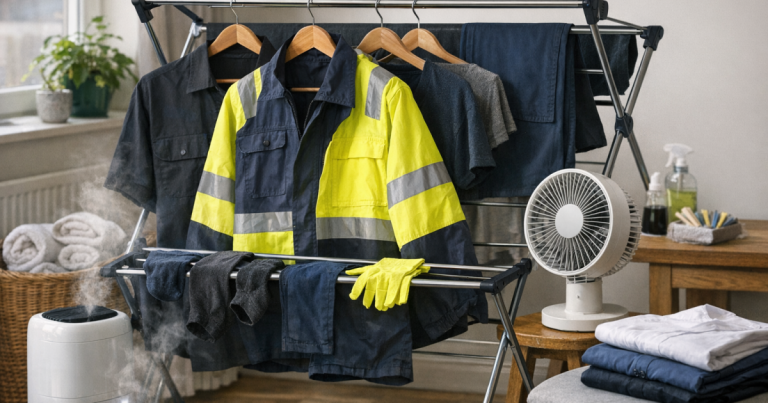
Drying should follow the care label. Some FR garments can be tumble dried at a stated setting; others should be line dried or dried flat. Do not use dryer sheets, and do not place garments directly on radiators, heaters or near open flames.
Over-drying can cause shrinkage, make seams pucker and shorten the life of trims. Under-drying can leave garments musty, especially thick coveralls and jackets with multiple layers. Shake the garment out before drying, reshape cuffs and collars, and allow air to circulate through heavy areas.
If line drying outdoors, avoid prolonged harsh sun on dark or hi-vis garments where fading is a concern. Drying indoors is fine if the area is ventilated and the garment is not left damp for long periods.
Step 8: Inspect before wearing again
Once dry, inspect the garment in good light. Look for holes, thin patches, scorched areas, frayed seams, damaged fastenings, cracked or peeling reflective tape, missing labels and stubborn stains. Check cuffs, knees, elbows, pockets and the front placket, as these areas take the most wear.
Smell matters too. A strong oily, fuel-like or chemical odour after washing suggests contamination may remain. Do not mask it with fragrance sprays or conditioner. A protective garment that cannot be properly cleaned may need professional assessment or replacement.
Fit is part of protection. If trousers have shrunk above the boot line, sleeves no longer cover the wrist properly, or a jacket pulls open when moving, the garment may not provide the intended coverage. Report fit changes through the workplace process rather than continuing to wear it as ordinary clothing.
Common mistakes that shorten the life of FR workwear
- Using fabric conditioner: it can leave a residue on fibres and trims, and many FR care labels prohibit it.
- Washing with greasy loads: oil can transfer from other work clothes and remain in the fabric.
- Ignoring persistent odours: fuel, solvent or chemical smells are warning signs, not just laundry freshness issues.
- Overloading the machine: dirt and detergent need space to rinse away properly.
- Using bleach as a shortcut: bleach can damage fibres, dyes, finishes or reflective components unless explicitly allowed.
- Repairing with ordinary thread or patches: repairs to protective garments should use approved materials and be handled through the correct PPE route.
Storing clean FR garments between shifts
Store FR workwear clean and fully dry. Keep it away from oils, fuels, solvents, aerosols, workshop dust and damp cupboards. A breathable garment bag or clean locker is better than leaving coveralls on a garage floor or in the boot of a car with tools and chemicals.
Do not compress damp garments in a laundry basket or kit bag. Mustiness is not only unpleasant; it usually means the fabric has stayed wet long enough for odour-causing growth to develop. Heavy workwear should be given more drying time than lightweight shirts.
Where uniforms are issued as a set, keep compatible layers together. Wearing an FR outer layer over a non-compliant or melt-prone inner layer can undermine the intended protection, depending on the hazard. Follow the employer’s clothing system rather than mixing garments by convenience.
FAQ
Can I use fabric conditioner on flame-resistant clothing?
Usually no. Many FR garments prohibit fabric conditioner because it can leave residues on the fabric. Only use it if the care label or manufacturer explicitly says it is allowed.
Can flame-resistant workwear go in a normal washing machine?
Yes, if the garment label and workplace rules allow domestic laundering. Wash it separately, avoid softener and bleach, and use enough drum space for thorough cleaning and rinsing.
What should I do if FR clothing is contaminated with fuel or solvent?
Do not wash it with household laundry. Isolate the garment and follow the workplace PPE procedure for contaminated clothing, which may require professional laundering, assessment or replacement.
How often should FR workwear be washed?
Wash it when it is visibly dirty, sweaty, oily or contaminated, and as required by workplace rules. Dirt and flammable residues should not be allowed to build up.
Can I iron flame-resistant uniforms?
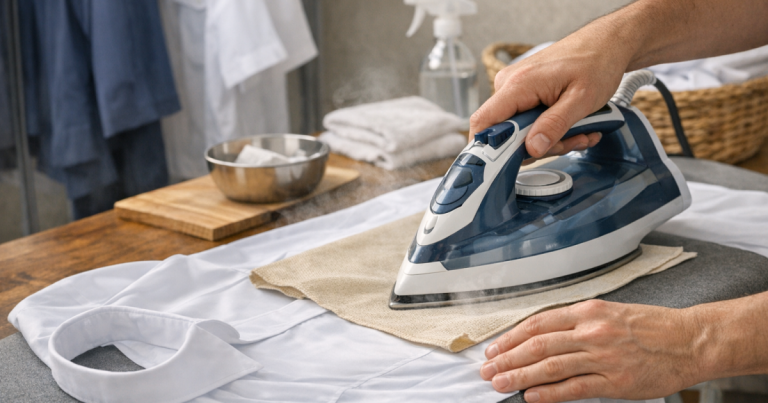
Only if the care label allows ironing. Avoid ironing over reflective tape, prints or coatings unless the label gives instructions, and never use starch unless it is specifically approved.
Main points
FR workwear needs clean fabric, not scented softness or aggressive stain shortcuts. The safest routine is to check the label, sort protective garments separately, remove grease before washing, use detergent without conditioner, rinse well, dry as instructed and inspect before the next shift.
If a garment remains oily, smells of chemicals, has lost coverage through shrinkage or shows damage to fabric, seams or reflective trim, treat it as a PPE issue rather than a laundry nuisance. Protective clothing only helps when it is clean, intact, correctly maintained and suitable for the work being done.