Greasy lunch spills, cooking oil from food tech and playground smears can all leave dark, stubborn patches on polo shirts, jumpers and trousers. The quickest way to treat school uniform grease stains is to lift the oil before the garment goes into a hot wash or tumble dryer, because heat can make the mark harder to remove. Check the care label first, then work gently from the outside of the stain towards the centre.
Most uniform grease marks can be removed at home if you act before the item is dried. The key is to absorb excess oil, break down the greasy residue with a suitable detergent, rinse properly, then wash at the warmest temperature allowed by the care label.
The short version
- Blot first; do not rub hard, as this can spread oil through the fibres.
- Use a small amount of washing-up liquid or liquid laundry detergent directly on the greasy patch.
- Let the pre-treatment sit for 10–15 minutes, but do not allow it to dry crusty on the fabric.
- Wash according to the care label, usually 30°C or 40°C for many school uniform items.
- Air dry and check the stain before ironing or tumble drying.
Why grease clings to uniform fabric
Grease is different from mud, juice or water-based food stains. Oil does not rinse away easily with plain water, and it can sink into woven polyester, cotton-rich polo shirts and acrylic or polyester-blend jumpers. This is why a quick wipe with a damp cloth often leaves a darker patch behind.
Many UK school uniforms are made from easy-care synthetic blends because they are hard-wearing and dry quickly. That is useful for busy households, but synthetic fibres can hold oily residues if the stain is not broken down before washing. Heat then makes the problem worse: a tumble dryer, radiator or hot iron can make the oily mark look faint at first, then reappear as a grey or dark shadow.
Grease also attracts dirt. A small chip-fat splatter on navy trousers can collect dust during the day, making the mark look larger by home time. Treating the oil first gives your normal wash a much better chance of finishing the job.
Step-by-step: removing fresh grease from uniform
1. Remove any solids gently
If the stain came from pasta sauce, pizza, buttered toast or chips, lift off any solid bits with the edge of a spoon or a blunt table knife. Avoid scraping aggressively, especially on knitted jumpers, as this can roughen the surface and create pilling.
2. Blot the oil
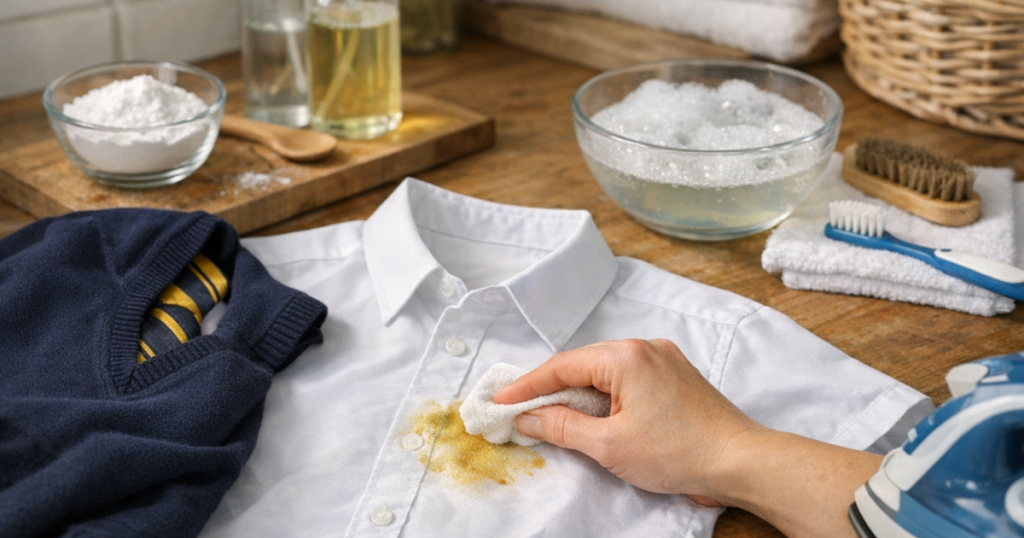
Press kitchen roll, a clean white cloth or a paper napkin onto the stain to absorb surface grease. Work from both sides of the fabric if possible. Do not use coloured napkins, as dye can transfer onto pale shirts.
3. Add a grease-cutting pre-treatment
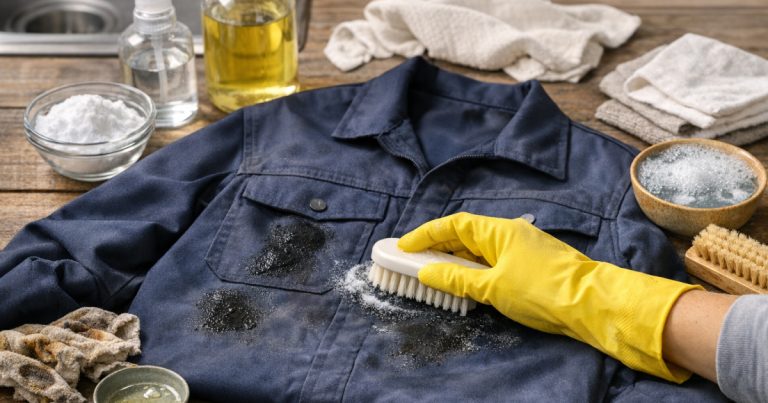
Put a small drop of washing-up liquid or liquid laundry detergent onto the greasy area. Use your fingertip or a soft toothbrush to work it lightly into the fibres. The aim is to coat the stain, not soak the whole garment in foam.
For white polo shirts, you can usually be a little more direct. For navy, black, burgundy or bottle-green items, keep the treatment neat and controlled so you do not create a pale rubbed patch. If you regularly struggle to decide what each laundry product is meant to do, this explanation of detergent versus fabric conditioner is a useful next step, because conditioner will not remove grease on its own.
4. Wait, then rinse
Leave the pre-treatment for around 10–15 minutes. Rinse from the back of the stain under cool or lukewarm water so the loosened oil is pushed out rather than driven deeper into the fabric. If the mark still feels greasy, repeat the pre-treatment once before washing.
5. Wash at the right temperature
Wash the item on the warmest setting allowed by the care label. Many uniform polos, shirts and trousers tolerate 30°C or 40°C, but do not guess with blazers, pleated skirts, embroidered badges or jumpers. Use your normal detergent dose for the load size and soil level; too little may leave oil behind, while too much can leave residue in the fabric.
6. Check before drying
When the wash finishes, inspect the stain in good daylight. Grease can be hard to see when fabric is wet, so look for a darker patch or a slightly slick feel. If there is any sign of oil, repeat the pre-treatment and wash again. Do not iron, tumble dry or place the item on a hot radiator until the mark has gone.
What to do with older grease marks
Older stains need more patience because the oil may already have bonded with detergent residue, dirt and heat. Start by dampening the mark with lukewarm water, then apply liquid detergent directly to the patch. Gently flex the fabric between your fingers to help the detergent reach the fibres.
If the mark has survived several washes, use a stain remover designed for oily food stains, following the product label and the garment care label. Test on an inside seam first, particularly on darker trousers, sweatshirts or coloured jumpers. Avoid chlorine bleach on coloured uniform and do not use harsh bleach on school shirts with coloured logos, trims or embroidery.
For repeat school uniform grease stains, it is worth checking the full laundry routine. Overloading the machine, washing greasy items with too little detergent, or drying before the stain has lifted can all leave a faint mark that builds over time.
Fabric-specific checks for common school uniform pieces
- White cotton or cotton-rich polo shirts: Treat quickly with liquid detergent, rinse well, and wash at the care-label temperature. Check collars and plackets where food residue can hide.
- Navy or black trousers and skirts: Use a small amount of pre-treatment and avoid hard scrubbing. Dark fabrics can show shiny abrasion marks if rubbed too vigorously.
- Acrylic or polyester-blend jumpers: Dab rather than scrub. Knitted uniform can stretch or pill if you attack the stain with a stiff brush.
- Blazers: Many blazers need more careful handling than standard shirts or trousers. Spot treat only if the care label allows it, and avoid soaking structured areas, linings and badges.
- PE kit: Grease from packed lunches can mix with sweat and deodorant residue. Treat oily patches before adding the kit to a normal sportswear wash.
Dark uniform needs extra care because stain removal and colour protection are happening at the same time. If you are dealing with navy jumpers, black trousers or dark PE kit, the same habits that remove grease should also support colour retention: wash inside out, avoid unnecessary heat, and do not overuse detergent. For more colour-care detail, see these tips on how to stop dark clothes fading in the wash.
Mistakes that make grease stains harder to remove
- Using hot water first: Heat can set some food residues and make oily marks cling more stubbornly. Start cool or lukewarm, then wash according to the label.
- Rubbing with a towel: Heavy rubbing spreads grease and can damage the fabric surface, especially on knitted jumpers.
- Putting the item straight in the tumble dryer: Drying heat can fix a faint grease shadow into the fibres.
- Adding fabric conditioner as a fix: Conditioner softens and scents laundry, but it does not clean oily stains.
- Overloading the washing machine: Uniform needs room to move so detergent and water can reach the treated patch.
- Mixing stain types without checking: Grease, ink, mud and deodorant marks need different handling. A method that works for one can make another worse.
Quick school-night routine
When a greasy uniform item comes home at 4 pm and needs to be ready by morning, keep the process simple. Blot the stain as soon as you spot it. Add a small amount of liquid detergent, leave it while the child changes or eats, then rinse and put the item into a normal wash with similar colours.
If the stain has not completely gone after washing, air dry it overnight rather than using a tumble dryer. A slightly damp polo shirt can usually be finished on a hanger in a warm, ventilated room, but a heat-set grease mark is far more annoying to deal with the next day.
It also helps to keep a small laundry basket or soaking bowl near the machine for urgent uniform items. That way, stained shirts and trousers do not disappear into a general pile and get dried by mistake.
Handling mixed stains: grease plus sauce, mud or deodorant
School stains rarely arrive neatly labelled. A lunch spill may include oil and tomato sauce; a blazer sleeve may have grease plus playground dirt. Deal with the oily part first by blotting and using detergent, then reassess the remaining colour mark after washing.
For tomato-based stains, avoid high heat until both the oil and the colour have lifted. For mud, let the mud dry and brush off loose soil before treating any grease underneath. For dark PE tops or black jumpers with underarm residue as well as food marks, use the right method for each problem rather than scrubbing everything together. These steps for removing white deodorant marks from black clothes can help when the mark is not actually grease.
Helpful questions
Can I use washing-up liquid on school uniform?
Yes, in small amounts, especially on fresh food grease. Rinse it out before machine washing, as too much foam can be a problem in a washing machine.
Will baking soda remove grease from uniforms?
Baking soda can help absorb surface oil, but it is usually not enough on its own. Use it as an absorbent first, then follow with liquid detergent.
Can I wash greasy uniform with the rest of the laundry?
Yes, once the stain has been pre-treated. Keep badly greasy items away from delicate fabrics and avoid overloading the drum.
Why does the stain come back after drying?
Oil can remain in the fibres even when the fabric looks clean while wet. Drying makes the residue visible again, which is why checking before heat is important.
Should I use bleach on white school shirts?
Avoid harsh bleach unless the care label and any stain remover instructions clearly allow it. It can weaken fibres and damage logos, stitching or coloured trims.
Key takeaways
Grease stains on school uniform are easiest to remove before the item is heated. Blot, pre-treat with a small amount of liquid detergent or washing-up liquid, rinse, wash at the care-label temperature, then check before drying. For dark, knitted or structured uniform pieces, use less friction and more patience so you lift the stain without damaging the fabric.
A consistent routine matters more than aggressive products. Keep treatment gentle, repeat the process if needed, and reserve stronger stain removers for marks that survive careful pre-treatment and washing.